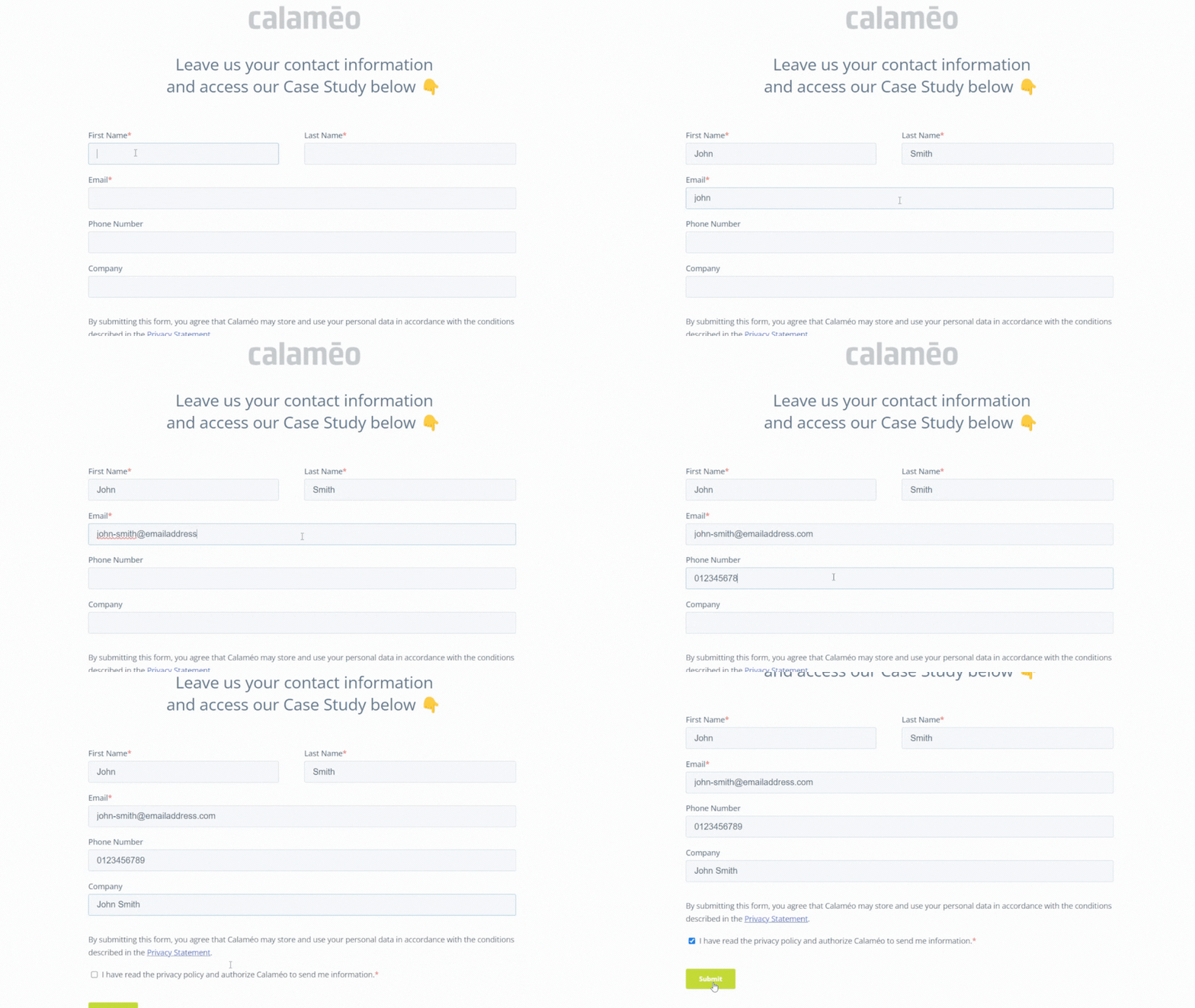
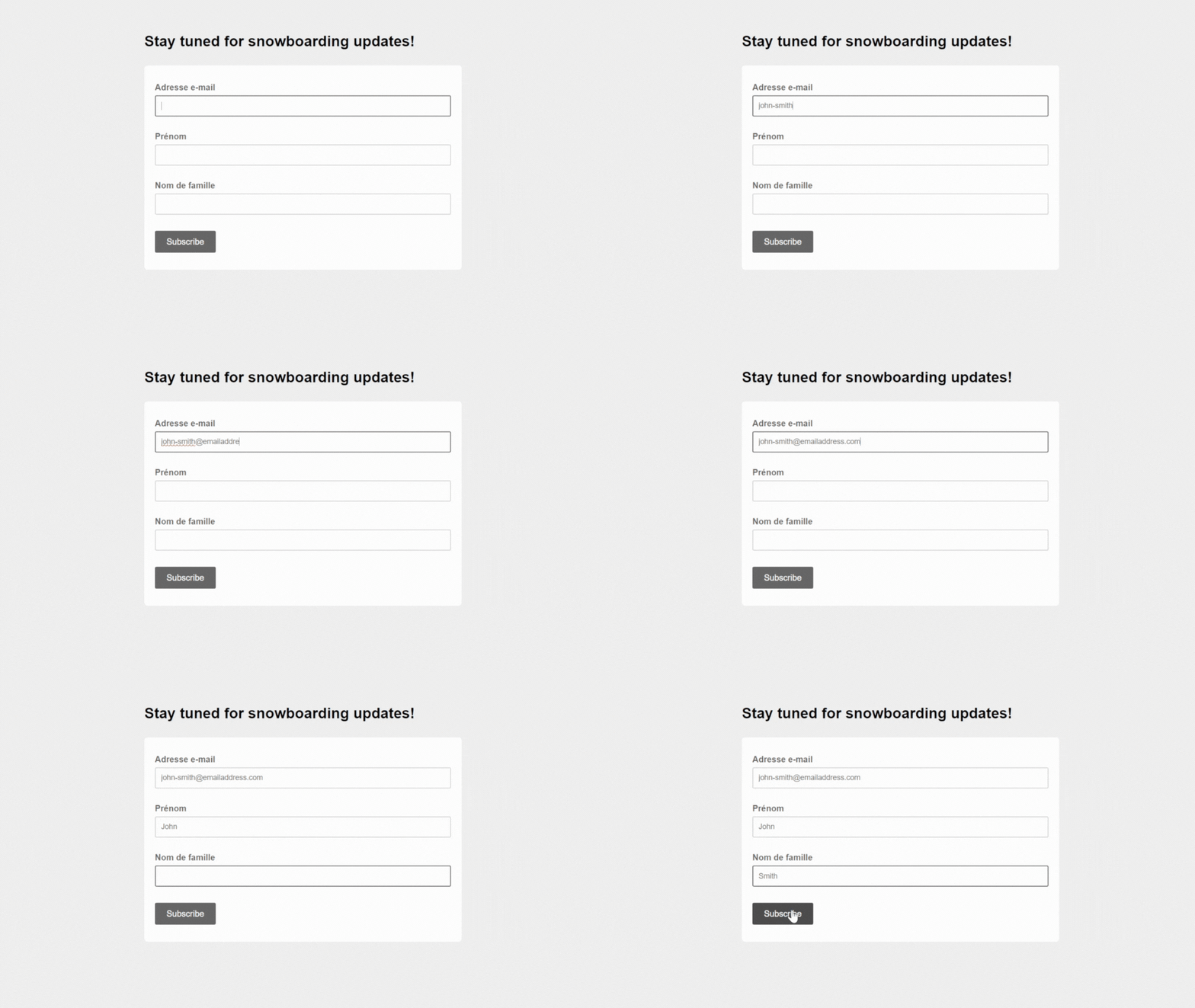
In the dynamic world of digital publishing, integrating forms into your documents can be an essential strategy for interacting with your audience effectively. Whether you use Google Forms, HubSpot Forms, MailChimp, Jotform or Typeform, here are three compelling reasons to incorporate this functionality into your publications:
1. Ask your audience for their opinion
Surveys and polls are powerful tools for understanding the needs and preferences of your audience. By integrating this type of form directly into your Calaméo publications, you can gather interesting feedback on your content, your products or even your company.
💡Check out the example survey in the publication below, created with Typeform, by clicking on the “Take part” link on the right-hand page :
Lead generation is a crucial aspect of any digital marketing strategy. By integrating lead capture forms into your Calaméo publications, you can collect valuable information about your prospects. Whether for targeted marketing campaigns, lead follow-ups or market analysis, this feature enables you to add leads and convert them more effectively into customers.
💡Below, you can see a form created using Hubspot Forms that automatically appears when the publication is opened using our triggers feature:
Simplify the process of subscribing to your newsletter or even placing online orders by integrating forms into your Calaméo publications. With integrations such as Mailchimp and Jotform, you can enable your audience to easily register for events, subscribe to newsletters or even place orders directly from your document. This feature is particularly useful for companies looking to increase their conversion rates and deliver an optimal user experience.
💡Check out the example newsletter sign-up form, created with MailChimp, in the publication below by clicking on the “Sign up now” link on the right-hand page :
In conclusion, integrating forms into your Calaméo publications offers a multitude of benefits, from collecting feedback to generating leads and simplifying the registration and ordering processes. By making full use of these features, you can not only improve your audience’s engagement, but also significantly boost your company’s growth.
💡Integrations are a new feature reserved for PLATINUM accounts.
Why an interactive publication can (actually) generate leads
A digital publication isn’t just a nicer-looking PDF. When it’s built with intent, it becomes a true acquisition asset: it attracts attention (SEO and sharing), keeps people engaged (smooth reading and navigation), and drives action (clicks, form submissions, requests). The difference between a publication that simply “gets views” and one that generates leads usually comes down to one thing: a clear, trackable journey. Readers immediately understand what’s in it for them, click at the right moment, and land on a conversion step that makes sense (a landing page/form or a meeting booking flow), while the data flows cleanly into your stack (analytics + CRM).
Lead gen with an interactive publication means turning readers into qualified contacts through contextual links and CTAs, connected to a landing page/form or a meeting-booking module—then measured with UTMs, KPIs, and analytics (e.g., GA4).
The part most teams miss: integrations matter as much as CTAs
A CTA without an integration is just a click that goes nowhere. A CTA with the right integration creates a lead that lands in the right place, at the right time, with the right context: source, campaign, intent—and a follow-up you can trigger faster. In short: the CTA is what people see. The integration is what makes it work. That’s what separates a publication that feels engaging from one that converts.
Checklist :
1 primary goal per publication (demo, quote request, signup…)
Contextual CTAs (repeat the main CTA 2–3 times max)
UTMs on every channel (email, social, ads, QR, partners)
Measurement via Google Analytics 4 or Matomo
Why choose Calaméo to generate leads from your publications
If you publish PDFs (catalogs, brochures, magazines, reports), the goal isn’t just readability. It’s making them actionable (CTAs that drive to conversion points) and trackable (tracking + attribution), while keeping the workflow simple for your team. With Calaméo, you can turn a publication into a lead-gen entry point thanks to integrations that sit right inside the reading experience: meeting booking (Calendly, HubSpot Meetings, OnceHub, Zoho Bookings), forms (HubSpot Form, Typeform, Jotform, Fillout, Formbricks, Google Forms), analytics (GA4, Matomo), rich content (Embedly, YouTube, Vimeo, TikTok), and even e-commerce (Shopify), depending on your use case.
7 lead gen scenarios (with recommended Calaméo integrations)
An interactive publication can generate leads at different moments in the journey—from very high-intent actions (requesting a quote, booking a meeting) to more long-term goals (newsletter growth, nurturing). The goal isn’t to switch on all seven plays at once. The fastest path is to pick one scenario, execute it cleanly (CTA + integration + tracking), then reuse that model across your future publications.
In each scenario below, you’ll find:
the context and goal (so you know when to use it),
the recommended journey (how readers move from reading to action),
the Calaméo integrations to enable (forms, meetings, analytics, rich content),
the CTAs—and what to measure to improve results.
Each scenario lines up with a stage of the funnel:
A catalog is often viewed by prospects who are already pretty far along. Your priority is to shrink the gap between “I’m interested” and “I’m talking to someone / requesting a quote.” The publication becomes both a showcase and a shortcut to action.
The journey that works
A reader lands on a product line, browses 2–3 pages, then hits a clear CTA (quote or meeting) that sends them to a super simple landing page or straight into booking. At this stage, every bit of friction costs you leads: forms that are too long, pages that feel generic, or a lack of proof.
Integrations to enable (Calaméo)
To convert product interest into leads without friction, pair a “request a quote” CTA with an embedded form—and offer a direct meeting option for the hottest prospects.
HubSpot Form or Jotform (or Typeform): capture the request (product/category, quantity, timeline, contact details) directly inside the publication.
Calendly, HubSpot Meetings, OnceHub, or Zoho Bookings: offer one-click booking to speed conversion (especially effective on “best sellers” and “bundles”).
Google Analytics 4 or Matomo: track CTA clicks and compare channels (email, social, ads, QR, partners) using UTMs.
CTAs (keep them extremely direct)
“Request a quote”
“Talk to an advisor”
“Book a time slot”
What to measure
The most useful trio: CTR, landing/booking conversion, and opportunity conversion rate.
A B2B brochure converts when it drives one clear action: the demo. The best timing is after the promise—then right after proof (case study, results, numbers).
The journey that works
Your brochure reassures (benefits), proves (results), then offers a simple next step: “Book a demo.” The landing page shouldn’t re-explain everything—it should reinforce the promise and make it easy to take action.
Integrations to enable (Calaméo)
The goal is straightforward: move readers from “I get it” to “I’m booking.” A calendar integration inside the publication is often the shortest path.
HubSpot Meetings or Calendly (or OnceHub / Zoho Bookings): book a demo directly inside the publication with a smooth flow.
HubSpot Form or Typeform: if you want to qualify before the demo (team size, need, timeline) via an embedded form.
Google Analytics 4 or Matomo: measure click-through rate, traffic source, and campaign performance.
Recommended CTAs
“Request a demo”
“See an example”
“Talk to an expert”
What to measure
Booked meetings / landing visits, show-up rate (if you track it), and opportunity conversion.
Scenario 3: White paper / report → lead magnet (email-gated access)
Study/report/benchmark formats are great for inbound leads—if the value is obvious. The most effective approach is usually to tease 1–2 insights, then offer full access.
The journey that works
Readers sample the content, see the value, then share an email to access the rest (or annexes/templates). After that, you run a short follow-up sequence to keep momentum.
Integrations to enable (Calaméo)
A lead magnet works when it’s simple: clear promise, short form, measurable follow-up.
Mailchimp or MailerLite: embed a signup form to capture email and feed your list (ideal for nurturing).
HubSpot Form: if you want a more CRM/MQL-style approach with qualification fields.
Fillout, Jotform, or Typeform: if you want a more tailored form (topic choice, role, needs) without hurting the reading experience.
Google Analytics 4 or Matomo: attribute leads to channels (SEO, social, ads, partners) via UTMs.
Recommended CTAs
“Get the full report”
“Access the annexes / templates”
What to measure
Form conversion rate, source quality (UTMs), and follow-up performance if you run sequences.
Scenario 4: Press kit → media requests / partnerships (PR-ready)
Press kits get skimmed quickly. Your goal isn’t to force a full read—it’s to make contact effortless and provide the right assets (logos, photos, media kit).
The journey that works
After the pitch and key stats, you offer a clear press contact (email or mini-form), then easy access to the media kit. The experience should feel simple and professional.
Integrations to enable (Calaméo)
Here the priority is fast, “PR-ready” contact: interview requests, media kit access, partnerships.
Fillout or Typeform (or Google Forms): embedded mini-form (outlet, topic, deadline) to centralize requests without sending readers elsewhere.
Embedly, YouTube, or Vimeo: add “proof” content (interview, coverage, demo, excerpt) to build credibility.
Google Analytics 4 or Matomo: see which channels and pages drive the most press requests.
Recommended CTAs
“Contact the press team”
“Download the media kit”
“Request an interview”
What to measure
Contact clicks, media kit downloads, and UTM sources (press/partners).
Here, the lead is the subscriber. It’s often the highest-ROI long-term play: you build an audience you own instead of relying on social reach.
The journey that works
You deliver value (a strong article), then make a simple promise: “Get the next issue.” The form should stay minimal, and the welcome email should reinforce why it’s worth subscribing.
Integrations to enable (Calaméo)
The biggest lever is capturing subscribers at the right moment (after strong content) without interrupting the flow.
Mailchimp or MailerLite: embed a simple signup form (email + optional interest area) to grow your owned audience.
HubSpot Form: if you want richer data (role, industry) and qualification at signup.
Google Analytics 4 or Matomo: measure click/signup rates by channel and by issue (UTMs).
Recommended CTAs
“Subscribe to the newsletter”
“Get the next issue”
What to measure
Signup conversion, email engagement (opens/clicks), and return readership.
In a sales cycle, an interactive publication is valuable when it helps you follow up better. Send a clear asset, then watch for intent signals (pricing, demo, comparison clicks) to prioritize outreach.
The journey that works
Sales sends a link, the prospect browses, then clicks a key section. Follow-up becomes more relevant because it’s contextual: you’re not “checking in,” you’re responding to real interest.
Integrations to enable (Calaméo)
The goal isn’t more steps—it’s capturing a simple signal (question, request, meeting) and moving quickly into a real conversation.
HubSpot Meetings or Calendly (or OnceHub / Zoho Bookings): embed a “Book a call” CTA at the right moments (objections, pricing, comparisons).
HubSpot Form or Jotform: embed “Ask a question” / “Request a proposal” to turn silent readers into leads.
Google Analytics 4 or Matomo: track clicks on key sections (pricing, comparison, demo) and measure outreach impact (UTMs by sequence).
Recommended CTAs
“Compare plans”
“See the demo”
“Ask a question”
What to measure
Clicks on key sections, follow-up success rate, and pipeline progression.
Scenario 7: Event (trade show, conference) → leads via QR code (ultra-fast conversion)
At events, your publication should be mobile-first and conversion-first. Full reading is secondary—you want a fast lead with clean event attribution.
The journey that works
Scan QR → clear entry page → “Get the presentation” CTA → ultra-short form → instant email. The goal is to capture the lead while the conversation is still warm.
Integrations to enable (Calaméo)
On-site, everything is about friction: a short form or an immediate meeting—measured cleanly with UTMs.
HubSpot Form (or Jotform / Google Forms): ultra-short embedded form (name, email, company) for mobile lead capture.
Calendly or HubSpot Meetings (or Zoho Bookings): “Book a meeting” option for the most qualified visitors—right inside the publication.
Google Analytics 4 or Matomo: clear attribution with utm_source=qr + utm_campaign=event_name, and comparisons across events/booths.
Recommended CTAs
“Get the presentation”
“Book a meeting”
“Request a callback”
What to measure
Scans→views, form conversion, meetings/calls post-event.
Where to place CTAs without “breaking” the reading experience
The goal isn’t to add CTAs everywhere. It’s to place CTAs where intent is strongest: after proof, after an “offer” section, after a case study, or at a decision moment (pricing, bundles). A simple rule works well:
one main CTA repeated 2–3 times in the publication,
a few secondary CTAs only if they don’t dilute the main goal,
a consistent landing experience (same promise, same wording, same benefit).
At a minimum, you should be able to answer: which channel drives the most clicks? which channel drives the most qualified leads? which CTAs perform best? Google Analytics 4 and Matomo are the two Calaméo integrations that cover measurement and attribution.
Common mistakes (often integration-related)
A form that’s too long (especially on mobile)
Reading inside a publication is smooth. If conversion takes 10 fields, you break the flow and lose a big chunk of leads. Capture the essentials first—qualify later.
No UTMs, so no attribution
Without UTMs, you can’t compare email vs social vs QR vs ads. You’ll get leads, but you won’t know what’s worth scaling.
A promise that doesn’t match the landing page or form
If the CTA says “Get the full report” and the next step asks for a generic “Reason for contacting us,” conversion drops. Message match is non-negotiable.
Launching too many scenarios at once
Start with one scenario, then replicate. Performance comes as much from iteration as from your initial choice.
Conclusion
An interactive publication becomes a lead engine when it’s built like a system: CTA → integration → follow-up → improvement. The 7 scenarios above are intentionally easy to reuse: activate one quickly, measure with UTMs and GA4/Matomo, then optimize based on the pages and CTAs that actually perform.
Suggested CTA (adapt as needed) • Button: “Create a lead-focused publication” • Secondary button: “Enable tracking (UTM/GA4)”
FAQ
How do you generate leads with an interactive publication?
An interactive publication generates leads when it guides readers to one clear action (demo, quote, signup) using contextual CTAs connected to a form or a meeting-booking module. To improve performance, tag your links with UTMs, then analyze what converts in Google Analytics 4 or Matomo.
What are the best CTAs to convert inside a publication (catalog, brochure, magazine)?
The best CTAs are simple and action-driven: “Request a demo,” “Request a quote,” “Book a time slot,” “Get the full report,” “Subscribe.” They work best after proof (case study, metrics, offer) and when the next step is perfectly consistent.
Where should you place CTAs in an interactive publication to maximize leads?
Place the main CTA 2–3 times max: (1) after the promise, (2) after proof (case study, metrics), (3) near a decision section (bundles, comparison, contact) or in the final recap. Avoid putting everything on the last page.
Landing page or embedded form: what converts better?
Landing pages convert better when you need to persuade (proof, benefits, case study). Embedded forms convert better when intent is already high (event leads, quick quote, “hot” demo). In both cases, the key is CTA → promise → form consistency and fewer fields.
Which Calaméo integrations should you use to capture leads inside a publication?
For forms: HubSpot Form, Typeform, Jotform, Fillout, Formbricks, Google Forms. For newsletter signup: Mailchimp and MailerLite. For meeting booking: Calendly, HubSpot Meetings, OnceHub, Zoho Bookings. For measurement: Google Analytics 4 and Matomo.
How do you track leads from a publication and know which channel converts (email, social, QR, ads)?
Add UTMs to every distribution link (and ideally to key CTAs). In GA4 (or Matomo), you can compare conversions by source, medium, and campaign. Without UTMs, you lose the ability to prioritize and scale.
What metrics should you track to optimize a lead-focused publication?
The most actionable metrics are: views/readers, CTA clicks, CTR, conversions (forms or bookings), and UTM sources (email, social, QR, ads). The goal is to identify what triggers action—then repeat that pattern in future publications.
What mistakes kill conversion on an interactive publication?
Most often: too many CTAs (unclear goal), forms that are too long, no UTMs, a landing page that doesn’t match (no message match), and no iteration. Often, moving a CTA, simplifying the form, and tightening the promise is enough to boost conversion.
Welcome to the world of digital publishing, where every innovation can significantly change the way your content is experienced, taking it to new heights. Today, we’re delighted to share with you our case study on enriching digital magazines to offer unique reading experiences that generate engagement and qualified leads.
Transform your magazine hosted on Calaméo, making it not only captivating but also conversion-friendly. Discover how our study explores the rich and powerful features offered by Calaméo, opening the door to extraordinary editorial experiences.
Transform your magazine: from engagement to conversion
Calaméo is much more than just a hosting platform. Our case study explores in detail how our rich and powerful features can transform your magazine, making it not only captivating, but also a powerful conversion engine. Let’s dive into the details of this transformation and discover how your content can become a magnet for qualified leads.
Generate qualified leads
Imagine a magazine that transcends simple static pages, transforming your content into an incomparable interactive experience. Our case study dives deep into the heart of this transformation, exploring in detail how lead generation integrations such as Calendly, Google Forms, HubSpot Forms, MailChimp, Jotform orTypeform radically reshape your digital magazine.
These tools are not simply add-ons, but catalysts that propel your content to new heights. By using these features, your magazine becomes much more than a simple read; it becomes an immersive experience where your readers can actively participate, interact and engage.
Every interaction becomes an open door to the generation of qualified leads. With these integrations, Calaméo offers a seamless bridge between content discovery and conversion. Imagine a reader who not only consumes your content but, thanks to Calendly invitations, HubSpotsurveys, or intelligent forms from Jotform and Typeform, becomes a potentially qualified lead.
This new dimension of your magazine captures the attention of your audience in a significant way. Readers become active participants in your editorial story. Lead generation integrations thus become valuable allies in the creation of an exceptional user experience, and in the art of converting engagement into tangible business opportunities.
Make your content more interactive
In digital publishing, interactivity is the key to captivating and retaining your audience. Calaméo goes beyond simple publishing to help you push back the boundaries of user experience, transforming your digital magazines into truly interactive works of art.
Push the boundaries of user experience by including interactive media in your magazine – just a few examples:
Imagine your readers in the midst of an immersive experience, with captivating YouTube videos integrated directly into the pages of your magazine. Our case study details how this feature is more than just an add-on; it’s a powerful way to energize your content, attract attention and prolong engagement. In this way, videos become interactive narrative elements, enriching your magazine to offer an unforgettable reading experience.
The magic of audio can also be integrated into your magazine. Discover in our case study how to use Embedly to embed your podcast directly into your pages. This integration transforms reading into a complete multimedia experience, offering a captivating alternative for listeners and adding an immersive dimension to your content. Users can now read and listen without interruption, creating a harmonious and rich content consumption experience.
Adding interactive maps to your magazine is another innovative way to create a memorable user experience. Explore how Leaflet integration can transform your publications into interactive guides. Whether you want to share specific locations, itineraries, or relevant geographical information, this feature offers total immersion, transforming every reader into a digital explorer.
Adding Shopify integration to your digital magazine opens the door to a new e-commerce dimension. Discover how, through our case study, this functionality can be used to add purchase links and “Buy Now” buttons. Your content thus becomes an interactive shop window, enabling your readers to explore, buy and engage in a totally new way.
And these are just a few examples! Explore the endless possibilities offered by these features in our case study. Turn every page into an adventure, engage your audience with captivating media, and let your digital magazine become the future of editorial experience. Personalization, interactivity and immersion become the pillars of your success, and Calaméo is there to guide you every step of the way.
Bring your magazines to life with personalization backed by reliable data
Calaméo gives you the option of connecting your magazine to leading analytics tools such as Google Analytics 4 and Matomo. These integrations open the doors to an in-depth understanding of your readership, enabling you to personalize your magazines with exceptional precision.
By linking your Google Analytics 4 or Matomo account, you unlock a wealth of information about your audience’s behavior. Get detailed audience analytics that go far beyond the simple number of views. Discover the time spent on each page, the most consulted sections, and even the specific interactions of your readers. This immersion in real-world data offers a granular view of how your content is consumed, enabling fine-grained analysis of your readership’s engagement. This information becomes a valuable compass, guiding you towards more informed editorial choices aligned with your audience’s interests.
Use this data to create highly personalized publications, precisely tailored to the needs of your audience. Detect the most relevant topics, adjust publication frequency according to activity peaks, and personalize calls to action to maximize engagement.
Take action now
Our case study guides you beyond Calaméo’s native functionality, exploring integrations such as Leaflet, Shopify, JotformandTypeform. Expand your horizons by using this palette of tools for maximum personalization of your magazine. The time to act is now! See our case study for a step-by-step guide to optimizing your Calaméo-hosted magazine. Don’t miss the opportunity to transform your content, engage your audience and increase your conversions.