Welcome to the second and final part of our series on online newsletters. The first article in this series focused on the content of your newsletters (for a refresher, here ispart one). In part two, we will focus on the important steps to take before and after creating your newsletter to ensure its success.
Set goals and track statistics
Before sending – or even creating – your newsletter, you will first need to determine your newsletter KPIs, or Key Performance Indicators. These are the metrics that you set in advance to help measure the success of your publication. Once you determine your metrics, you can set goals around them.
There are many reasons for setting goals for your newsletter. Perhaps you want to sell ads, or you are hoping to reach an international audience. So before starting your newsletter, establish your goals and the metrics to measure them by (we can help!).
After you have set your goals, created your newsletter, and shared it with your audience, you will be able to track your publication’s statistics. By tracking who reads your newsletter, which links get clicked, and the devices your readers are using, you will be able to tailor your future newsletters to your audience and reach your goals. Luckily, Calaméo users have access to their publications’ statistics to track how well they are performing! For further insights, PLATINUM members can link their Calaméo accounts to Google Analytics.
💡TIP: Learn all about analytics with Calaméo and which goals to set for your publications!
Private vs. public
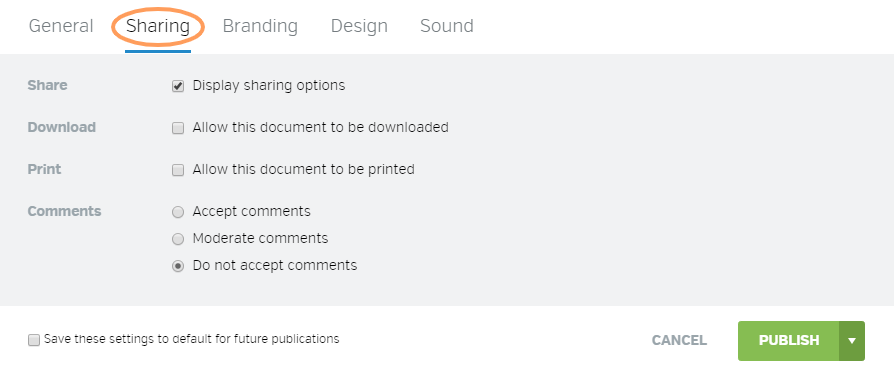
With digital publishing, you have the luxury of choice when it comes to distributing your publication: disseminate your newsletter far and wide, or share it with just a select few. You can target your newsletter to a small audience or make your publication available to everyone. If you change your mind down the road about who can view your newsletter, you can adjust your privacy settings – even after you’ve published the document.
By opting to make your newsletter public, the text may be indexed by search engines. If there is information that you don’t want available to the public, make sure to set your publication to private.
There are a few options if you decide to make your publication private. You can:
Make your publication available to you only.
Make your publication available through a private URL. This means that your publication will only be accessible to those you share the private URL with, it will not appear on the Calaméo website nor will it be indexed by search engines. This option is available to all users.
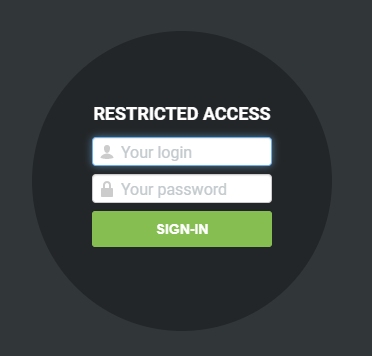
For a more secure private access, PREMIUM and PLATINUM users can make their publications available only to their Subscribers, through username and password access.
Distribution
Finally, a crucial aspect of newsletters is how they are distributed. You’ve chosen who to send your newsletter to, so now it’s time to choose how you’d like to share your newsletter with your audience.
Linking a private URL for your recipients via email or another channel
Try a system of A/B testing to see which distribution methods work for you. Find the best channel for your requirements and your readers’ needs. Sending your publication via the appropriate channel will increase the likelihood that your audience will open your newsletter and actually read it!
Ready to start?
Newsletters are an efficient and fun way to share professional or personal news. Keep employees, students, families, club members, and stakeholders up to date with a digital newsletter hosted on Calaméo. With partss one and two of this series, you should have all the tips you need to create and share an excellent newsletter. Are you ready to start? Try our free 2-week PLATINUM demo and take advantage of all the features Calaméo has to offer!

Why an interactive publication can (actually) generate leads
A digital publication isn’t just a nicer-looking PDF. When it’s built with intent, it becomes a true acquisition asset: it attracts attention (SEO and sharing), keeps people engaged (smooth reading and navigation), and drives action (clicks, form submissions, requests). The difference between a publication that simply “gets views” and one that generates leads usually comes down to one thing: a clear, trackable journey. Readers immediately understand what’s in it for them, click at the right moment, and land on a conversion step that makes sense (a landing page/form or a meeting booking flow), while the data flows cleanly into your stack (analytics + CRM).
Lead gen with an interactive publication means turning readers into qualified contacts through contextual links and CTAs, connected to a landing page/form or a meeting-booking module—then measured with UTMs, KPIs, and analytics (e.g., GA4).
The part most teams miss: integrations matter as much as CTAs
A CTA without an integration is just a click that goes nowhere. A CTA with the right integration creates a lead that lands in the right place, at the right time, with the right context: source, campaign, intent—and a follow-up you can trigger faster. In short: the CTA is what people see. The integration is what makes it work. That’s what separates a publication that feels engaging from one that converts.
Checklist :
1 primary goal per publication (demo, quote request, signup…)
Contextual CTAs (repeat the main CTA 2–3 times max)
UTMs on every channel (email, social, ads, QR, partners)
Measurement via Google Analytics 4 or Matomo
Why choose Calaméo to generate leads from your publications
If you publish PDFs (catalogs, brochures, magazines, reports), the goal isn’t just readability. It’s making them actionable (CTAs that drive to conversion points) and trackable (tracking + attribution), while keeping the workflow simple for your team. With Calaméo, you can turn a publication into a lead-gen entry point thanks to integrations that sit right inside the reading experience: meeting booking (Calendly, HubSpot Meetings, OnceHub, Zoho Bookings), forms (HubSpot Form, Typeform, Jotform, Fillout, Formbricks, Google Forms), analytics (GA4, Matomo), rich content (Embedly, YouTube, Vimeo, TikTok), and even e-commerce (Shopify), depending on your use case.
7 lead gen scenarios (with recommended Calaméo integrations)
An interactive publication can generate leads at different moments in the journey—from very high-intent actions (requesting a quote, booking a meeting) to more long-term goals (newsletter growth, nurturing). The goal isn’t to switch on all seven plays at once. The fastest path is to pick one scenario, execute it cleanly (CTA + integration + tracking), then reuse that model across your future publications.
In each scenario below, you’ll find:
the context and goal (so you know when to use it),
the recommended journey (how readers move from reading to action),
the Calaméo integrations to enable (forms, meetings, analytics, rich content),
the CTAs—and what to measure to improve results.
Each scenario lines up with a stage of the funnel:
A catalog is often viewed by prospects who are already pretty far along. Your priority is to shrink the gap between “I’m interested” and “I’m talking to someone / requesting a quote.” The publication becomes both a showcase and a shortcut to action.
The journey that works
A reader lands on a product line, browses 2–3 pages, then hits a clear CTA (quote or meeting) that sends them to a super simple landing page or straight into booking. At this stage, every bit of friction costs you leads: forms that are too long, pages that feel generic, or a lack of proof.
Integrations to enable (Calaméo)
To convert product interest into leads without friction, pair a “request a quote” CTA with an embedded form—and offer a direct meeting option for the hottest prospects.
HubSpot Form or Jotform (or Typeform): capture the request (product/category, quantity, timeline, contact details) directly inside the publication.
Calendly, HubSpot Meetings, OnceHub, or Zoho Bookings: offer one-click booking to speed conversion (especially effective on “best sellers” and “bundles”).
Google Analytics 4 or Matomo: track CTA clicks and compare channels (email, social, ads, QR, partners) using UTMs.
CTAs (keep them extremely direct)
“Request a quote”
“Talk to an advisor”
“Book a time slot”
What to measure
The most useful trio: CTR, landing/booking conversion, and opportunity conversion rate.
A B2B brochure converts when it drives one clear action: the demo. The best timing is after the promise—then right after proof (case study, results, numbers).
The journey that works
Your brochure reassures (benefits), proves (results), then offers a simple next step: “Book a demo.” The landing page shouldn’t re-explain everything—it should reinforce the promise and make it easy to take action.
Integrations to enable (Calaméo)
The goal is straightforward: move readers from “I get it” to “I’m booking.” A calendar integration inside the publication is often the shortest path.
HubSpot Meetings or Calendly (or OnceHub / Zoho Bookings): book a demo directly inside the publication with a smooth flow.
HubSpot Form or Typeform: if you want to qualify before the demo (team size, need, timeline) via an embedded form.
Google Analytics 4 or Matomo: measure click-through rate, traffic source, and campaign performance.
Recommended CTAs
“Request a demo”
“See an example”
“Talk to an expert”
What to measure
Booked meetings / landing visits, show-up rate (if you track it), and opportunity conversion.
Scenario 3: White paper / report → lead magnet (email-gated access)
Study/report/benchmark formats are great for inbound leads—if the value is obvious. The most effective approach is usually to tease 1–2 insights, then offer full access.
The journey that works
Readers sample the content, see the value, then share an email to access the rest (or annexes/templates). After that, you run a short follow-up sequence to keep momentum.
Integrations to enable (Calaméo)
A lead magnet works when it’s simple: clear promise, short form, measurable follow-up.
Mailchimp or MailerLite: embed a signup form to capture email and feed your list (ideal for nurturing).
HubSpot Form: if you want a more CRM/MQL-style approach with qualification fields.
Fillout, Jotform, or Typeform: if you want a more tailored form (topic choice, role, needs) without hurting the reading experience.
Google Analytics 4 or Matomo: attribute leads to channels (SEO, social, ads, partners) via UTMs.
Recommended CTAs
“Get the full report”
“Access the annexes / templates”
What to measure
Form conversion rate, source quality (UTMs), and follow-up performance if you run sequences.
Scenario 4: Press kit → media requests / partnerships (PR-ready)
Press kits get skimmed quickly. Your goal isn’t to force a full read—it’s to make contact effortless and provide the right assets (logos, photos, media kit).
The journey that works
After the pitch and key stats, you offer a clear press contact (email or mini-form), then easy access to the media kit. The experience should feel simple and professional.
Integrations to enable (Calaméo)
Here the priority is fast, “PR-ready” contact: interview requests, media kit access, partnerships.
Fillout or Typeform (or Google Forms): embedded mini-form (outlet, topic, deadline) to centralize requests without sending readers elsewhere.
Embedly, YouTube, or Vimeo: add “proof” content (interview, coverage, demo, excerpt) to build credibility.
Google Analytics 4 or Matomo: see which channels and pages drive the most press requests.
Recommended CTAs
“Contact the press team”
“Download the media kit”
“Request an interview”
What to measure
Contact clicks, media kit downloads, and UTM sources (press/partners).
Here, the lead is the subscriber. It’s often the highest-ROI long-term play: you build an audience you own instead of relying on social reach.
The journey that works
You deliver value (a strong article), then make a simple promise: “Get the next issue.” The form should stay minimal, and the welcome email should reinforce why it’s worth subscribing.
Integrations to enable (Calaméo)
The biggest lever is capturing subscribers at the right moment (after strong content) without interrupting the flow.
Mailchimp or MailerLite: embed a simple signup form (email + optional interest area) to grow your owned audience.
HubSpot Form: if you want richer data (role, industry) and qualification at signup.
Google Analytics 4 or Matomo: measure click/signup rates by channel and by issue (UTMs).
Recommended CTAs
“Subscribe to the newsletter”
“Get the next issue”
What to measure
Signup conversion, email engagement (opens/clicks), and return readership.
In a sales cycle, an interactive publication is valuable when it helps you follow up better. Send a clear asset, then watch for intent signals (pricing, demo, comparison clicks) to prioritize outreach.
The journey that works
Sales sends a link, the prospect browses, then clicks a key section. Follow-up becomes more relevant because it’s contextual: you’re not “checking in,” you’re responding to real interest.
Integrations to enable (Calaméo)
The goal isn’t more steps—it’s capturing a simple signal (question, request, meeting) and moving quickly into a real conversation.
HubSpot Meetings or Calendly (or OnceHub / Zoho Bookings): embed a “Book a call” CTA at the right moments (objections, pricing, comparisons).
HubSpot Form or Jotform: embed “Ask a question” / “Request a proposal” to turn silent readers into leads.
Google Analytics 4 or Matomo: track clicks on key sections (pricing, comparison, demo) and measure outreach impact (UTMs by sequence).
Recommended CTAs
“Compare plans”
“See the demo”
“Ask a question”
What to measure
Clicks on key sections, follow-up success rate, and pipeline progression.
Scenario 7: Event (trade show, conference) → leads via QR code (ultra-fast conversion)
At events, your publication should be mobile-first and conversion-first. Full reading is secondary—you want a fast lead with clean event attribution.
The journey that works
Scan QR → clear entry page → “Get the presentation” CTA → ultra-short form → instant email. The goal is to capture the lead while the conversation is still warm.
Integrations to enable (Calaméo)
On-site, everything is about friction: a short form or an immediate meeting—measured cleanly with UTMs.
HubSpot Form (or Jotform / Google Forms): ultra-short embedded form (name, email, company) for mobile lead capture.
Calendly or HubSpot Meetings (or Zoho Bookings): “Book a meeting” option for the most qualified visitors—right inside the publication.
Google Analytics 4 or Matomo: clear attribution with utm_source=qr + utm_campaign=event_name, and comparisons across events/booths.
Recommended CTAs
“Get the presentation”
“Book a meeting”
“Request a callback”
What to measure
Scans→views, form conversion, meetings/calls post-event.
Where to place CTAs without “breaking” the reading experience
The goal isn’t to add CTAs everywhere. It’s to place CTAs where intent is strongest: after proof, after an “offer” section, after a case study, or at a decision moment (pricing, bundles). A simple rule works well:
one main CTA repeated 2–3 times in the publication,
a few secondary CTAs only if they don’t dilute the main goal,
a consistent landing experience (same promise, same wording, same benefit).
At a minimum, you should be able to answer: which channel drives the most clicks? which channel drives the most qualified leads? which CTAs perform best? Google Analytics 4 and Matomo are the two Calaméo integrations that cover measurement and attribution.
Common mistakes (often integration-related)
A form that’s too long (especially on mobile)
Reading inside a publication is smooth. If conversion takes 10 fields, you break the flow and lose a big chunk of leads. Capture the essentials first—qualify later.
No UTMs, so no attribution
Without UTMs, you can’t compare email vs social vs QR vs ads. You’ll get leads, but you won’t know what’s worth scaling.
A promise that doesn’t match the landing page or form
If the CTA says “Get the full report” and the next step asks for a generic “Reason for contacting us,” conversion drops. Message match is non-negotiable.
Launching too many scenarios at once
Start with one scenario, then replicate. Performance comes as much from iteration as from your initial choice.
Conclusion
An interactive publication becomes a lead engine when it’s built like a system: CTA → integration → follow-up → improvement. The 7 scenarios above are intentionally easy to reuse: activate one quickly, measure with UTMs and GA4/Matomo, then optimize based on the pages and CTAs that actually perform.
Suggested CTA (adapt as needed) • Button: “Create a lead-focused publication” • Secondary button: “Enable tracking (UTM/GA4)”
FAQ
How do you generate leads with an interactive publication?
An interactive publication generates leads when it guides readers to one clear action (demo, quote, signup) using contextual CTAs connected to a form or a meeting-booking module. To improve performance, tag your links with UTMs, then analyze what converts in Google Analytics 4 or Matomo.
What are the best CTAs to convert inside a publication (catalog, brochure, magazine)?
The best CTAs are simple and action-driven: “Request a demo,” “Request a quote,” “Book a time slot,” “Get the full report,” “Subscribe.” They work best after proof (case study, metrics, offer) and when the next step is perfectly consistent.
Where should you place CTAs in an interactive publication to maximize leads?
Place the main CTA 2–3 times max: (1) after the promise, (2) after proof (case study, metrics), (3) near a decision section (bundles, comparison, contact) or in the final recap. Avoid putting everything on the last page.
Landing page or embedded form: what converts better?
Landing pages convert better when you need to persuade (proof, benefits, case study). Embedded forms convert better when intent is already high (event leads, quick quote, “hot” demo). In both cases, the key is CTA → promise → form consistency and fewer fields.
Which Calaméo integrations should you use to capture leads inside a publication?
For forms: HubSpot Form, Typeform, Jotform, Fillout, Formbricks, Google Forms. For newsletter signup: Mailchimp and MailerLite. For meeting booking: Calendly, HubSpot Meetings, OnceHub, Zoho Bookings. For measurement: Google Analytics 4 and Matomo.
How do you track leads from a publication and know which channel converts (email, social, QR, ads)?
Add UTMs to every distribution link (and ideally to key CTAs). In GA4 (or Matomo), you can compare conversions by source, medium, and campaign. Without UTMs, you lose the ability to prioritize and scale.
What metrics should you track to optimize a lead-focused publication?
The most actionable metrics are: views/readers, CTA clicks, CTR, conversions (forms or bookings), and UTM sources (email, social, QR, ads). The goal is to identify what triggers action—then repeat that pattern in future publications.
What mistakes kill conversion on an interactive publication?
Most often: too many CTAs (unclear goal), forms that are too long, no UTMs, a landing page that doesn’t match (no message match), and no iteration. Often, moving a CTA, simplifying the form, and tightening the promise is enough to boost conversion.
In the world of social media, Pinterest stands out. Instead of a chronological feed of posts, Pinterest shows its users a mix of content curated to reflect their interests.
Pinterest users can follow friends or topics like “Travel,” search for more specific subjects and create their own posts called “pins.” Then they save ideas for later by organizing posts on personalized boards. And there are a lot of them: more than 200 million Pinterest users have posted over 100 billion pins.
Although Pinterest is a little bit different it can be a great place to promote your business’s online publications. In this article we’ll explain three opportunities for digital publishers on Pinterest and how you can take advantage of them.
Drive Traffic
Don’t underestimate the power of pins to drive traffic: in 2017, Pinterest was the biggest social source of referrals after Facebook and has continued to show impressive growth. Creating pins that feature your publications is an easy way to help Pinterest users discover them.
First set up a Pinterest profile, then get pinning! Since each pin on Pinterest has an image, a short description and a link, every post is a golden opportunity to bring more readers to your publication. Here’s an example from Wedding Vibes pinned to Calaméo’s page:
You can create posts in Pinterest or pin a publication directly from Calaméo—it’s a breeze! First, go to your account’s Publications tab, select Share for the title you want to pin and click on the Pinterest icon. This will take you to Pinterest, where you’ll be able to choose an image for your pin and add a description.
We recommend that digital publishers dedicate a board on their Pinterest profile to pinning every issue of their publication. This example shows how 95° Magazine encourages curious Pinterest users to browse its archives:
Get Audience Insights
Posting your digital publications to Pinterest as pins can grow your audience by bringing in new readers who find them in their feeds. But establishing a Pinterest profile for your business can bring you valuable insights about your existing audience, too.
Chances are, your publications may already have been shared on Pinterest by your readers! Find out with the advanced statistics in our PLATINUM plan: our analytics include a breakdown of your publications’ social media shares by platform, so you can see how many times they have already been pinned.
The results might surprise you!
To get more information about your audience on Pinterest, we suggest that you set up your account with a business profile. This gives you access to statistics about your audience on Pinterest, including gender, location and interests. Armed with insights about your Calaméo readership and Pinterest reach, you can tailor your online publications to build stronger connections with your audience.
💡TIP: Connecting your Calaméo account to Google Analytics lets you analyze traffic from Pinterest to your publications in detail. Upgrade to PLATINUM to enjoy this feature!
Engage New Clients
Pinterest is a destination for users researching purchases. It has been estimated that 87 percent of the social network’s users have bought something that they saw on Pinterest first. This makes Pinterest a natural platform for posting products, but it’s also a reason to post inspiring content. Inspired users are more likely to become readers, who are more likely to become customers.
To make the most out of your business’s Pinterest presence, pin a variety of interesting material. Pinterest users look for vacation and travel planning, recipe ideas, professional development materials, home design and more. Try posting individual features, photos or articles from your publications to different boards, like in the example below from Hamilton Island:
Organizing your content by subject maximizes the appeal to potential readers and helps engage potential buyers.
These basics should give you some ideas for how to get started sharing your business’s digital publiations on Pinterest. We can’t wait to see you there!
We love covering social media here on the blog. Check out our tips for digital publishers on Facebook and YouTube, or have a look at our guide to polished shares on any social media network.