Choosing a white label publishing platform for your online documents can have many benefits for your business. Read on to learn more about digital publishing in white label and the solutions offered by Calaméo.
What is white label publishing?
White label, or private label, describes a product that does not have branding attached to it before use. This can include the company name, product name, logo and any other features that connect it to the maker. In most cases, users of white label products then add their own branding to make it their own.
A white label publishing platform lets users upload and share documents without outside branding and advertising. For example, Calaméo’s digital publishing platform offers a white label feature for professional users. When you publish in white label, Calaméo logos do not appear on the publication viewer. In addition, viewer menus don’t display third-party content.
The end result? No mention of Calaméo anywhere inside the viewer.
Why should I choose a publishing platform with white label?
There are many good reasons to select a white label publishing platform for your online documents.
Discretion
First, you remove any distractions from the publication viewer and keep all the focus on your documents. Rather than call attention to tools your business uses, white label provides a discreet solution.
Rebranding
Next, the best white label publishing platforms will allow you to rebrand the document viewer as your own. Why settle for a neutral reading experience when you can take your publications to the next level? Plus, adding your company’s own logo is simple with Calaméo. Thanks to our awesome Elements feature, it only takes a few clicks to upload and apply a logo to your digital publications.
Flexibility
In fact, the biggest advantage of a white label publishing platform is flexibility. Because the solution is meant to be adapted to your needs, look for tools that enable you to customize your publications. For instance, Calaméo’s custom theme feature lets you define practically every detail of the viewer, from color and design to languages and behaviors. Go ahead—make it your own!
How can I publish in white label?
If you’re ready to start publishing your online documents in white label, then it’s time to join Calaméo. Signing up is free and easy, and you can explore all of the ways that digital publishing on Calaméo is best in class right away with our BASIC plan.
Go pro
Publishing in white label is a feature of our platform’s PLATINUM plan. Created specially for professional users, the PLATINUM offer on Calaméo is packed with essential options like custom account URL and direct downloads. Once you upgrade to PLATINUM, you’ll automatically enjoy a white label publication viewer. In other words, there’s no box to check or submenu to navigate—just your documents, ready to go in white label.
Embed
However, to avoid referencing Calaméo in the publication URL, you should embed it in your website or blog. By opting for an embed in “Publication” view, you can share via your own URL. Check out our Complete Guide to Embeds for an illustrated tutorial and extra tips.
💡 TIP: Use the “shareurl” parameter in the embed code to specify your own URL for your readers to share.
What will my publications look like in white label?
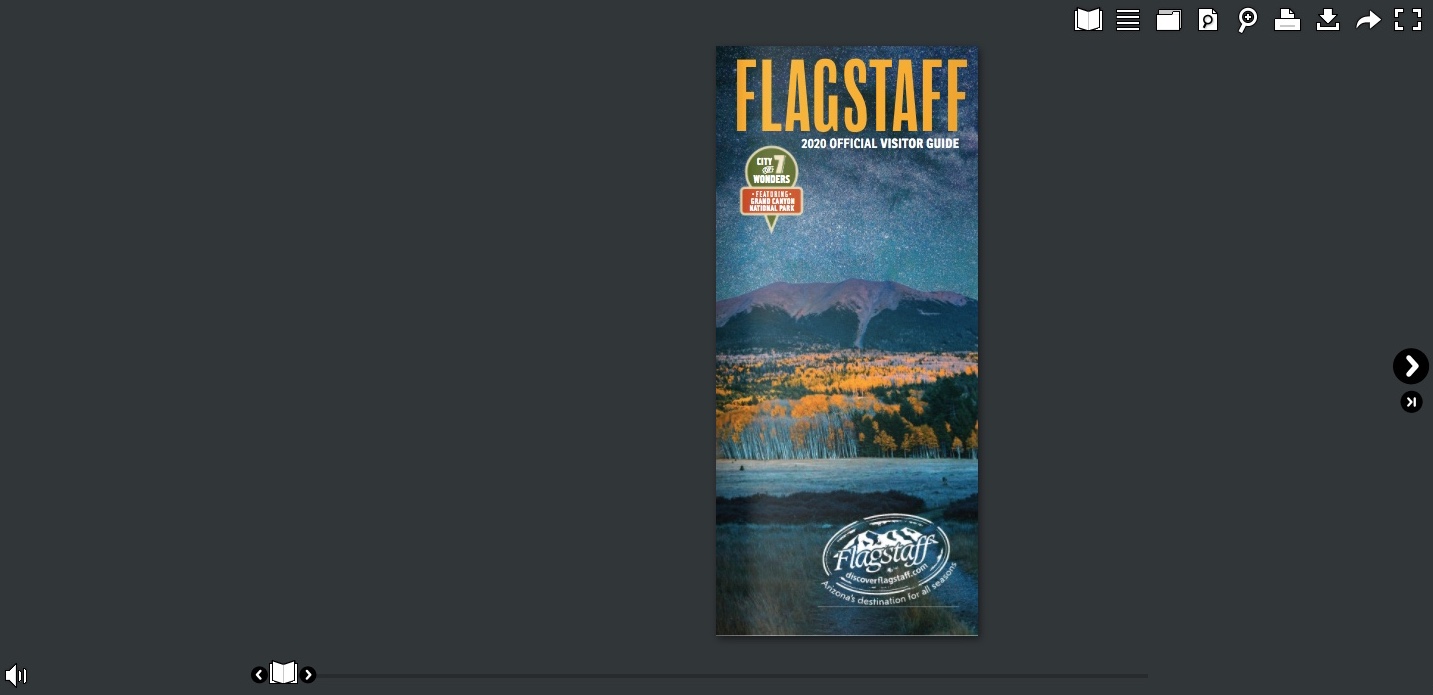
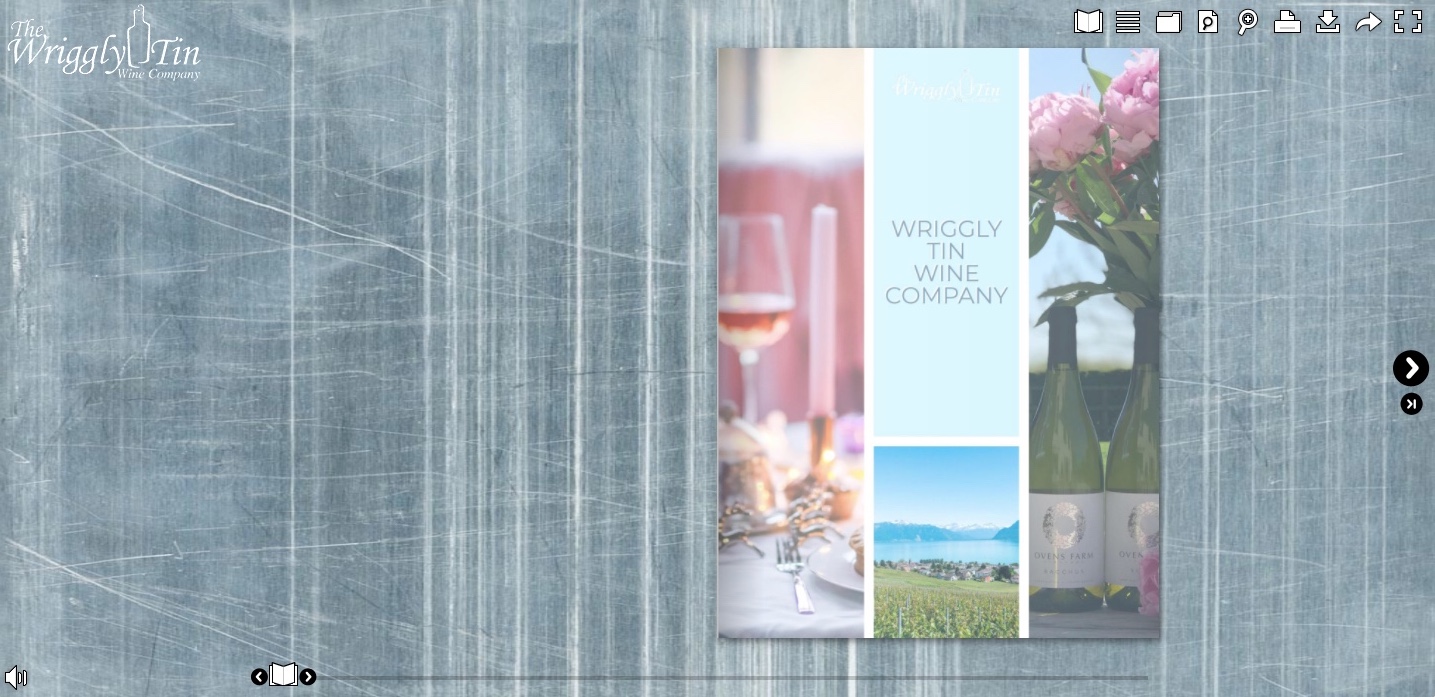
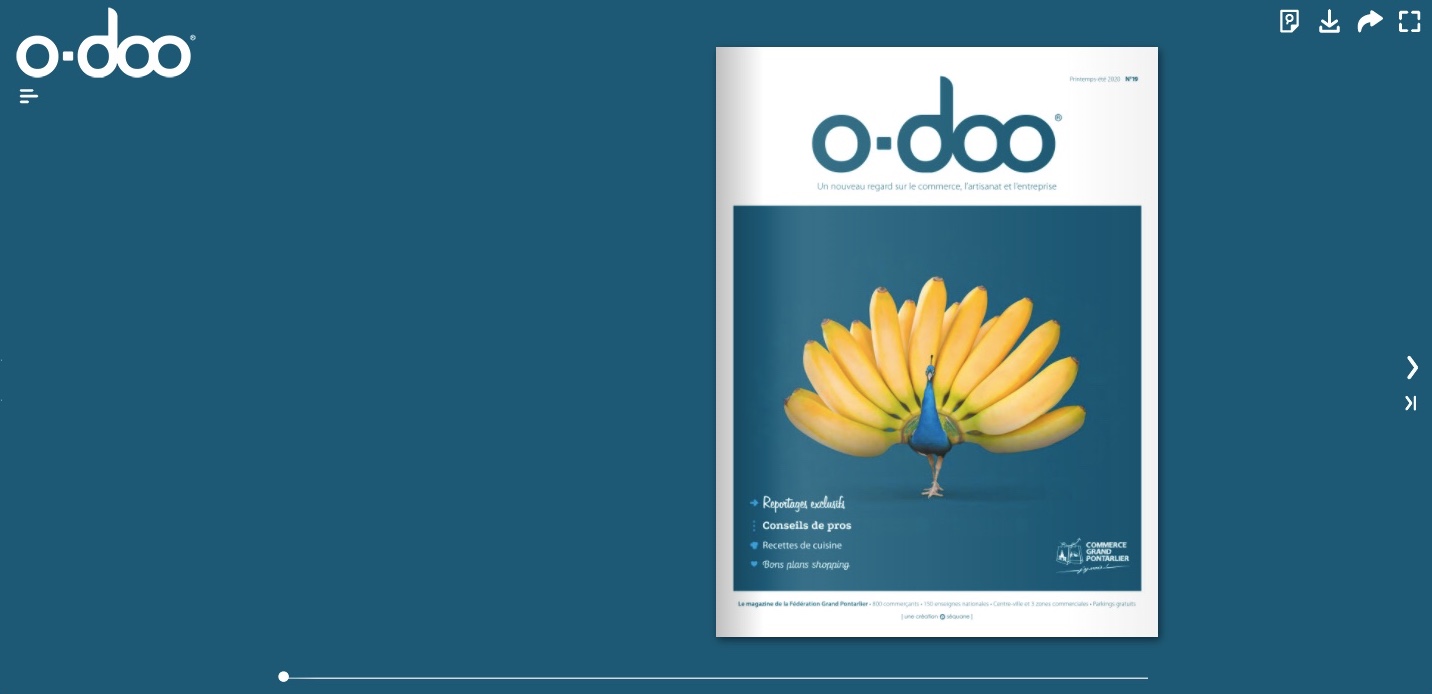
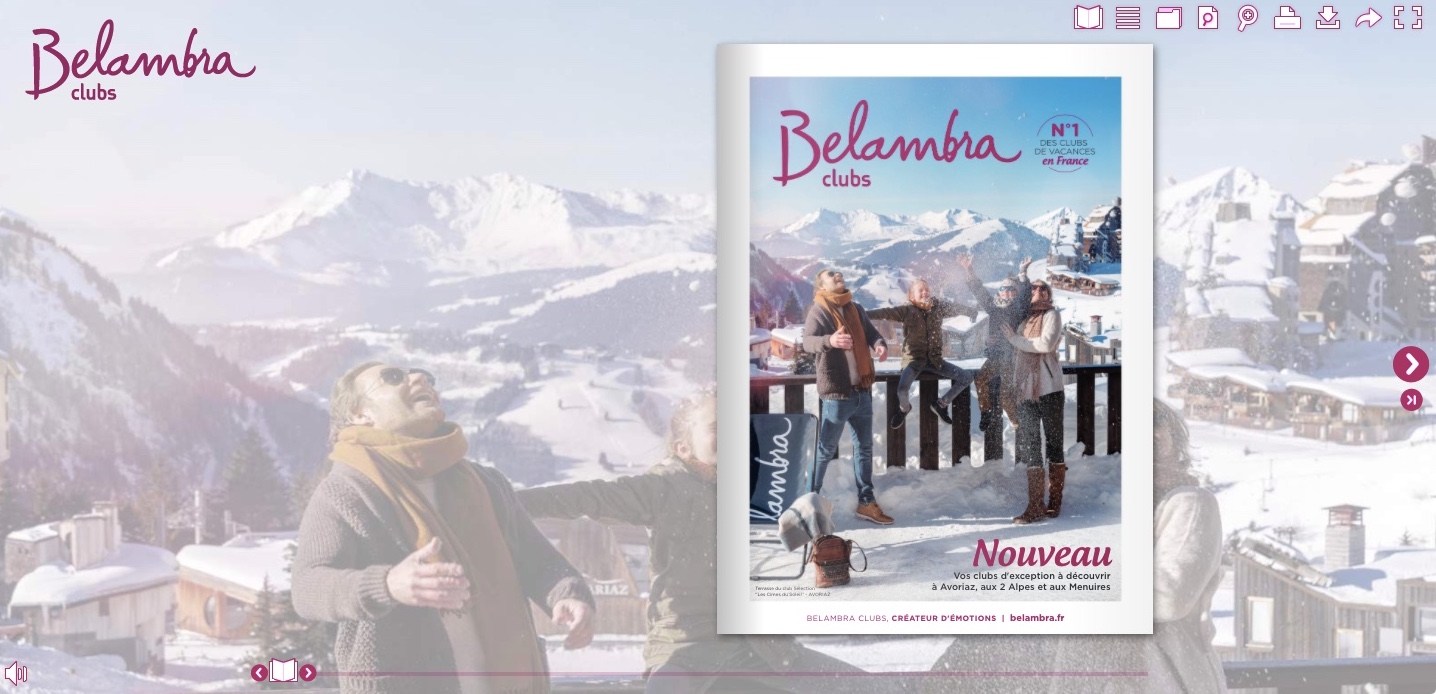
Most important of all is how your documents actually look with a white label publishing platform. Here’s an example of a publication in our white labeled viewer on Calaméo:
Interested in finding out how publishing in white label works for your documents? Request your 14-day free PLATINUM demo today and put our professional features to the test.
Why an interactive publication can (actually) generate leads
A digital publication isn’t just a nicer-looking PDF. When it’s built with intent, it becomes a true acquisition asset: it attracts attention (SEO and sharing), keeps people engaged (smooth reading and navigation), and drives action (clicks, form submissions, requests). The difference between a publication that simply “gets views” and one that generates leads usually comes down to one thing: a clear, trackable journey. Readers immediately understand what’s in it for them, click at the right moment, and land on a conversion step that makes sense (a landing page/form or a meeting booking flow), while the data flows cleanly into your stack (analytics + CRM).
Lead gen with an interactive publication means turning readers into qualified contacts through contextual links and CTAs, connected to a landing page/form or a meeting-booking module—then measured with UTMs, KPIs, and analytics (e.g., GA4).
The part most teams miss: integrations matter as much as CTAs
A CTA without an integration is just a click that goes nowhere. A CTA with the right integration creates a lead that lands in the right place, at the right time, with the right context: source, campaign, intent—and a follow-up you can trigger faster. In short: the CTA is what people see. The integration is what makes it work. That’s what separates a publication that feels engaging from one that converts.
Checklist :
1 primary goal per publication (demo, quote request, signup…)
Contextual CTAs (repeat the main CTA 2–3 times max)
UTMs on every channel (email, social, ads, QR, partners)
Measurement via Google Analytics 4 or Matomo
Why choose Calaméo to generate leads from your publications
If you publish PDFs (catalogs, brochures, magazines, reports), the goal isn’t just readability. It’s making them actionable (CTAs that drive to conversion points) and trackable (tracking + attribution), while keeping the workflow simple for your team. With Calaméo, you can turn a publication into a lead-gen entry point thanks to integrations that sit right inside the reading experience: meeting booking (Calendly, HubSpot Meetings, OnceHub, Zoho Bookings), forms (HubSpot Form, Typeform, Jotform, Fillout, Formbricks, Google Forms), analytics (GA4, Matomo), rich content (Embedly, YouTube, Vimeo, TikTok), and even e-commerce (Shopify), depending on your use case.
7 lead gen scenarios (with recommended Calaméo integrations)
An interactive publication can generate leads at different moments in the journey—from very high-intent actions (requesting a quote, booking a meeting) to more long-term goals (newsletter growth, nurturing). The goal isn’t to switch on all seven plays at once. The fastest path is to pick one scenario, execute it cleanly (CTA + integration + tracking), then reuse that model across your future publications.
In each scenario below, you’ll find:
the context and goal (so you know when to use it),
the recommended journey (how readers move from reading to action),
the Calaméo integrations to enable (forms, meetings, analytics, rich content),
the CTAs—and what to measure to improve results.
Each scenario lines up with a stage of the funnel:
A catalog is often viewed by prospects who are already pretty far along. Your priority is to shrink the gap between “I’m interested” and “I’m talking to someone / requesting a quote.” The publication becomes both a showcase and a shortcut to action.
The journey that works
A reader lands on a product line, browses 2–3 pages, then hits a clear CTA (quote or meeting) that sends them to a super simple landing page or straight into booking. At this stage, every bit of friction costs you leads: forms that are too long, pages that feel generic, or a lack of proof.
Integrations to enable (Calaméo)
To convert product interest into leads without friction, pair a “request a quote” CTA with an embedded form—and offer a direct meeting option for the hottest prospects.
HubSpot Form or Jotform (or Typeform): capture the request (product/category, quantity, timeline, contact details) directly inside the publication.
Calendly, HubSpot Meetings, OnceHub, or Zoho Bookings: offer one-click booking to speed conversion (especially effective on “best sellers” and “bundles”).
Google Analytics 4 or Matomo: track CTA clicks and compare channels (email, social, ads, QR, partners) using UTMs.
CTAs (keep them extremely direct)
“Request a quote”
“Talk to an advisor”
“Book a time slot”
What to measure
The most useful trio: CTR, landing/booking conversion, and opportunity conversion rate.
A B2B brochure converts when it drives one clear action: the demo. The best timing is after the promise—then right after proof (case study, results, numbers).
The journey that works
Your brochure reassures (benefits), proves (results), then offers a simple next step: “Book a demo.” The landing page shouldn’t re-explain everything—it should reinforce the promise and make it easy to take action.
Integrations to enable (Calaméo)
The goal is straightforward: move readers from “I get it” to “I’m booking.” A calendar integration inside the publication is often the shortest path.
HubSpot Meetings or Calendly (or OnceHub / Zoho Bookings): book a demo directly inside the publication with a smooth flow.
HubSpot Form or Typeform: if you want to qualify before the demo (team size, need, timeline) via an embedded form.
Google Analytics 4 or Matomo: measure click-through rate, traffic source, and campaign performance.
Recommended CTAs
“Request a demo”
“See an example”
“Talk to an expert”
What to measure
Booked meetings / landing visits, show-up rate (if you track it), and opportunity conversion.
Scenario 3: White paper / report → lead magnet (email-gated access)
Study/report/benchmark formats are great for inbound leads—if the value is obvious. The most effective approach is usually to tease 1–2 insights, then offer full access.
The journey that works
Readers sample the content, see the value, then share an email to access the rest (or annexes/templates). After that, you run a short follow-up sequence to keep momentum.
Integrations to enable (Calaméo)
A lead magnet works when it’s simple: clear promise, short form, measurable follow-up.
Mailchimp or MailerLite: embed a signup form to capture email and feed your list (ideal for nurturing).
HubSpot Form: if you want a more CRM/MQL-style approach with qualification fields.
Fillout, Jotform, or Typeform: if you want a more tailored form (topic choice, role, needs) without hurting the reading experience.
Google Analytics 4 or Matomo: attribute leads to channels (SEO, social, ads, partners) via UTMs.
Recommended CTAs
“Get the full report”
“Access the annexes / templates”
What to measure
Form conversion rate, source quality (UTMs), and follow-up performance if you run sequences.
Scenario 4: Press kit → media requests / partnerships (PR-ready)
Press kits get skimmed quickly. Your goal isn’t to force a full read—it’s to make contact effortless and provide the right assets (logos, photos, media kit).
The journey that works
After the pitch and key stats, you offer a clear press contact (email or mini-form), then easy access to the media kit. The experience should feel simple and professional.
Integrations to enable (Calaméo)
Here the priority is fast, “PR-ready” contact: interview requests, media kit access, partnerships.
Fillout or Typeform (or Google Forms): embedded mini-form (outlet, topic, deadline) to centralize requests without sending readers elsewhere.
Embedly, YouTube, or Vimeo: add “proof” content (interview, coverage, demo, excerpt) to build credibility.
Google Analytics 4 or Matomo: see which channels and pages drive the most press requests.
Recommended CTAs
“Contact the press team”
“Download the media kit”
“Request an interview”
What to measure
Contact clicks, media kit downloads, and UTM sources (press/partners).
Here, the lead is the subscriber. It’s often the highest-ROI long-term play: you build an audience you own instead of relying on social reach.
The journey that works
You deliver value (a strong article), then make a simple promise: “Get the next issue.” The form should stay minimal, and the welcome email should reinforce why it’s worth subscribing.
Integrations to enable (Calaméo)
The biggest lever is capturing subscribers at the right moment (after strong content) without interrupting the flow.
Mailchimp or MailerLite: embed a simple signup form (email + optional interest area) to grow your owned audience.
HubSpot Form: if you want richer data (role, industry) and qualification at signup.
Google Analytics 4 or Matomo: measure click/signup rates by channel and by issue (UTMs).
Recommended CTAs
“Subscribe to the newsletter”
“Get the next issue”
What to measure
Signup conversion, email engagement (opens/clicks), and return readership.
In a sales cycle, an interactive publication is valuable when it helps you follow up better. Send a clear asset, then watch for intent signals (pricing, demo, comparison clicks) to prioritize outreach.
The journey that works
Sales sends a link, the prospect browses, then clicks a key section. Follow-up becomes more relevant because it’s contextual: you’re not “checking in,” you’re responding to real interest.
Integrations to enable (Calaméo)
The goal isn’t more steps—it’s capturing a simple signal (question, request, meeting) and moving quickly into a real conversation.
HubSpot Meetings or Calendly (or OnceHub / Zoho Bookings): embed a “Book a call” CTA at the right moments (objections, pricing, comparisons).
HubSpot Form or Jotform: embed “Ask a question” / “Request a proposal” to turn silent readers into leads.
Google Analytics 4 or Matomo: track clicks on key sections (pricing, comparison, demo) and measure outreach impact (UTMs by sequence).
Recommended CTAs
“Compare plans”
“See the demo”
“Ask a question”
What to measure
Clicks on key sections, follow-up success rate, and pipeline progression.
Scenario 7: Event (trade show, conference) → leads via QR code (ultra-fast conversion)
At events, your publication should be mobile-first and conversion-first. Full reading is secondary—you want a fast lead with clean event attribution.
The journey that works
Scan QR → clear entry page → “Get the presentation” CTA → ultra-short form → instant email. The goal is to capture the lead while the conversation is still warm.
Integrations to enable (Calaméo)
On-site, everything is about friction: a short form or an immediate meeting—measured cleanly with UTMs.
HubSpot Form (or Jotform / Google Forms): ultra-short embedded form (name, email, company) for mobile lead capture.
Calendly or HubSpot Meetings (or Zoho Bookings): “Book a meeting” option for the most qualified visitors—right inside the publication.
Google Analytics 4 or Matomo: clear attribution with utm_source=qr + utm_campaign=event_name, and comparisons across events/booths.
Recommended CTAs
“Get the presentation”
“Book a meeting”
“Request a callback”
What to measure
Scans→views, form conversion, meetings/calls post-event.
Where to place CTAs without “breaking” the reading experience
The goal isn’t to add CTAs everywhere. It’s to place CTAs where intent is strongest: after proof, after an “offer” section, after a case study, or at a decision moment (pricing, bundles). A simple rule works well:
one main CTA repeated 2–3 times in the publication,
a few secondary CTAs only if they don’t dilute the main goal,
a consistent landing experience (same promise, same wording, same benefit).
At a minimum, you should be able to answer: which channel drives the most clicks? which channel drives the most qualified leads? which CTAs perform best? Google Analytics 4 and Matomo are the two Calaméo integrations that cover measurement and attribution.
Common mistakes (often integration-related)
A form that’s too long (especially on mobile)
Reading inside a publication is smooth. If conversion takes 10 fields, you break the flow and lose a big chunk of leads. Capture the essentials first—qualify later.
No UTMs, so no attribution
Without UTMs, you can’t compare email vs social vs QR vs ads. You’ll get leads, but you won’t know what’s worth scaling.
A promise that doesn’t match the landing page or form
If the CTA says “Get the full report” and the next step asks for a generic “Reason for contacting us,” conversion drops. Message match is non-negotiable.
Launching too many scenarios at once
Start with one scenario, then replicate. Performance comes as much from iteration as from your initial choice.
Conclusion
An interactive publication becomes a lead engine when it’s built like a system: CTA → integration → follow-up → improvement. The 7 scenarios above are intentionally easy to reuse: activate one quickly, measure with UTMs and GA4/Matomo, then optimize based on the pages and CTAs that actually perform.
Suggested CTA (adapt as needed) • Button: “Create a lead-focused publication” • Secondary button: “Enable tracking (UTM/GA4)”
FAQ
How do you generate leads with an interactive publication?
An interactive publication generates leads when it guides readers to one clear action (demo, quote, signup) using contextual CTAs connected to a form or a meeting-booking module. To improve performance, tag your links with UTMs, then analyze what converts in Google Analytics 4 or Matomo.
What are the best CTAs to convert inside a publication (catalog, brochure, magazine)?
The best CTAs are simple and action-driven: “Request a demo,” “Request a quote,” “Book a time slot,” “Get the full report,” “Subscribe.” They work best after proof (case study, metrics, offer) and when the next step is perfectly consistent.
Where should you place CTAs in an interactive publication to maximize leads?
Place the main CTA 2–3 times max: (1) after the promise, (2) after proof (case study, metrics), (3) near a decision section (bundles, comparison, contact) or in the final recap. Avoid putting everything on the last page.
Landing page or embedded form: what converts better?
Landing pages convert better when you need to persuade (proof, benefits, case study). Embedded forms convert better when intent is already high (event leads, quick quote, “hot” demo). In both cases, the key is CTA → promise → form consistency and fewer fields.
Which Calaméo integrations should you use to capture leads inside a publication?
For forms: HubSpot Form, Typeform, Jotform, Fillout, Formbricks, Google Forms. For newsletter signup: Mailchimp and MailerLite. For meeting booking: Calendly, HubSpot Meetings, OnceHub, Zoho Bookings. For measurement: Google Analytics 4 and Matomo.
How do you track leads from a publication and know which channel converts (email, social, QR, ads)?
Add UTMs to every distribution link (and ideally to key CTAs). In GA4 (or Matomo), you can compare conversions by source, medium, and campaign. Without UTMs, you lose the ability to prioritize and scale.
What metrics should you track to optimize a lead-focused publication?
The most actionable metrics are: views/readers, CTA clicks, CTR, conversions (forms or bookings), and UTM sources (email, social, QR, ads). The goal is to identify what triggers action—then repeat that pattern in future publications.
What mistakes kill conversion on an interactive publication?
Most often: too many CTAs (unclear goal), forms that are too long, no UTMs, a landing page that doesn’t match (no message match), and no iteration. Often, moving a CTA, simplifying the form, and tightening the promise is enough to boost conversion.
Creating a professional digital publication shouldn’t take hours. With Calaméo, just a few minutes are enough to turn a simple PDF into an interactive and easy-to-share reading experience.
Here’s our quick guide to publishing your brochure in less than 10 minutes.
1. Prepare your PDF
Before publishing your document, make sure your file is ready to be viewed online:
pages in the correct order,
high-quality visuals,
text that is easy to read on mobile,
an optimized file size.
Whether it’s a business brochure, magazine, portfolio, guide, or catalog, every great digital publication starts with a well-prepared PDF.
2. Upload your document to Calaméo
Log in to your account and click on “Publish”.
Simply upload your PDF file: Calaméo automatically converts it into a digital flipbook publication.
In just a few moments, your document comes to life with a smooth interactive viewer accessible on desktop, tablet, and smartphone.
3. Customize your publication
Once your document is published, you can enhance the reading experience with several options:




 Try