When you’ve worked hard on creating a great publication, having more choices is always a good thing. That’s why we’re so pleased to announce that there is now a new option for including video in your digital publications on Calaméo!
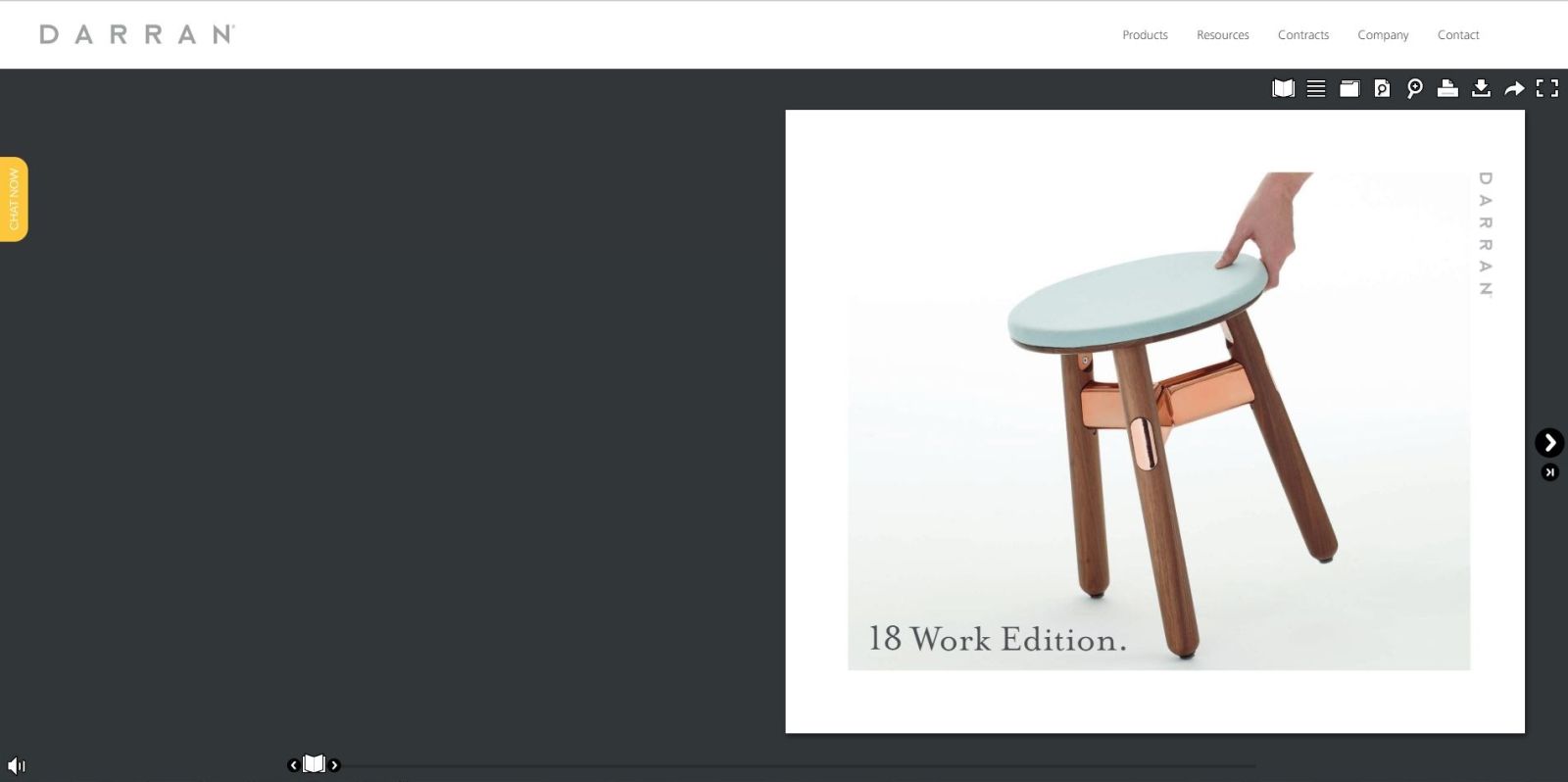
From now on, you will be able to embed video elements that play directly on the page of your publication without opening a pop-up overlay. Your readers can move seamlessly from browsing an article to watching a video clip and back again.
All you need to do is open your publication in the Calaméo Editor, go to the page you want to modify and select the video icon.
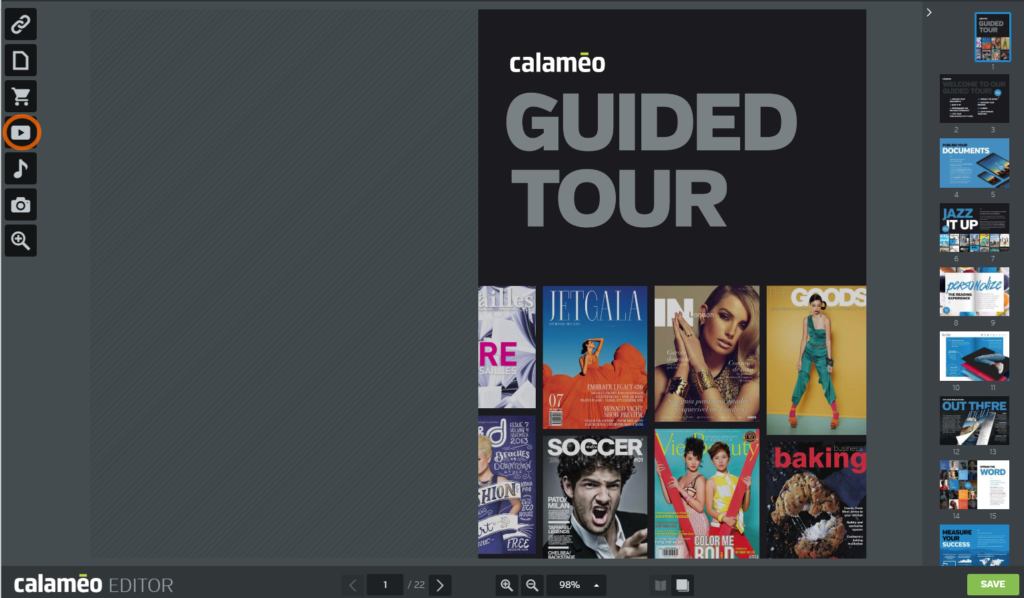
Adjust the blue zone so that it appears where you wish the video to play and add the video URL and text label in the video properties window. Then, choose “Embedded” from the Display mode drop-down menu.
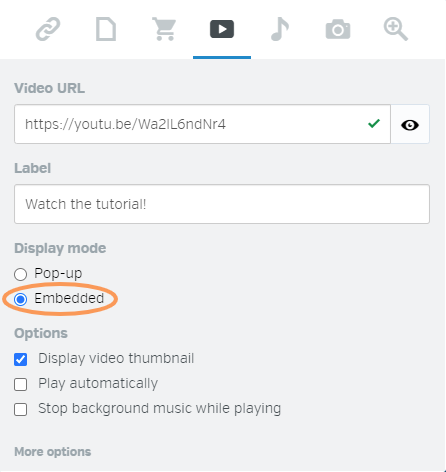
You can also choose whether you would like to display the video thumbnail, begin playing the video automatically when the reader turns to this page and mute any background music while the video plays.
💡 TIP: Want embedded videos to play with sound? Don’t opt for autoplay. By default, your readers must click for sound on videos that start playing automatically.
Save your work and view your publication to see the video embedded right on the page!
Of course, you’ll still be able to choose the classic pop-up player for your videos. Just select “Pop-up” from the Display mode options when adding video to your publication in the Calaméo Editor.
Looking to get a handle on your video strategy? Check out our guide to promoting content on YouTube. Then visit our YouTube channel to watch tutorials on using our Editor and more.

In the digital age, virtual libraries have become essential tools for organizing, sharing and accessing online resources. Thanks to technological advances and new solutions such as the Library Widget from Calaméo, it’s easier than ever to create a virtual library that meets users’ modern needs. In this article, we’ll explore the key steps to creating your own virtual library and show you how to make the most of the tools available.
A virtual library is an organized collection of digital documents, accessible online. Unlike ordinary libraries, virtual libraries offer unlimited accessibility, simplified content management and the ability to adapt to the needs of their users.
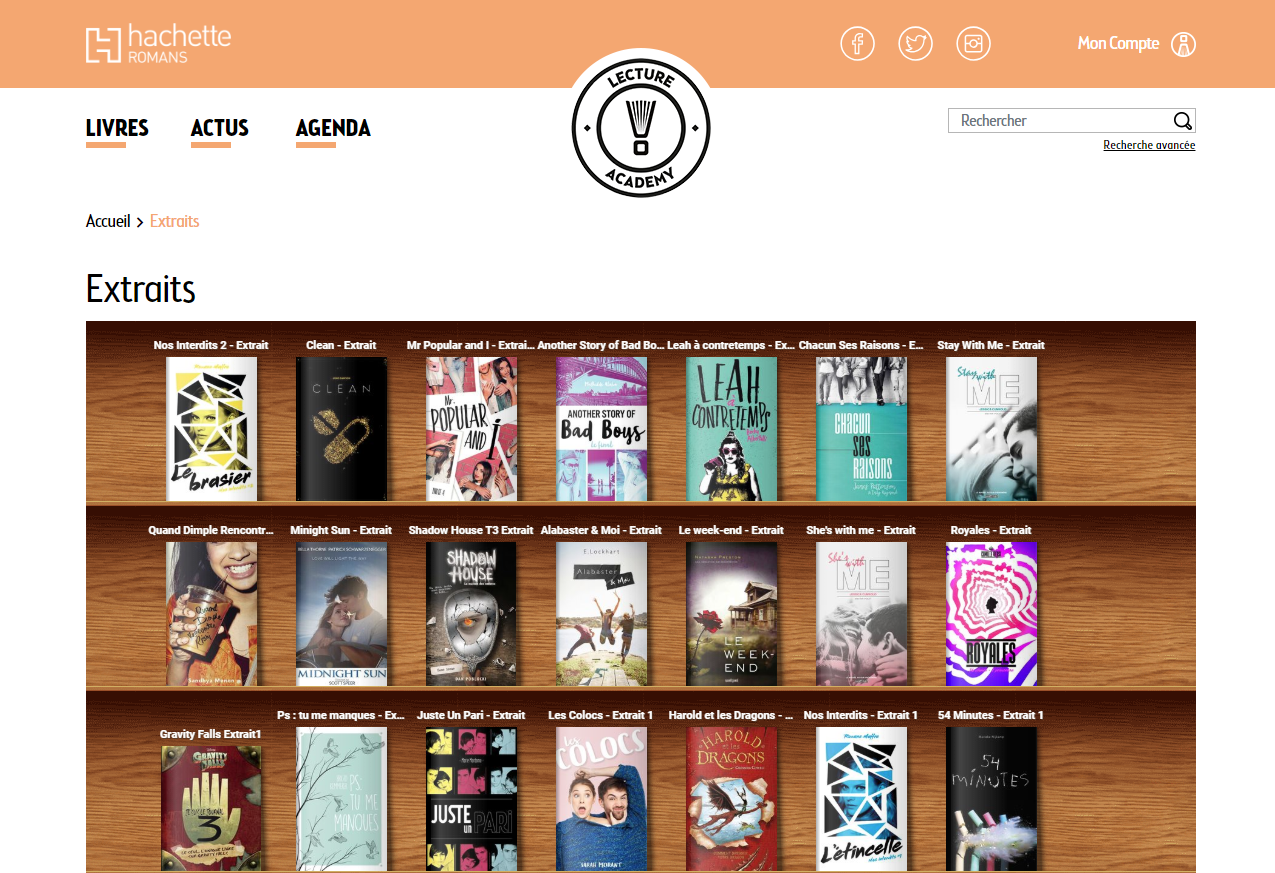
Here’s an example of a virtual library created with Calaméo:
Why you should create a virtual library: the major advantages
Optimized visual display
One of the greatest advantages of creating a virtual library is the simple, interactive way of showcasing your publications. Whether you want to display every issue of your magazine or a varied collection of documents, the virtual library enhances the visual impact of your content. Thanks to intuitive navigation, visitors can easily browse your virtual shelves and click on a cover to open the publication in full screen or in a new window. They can then easily return to your virtual library once they’ve finished reading.
Automatic updates
Automatic updates make it easy to manage your virtual library. Every time you add a new publication to your Library Folder on Calaméo, it instantly appears on your virtual shelves. By choosing to create a virtual library, you’re freed from repetitive manual management tasks. Removing publications is just as easy: mark them as private or move them to another Folder to adjust their accessibility with a few clicks.
In-depth analytics
When you create a virtual library, you also benefit from detailed analytics on how your audience interacts with your publications. You can track views, link clicks, downloads and traffic origin. These analyses enable you to adapt your content to better meet your audience’s expectations and improve engagement with your virtual library.
Why choose Calaméo to create your virtual library?
To create an effective virtual library, it’s essential to choose a platform tailored to your needs. Several solutions are available on the market, but the Library Widget from Calaméo stands out for its ease of use, intuitive interface and numerous advanced features. This solution is ideal for those who want to create a virtual library quickly and without any particular technical skills.
By using this feature, you benefit from :
Easy embeding on your website: Calaméo enables effortless embeding of your virtual library on your website, which means you can showcase your digital resources in a harmonious, professional way.
Visual customization to match your brand: Thanks to a variety of customization options, you can adapt the appearance of your library to reflect your brand identity and blend seamlessly into the pages of your website.
Numerous options for sharing and distributing your publications: With Calaméo, you can easily share your publications on social networks or by e-mail. This enables you to reach a wider audience and increase the visibility of your resources.
Step 1: Publish and organize your documents on Calaméo
Organizing your documents is a key step in ensuring an optimal user experience and smooth navigation in your virtual library. To ensure that your publications are easily accessible and well structured, it’s important to prepare them well before publishing them on Calaméo.
Start by publishing your digital documents on Calaméo. Each publication should be accompanied by a catchy, descriptive title, incorporating relevant keywords linked to your content. Don’t forget to fill in the description of each publication with clear, engaging summaries that will encourage users to discover your content.
Next, organize your publications by placing them in Folders or adding them to a Favorites list. For these documents to be visible in your virtual library, it is essential that Folders and publications are defined as public.
NOTE: Private publications will not be displayed in the Library Widget, giving you total control over what is visible to your users.
All you have to do is select the Folder (or favorites list) whose contents you wish to display in your virtual library. All public publications in this folder will automatically appear in your library, making it easy to manage your documents without any extra effort.
Step 2: Customize the appearance of your Library Widget
Personalizing your virtual library is essential to ensuring a user experience that reflects your brand identity. Thanks to the many customization options offered by the Calaméo Library Widget, you can adjust the appearance of your library so that it blends seamlessly with your website while reinforcing your brand image.
You can adjust the following elements of your Library Widget:
The texture or background color of the library to match the style of your website.
The number of shelves to display to visually organize your publications.
The size of your publication thumbnails for optimized display.
The information to be displayed for each publication (such as title or description).
The order in which your publications appear, allowing you to highlight certain strategic documents.
The way publications open (in a new window or full screen).
You can also adjust the appearance of thumbnails by choosing, for example, a shadow or other visual effects that enhance the impact of your publications. These subtle details play a key role in enhancing the aesthetics and navigation of your virtual library.
TIP: While you’re customizing the look and feel of your Calaméo Library Widget, you can see the changes in real time thanks to the preview function. This allows you to test different configurations and ensure that each modification fits perfectly into your overall site before finalizing the upload.
By customizing your virtual library with these options, you offer your users a fluid, visually appealing experience, while reinforcing your brand identity at every stage.
Step 3: Embed the Calaméo Library Widget into your website
Once you’ve carefully customized the look and feel of your virtual library, the next step is to embed it directly into your website. This step is crucial to making your virtual library accessible to your users and enabling smooth navigation between your content and the other pages of your site.
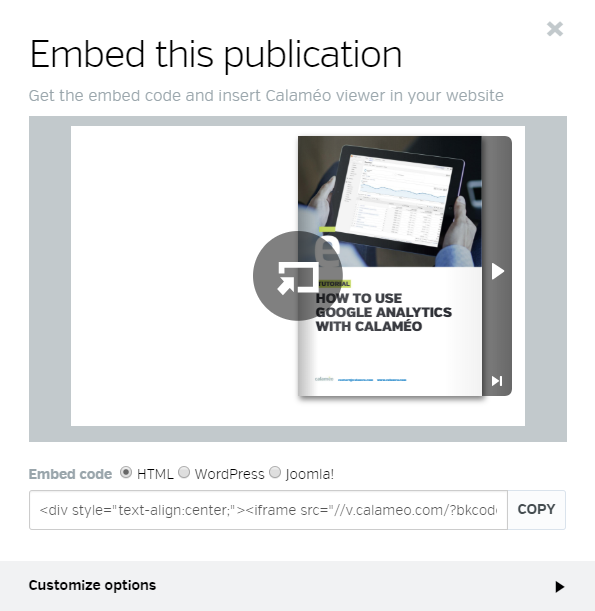
Embeding the Calaméo Library Widget is quick and easy, and you have several options for doing so. Once you’re happy with the configuration and design of your virtual library, simply copy the embed code provided by Calaméo. This code can be inserted on any page of your website, whether on a page dedicated to your publications or another section of your site.
This intuitive process makes it easy to present your digital document collections in a professional, interactive way.
READ MORE: If you need help with embedding, resources such as the tutorial or the support pagein the Calaméo Help Center are available to guide you step by step.
By embedding a Calaméo library on your site, you enable your visitors to easily explore your digital publications directly from your platform, without having to navigate to another site. This not only enhances the user experience, but also reinforces the consistency of your brand image by providing seamless access to your documents in a controlled environment.
Embeding requires no advanced technical skills and, once the code has been inserted, your virtual library will be automatically updated every time you publish new documents or modify existing ones. So you don’t have to worry about manually keeping your library up to date, which saves you and your team valuable time.
With just a few clicks, you can create a dynamic, scalable virtual library that blends seamlessly with your website, while enriching your users’ experience and facilitating access to your digital content.
Conclusion
Creating a virtual library represents a unique opportunity to modernize your content management and improve access to your digital resources. With the Calaméo Library Widget, you have a powerful and flexible tool at your disposal to set up a virtual library perfectly adapted to your needs.
Don’t wait any longer, transform the way you share information by starting to build your virtual library with Calaméo today!
2023 has been a great year for Calaméo. Not only have we offered you improved account security and the ability to export your statistics in CSV format, thanks to new features introduced this year, but it’s also time to announce the arrival of a major new feature that will change the way you use Calaméo: integrations.
Easy-to-use integrations
Link your favorite applications to your Calaméo account to unlock brand-new features: with integrations, you’ll be able to add many new elements to your Calaméo publications, in the same way you used to add links, to make your content more interactive.
However, the difference with our EDITOR‘s initial options, such as links, is that the integration elements come directly from the applications you’ve linked to your Calaméo account, such as Calendly, Shopify(coming soon) or Embed.ly for example. And all in just a few clicks!
The reason we’re so excited to bring you this new feature is that we know it will enable you to use Calaméo in many new ways, and that it will not only enhance your experience, but that of your readers too.
Generate qualified leads with your Calaméo publications
Integrations are a powerful marketing tool that will enable you to achieve your objectives with ease (lead capture in particular).
capture qualified leads directly from your publication using Mailchimp, Jotform or Google Forms forms
use a trigger to display a mandatory Hubspot or Typeform form when your publication is downloaded to collect information from your readers, with the aim of capturing leads,
display a Calendly appointment calendar to make it easier to book appointments,
integrate products from your Shopify store directly into your publication (coming soon),
and much more!
💡 Learn more about each of the integrations right here.
On the other hand, integrations give you the option of using triggers.
Triggers automatically activate a specific action at a chosen moment. They are added, like a layer, above your publication. On Calaméo, you can choose between three key moments to trigger an action:
when the publication is opened,
downloading,
or when the publication is printed.
These moments are crucial for capturing your audience’s attention and maximizing the impact of your content.
What’s more, you can choose how this trigger element is displayed on screen:
once only,
until the reader completes the action,
or always displayed.
Note that in addition to lead capture triggers, you could, for example, embed a YouTube video as a trigger, with the aim of promoting your products or services, educating or engaging your audience.
Thanks to the new integrations, it will be easier than ever to link your Calaméo and Google Analytics or Matomo accounts, so you can track the performance of your Calaméo publications directly where all your other statistics are already. All the more reason to simplify your reporting!
🔎 Please note:If you have linked your Google Analytics 4 account to your Calaméo account before the integrations, good news, you won’t have to do a thing. Your accounts will be linked automatically via the integration, and there will be no loss of statistics!
Add even more interactive elements
Thanks to the wide range of integrations we offer (and will be offering in the future), you’ll be able to insert a multitude of new rich media into your publications, for an ever more unique and dynamic reading experience.
💡 Find the list of integrations we offer and their possible uses right here.
Conclusion
Integrations are going to revolutionize the way you use Calaméo. We can’t wait to see what you, our extraordinary users, will create with all these new possibilities open to you!
💡Integrations are a new feature reserved for PLATINUM accounts.