
To kick off the year, we’ve prepared a few ideas to help you with essential New Year’s resolutions for even better digital publications. These good habits will help your online publications reach the best of their potential all year long!
Polish your account page
Take five minutes to update the information in your Calaméo account page. By making sure that your account name, website and description are as accurate and relevant as possible, you can quickly and easily boost your business’s digital presence. (Remember to use your logo as an avatar, too!) Optimizing your account page will help you take advantage of our SEO and allow more readers to find your digital publications.

Publish regularly
In a digital world brimming with content, it’s important to establish consistency for your online publications. If your audience knows when to expect your publication, they are more likely to make a habit of enjoying it whether you bring out issues weekly, monthly or quarterly. Scheduling your publications in advance on Calaméo can be a powerful tool to manage deadlines and build a loyal readership.
Think big picture
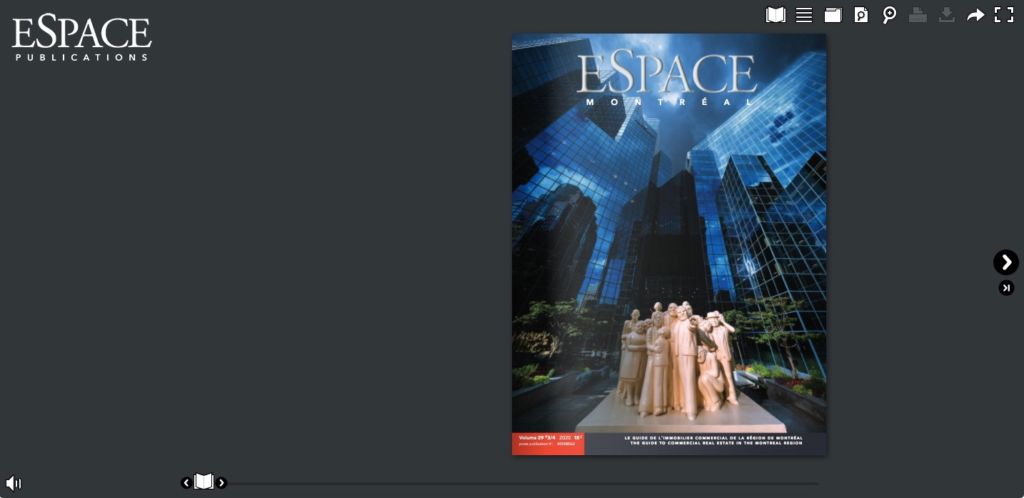
The visual identity of your business is an important part of its online presence. Whether you link to your digital publications on Calaméo or embed them in your own site, you can customize the viewer to ensure a seamless fit between your documents and your brand. First, you can choose the best theme to display your publication or create your own to achieve that perfect look. Next, set a background image or add your company’s logo, as in the example below from Espace Publications. Strengthening the visual connection between your digital documents and your business can really help your publications shine!
Tell a story
Make good use of social media to get the biggest impact out of sharing your digital publications. Keep storytelling in mind on Facebook, LinkedIn and more! A post on any of these platforms can introduce your publication to the world, so be sure to communicate the part it plays in your business’s mission and why your audience should check it out. This tweet from the New York University Alumni Magazine is a great example:
The most recent issue of the NYU Alumni Magazine is here, and it's devoted to the stories of faculty, alumni, and students who are advancing social justice in creative, transformative ways: https://t.co/e46vNrPRvX
— New York University (@nyuniversity) May 11, 2021
Dig into your statistics
Calaméo’s readership statistics provide you with key information about your audience and the success of your online publications. For a refresher, check out our tips for updating your approach to analytics and make a habit out of tracking your statistics on Calaméo in 2022.
With these New Year’s digital publishing resolutions, you’ll be in great shape to start a stellar year.
Have you made your own resolutions this year for your digital publications? Let us know on Twitter @calameo! Don’t forget to follow us on Facebook, LinkedIn, Instagram and YouTube for all the latest Calaméo news and updates.

Have you ever wanted to start your own magazine? We here at Calaméo did—way back at the beginning of last year, when we had the idea to create our CALAMEO Magazine. Since that first issue was released in February 2019 we’ve learned a lot about how to start a magazine from scratch. For example, what you’ll need to get organized, get creating and get out there.
Keep reading to find our complete guide to start your own magazine, plus three great reasons to opt for digital distribution.
Big-Picture Planning
The first and most important step when you start a magazine is to decide on your subject matter. Maybe there’s an idea you’re passionate about and want to share with others. Or maybe you’re part of a group interested in exploring new ways to communicate. No matter where you’re coming from, take a few minutes to write down the main topic for your magazine. Some possible topics are:
A
hobby or activity, like birding
A
place or institution, like a town or local museum
An
industry, like higher education
An
organization or association, like a sports club or charity
A
business or institution, like your company
For example, we decided right away that CALAMEO Magazine would be about the digital publishing sector as well as about our company. We wanted to give readers a deeper look at Calaméo’s history, people and news. But we also knew that we wanted to provide insight into the digital publishing world and analyze key trends.
Once you’ve defined your subject, it’s time to consider the goals you have for your magazine. These can be business goals, such as selling advertisements or making new contacts. They might also include personal goals like challenging yourself creatively and growing a collaborative community. In other words, write down the reasons why you want to start a magazine. This will help you focus on what’s most valuable and, a little farther down the road, help you evaluate your success.
Finally, think about the scope of your project. Some magazines come out once a week and have hundreds of employees; some magazines only put out one issue every six months. Here at Calaméo, we chose to make four issues of CALAMEO Magazine during our first year of publication. How many times would you ideally like to publish this year to work toward your goals? Pick a number before you move on to planning the actual content of your magazine.
Building Your Team
Now the fun part of how to start a magazine begins! That’s right—it’s the “getting the team together” stage of the project. The size of your team can vary depending on the resources that are available for your magazine. But even limited resources don’t mean you’ll have to sacrifice on quality. At a minimum, you should count on filling three primary roles: Editor, Lead writer and Designer.
Each of these three roles comes with a different responsibility that is essential to creating your magazine.
The Editor is in charge of decision-making. He or she has final say on the topics to cover, assigning stories and approving design.
The Lead writer is generally asked to produce the text content of the magazine, including features, interviews and opinion pieces.
And last but not least, the Designer creates the finished publication. This can involve making page templates, developing a graphic identity for your magazine and illustrating its content.
Finding collaborators to help you start a magazine can mean getting creative. For instance, you may want to put out a call for volunteers, either within your organization or your community. If you have a budget, you can get in touch with freelance writers and designers on platforms like Behance and Fiverr. On the other hand, if you plan to be your own designer, the templates available in sites like Canva allow you to handle basic graphics and layout.
Inside this Issue
After you’ve
assembled your core team, it’s time to work on the first issue of your magazine! Above all, you’ll want to think carefully about the way your content is structured. That’s because you can use this same structure in every issue of your magazine. As a result, you’ll save yourself time and the stress of making such fundamental decisions for each new release.
Begin with your ideas for the main rubrics, or categories, of content that you would like to feature in your magazine. Be careful not to confuse content categories with actual, specific stories that you might already have in mind! For example, our CALAMEO Magazine has nine rubrics: our Editors’ Note, a table of contents, Stats, News, Highlights, Interview, Tips and Editors’ Picks. While the subjects change from issue to issue, the structure stays the same.
With your magazine’s rubrics figured out, the Editor can begin to assign topics to your contributors. Your Lead writer should take on the most important stories, but you can consider asking additional writers and creators to contribute content or even ask for submissions. (Just make sure to explain the topic well enough to receive relevant responses!) Meanwhile, discuss the upcoming issue and its subjects with your Designer so that he or she can prepare layouts and other graphic elements.
Now all that’s left is to set some deadlines! The Editor of your magazine should let everyone else involved in its creation know when their content is due. Plus, the Lead writer and Designer will need a schedule for completing the layout, making edits, finalizing the publication and the planned release date. Stick to your schedule as closely as possible and voilà—the first issue of your magazine is done!
Getting to Readers
There are still a few more choices to make before you get your publication in front of readers. Perhaps the most crucial question when you decide to start a magazine is whether to publish in print, online or both. In the past, print was the only option for new projects and came with lots of built-in costs, from paper to postage. However, it’s now both easy and common for magazines to be available in a digital format.
Besides the lower costs associated with online publication, digital magazines can benefit from incorporating interactive content. You can add links to other websites to cite sources, promote products and events or support advertisers. Spice up your stories with videos from YouTube, audio tracks or even GIFs. Thanks to digital publishing platforms like Calaméo, it only takes a few minutes to make your magazine fully interactive online.
Plus, a digital magazine offers you key information about your readership that print distribution can’t match. Instead of relying on the number of printed copies you’ve ordered, you can effortlessly access analytics showing how many views your magazine is receiving online. (And if you need further details about how readers interact with your content, advanced statistics can provide insights.) This data will help you evaluate the progress you’re making toward your goals as you create the next issues of your new magazine!
We hope that this practical guide to how to start a magazine has given you the right tools for taking on such an exciting project. We loved creating CALAMEO Magazine and are happy to announce that a brand-new issue will be coming your way this spring. Ready to try out publishing your own digital magazine? Join Calaméo today and publish for free.
Launching an online magazine is an exciting adventure, especially in 2025, when digital tools offer infinite possibilities for content creators. Whether you’re an experienced publisher or a novice in the field, this comprehensive guide will walk you through the key steps to launching a successful online magazine.
Why launch an online magazine in 2025?
In 2025, digital content consumption continues to grow exponentially. Online magazines offer flexibility and accessibility that print publications can’t match. Here are just a few reasons why launching an online magazine is a great idea:
Reduced costs: Printing and distribution costs are eliminated.
Global reach: You can reach an international audience at the click of a button.
Increased interactivity: Digital magazines can embed videos, animations and interactive links.
Easy updates: Unlike print publications, you can update your content at any time.
How Calaméo can help you create your online magazine
Calaméo is a digital publishing platform that lets you turn your PDFs into immersive, interactive magazines. Thanks to its advanced features, you can create a professional online magazine without any technical skills. Using Calaméo, you’ll benefit from an intuitive interface, multiple customization options, and simplified distribution across all devices.
Step 1: Define your concept and target audience
Before you start creating your magazine, it’s crucial to define a clear concept and identify your target audience. Ask yourself the following questions:
What is the main theme of your magazine?
Who is your ideal audience?
What are their expectations and preferences in terms of content?
Content is king, and this remains true for online magazines. Make sure your articles are informative, well-written and visually appealing. Here are some tips for creating a quality magazine:
Use catchy headlines to grab your readers’ attention.
Embed images and videos to make your articles more engaging.
Organize your articles into clear sections for easy reading.
The benefits of Calaméo
With Calaméo, you can enrich your magazine with multimedia elements such as videos, animations and interactive links. These features not only enhance the reading experience, they also increase reader engagement.
Step 3: Design an attractive layout
A professional layout is essential to capture your audience’s attention. Use legible fonts, harmonious colors and a well-organized structure. Make sure your magazine is optimized for mobile reading, as more and more readers access content via their smartphones.
Calaméo and design customization
Calaméo offers a range of design options so you can customize the look and feel of your magazine reader. You can choose from different themes, add your logo, and adjust colors to match your brand identity.
Step 4: Publish and promote your online magazine
Once your magazine is ready, it’s time to publish and promote it. Calaméo makes this easy, with options for sharing on social networks, embedding on websites and sending by email. Here are a few strategies for promoting your magazine:
Use social networks to share your magazine with a wide audience.
Create a newsletter to inform your subscribers of the release of each new issue.
Collaborate with influencers or bloggers to reach a wider audience.
Step 5: Analyze performance and adjust your strategy
One of the keys to the success of your online magazine is to analyze its performance on a regular basis. Calaméo offers you powerful analytics tools to track your readers’ views, shares and engagement. Use this data to adjust your content strategy and maximize your impact.
Why choose Calaméo for your online magazine in 2025?
Calaméo is more than a digital publishing platform, it’s a complete tool for online magazine creators. Here are just a few reasons why Calaméo is the ideal choice:
Ease of use: No technical skills required.
Customization options: Create a e-reader that perfectly reflects your brand.
Multimedia features: Add videos, animations and interactive links.
Optimized distribution: Share your magazine easily on all digital channels and embed it on your website.
Detailed statistics: Track your magazine’s performance in real time.
Conclusion
Launching an online magazine in 2025 is an exciting opportunity for content creators who want to stand out from the crowd and reach a global audience. Thanks to tools like Calaméo, creating a professional and engaging magazine has never been easier. Follow these steps and start building a digital publication that will captivate your readers and grow your brand.
Ready to launch your online magazine? Explore Calaméo’s innovative digital publishing solution now by requesting your free 14-day trial for Calaméo PLATINUM, bring your content to life and achieve your marketing goals.