For many businesses, showcasing digital publications on their own website is a great business solution. Clients can enjoy the convenient presentation and interactive features of catalogs, magazines and more all while browsing the brand’s site.
To help you take advantage of this powerful tool, we’ve created a complete guide to embedding your publications!
In today’s post, we will explain how your publications on Calaméo can be embedded in your website, blog or displayed in a Library widget.
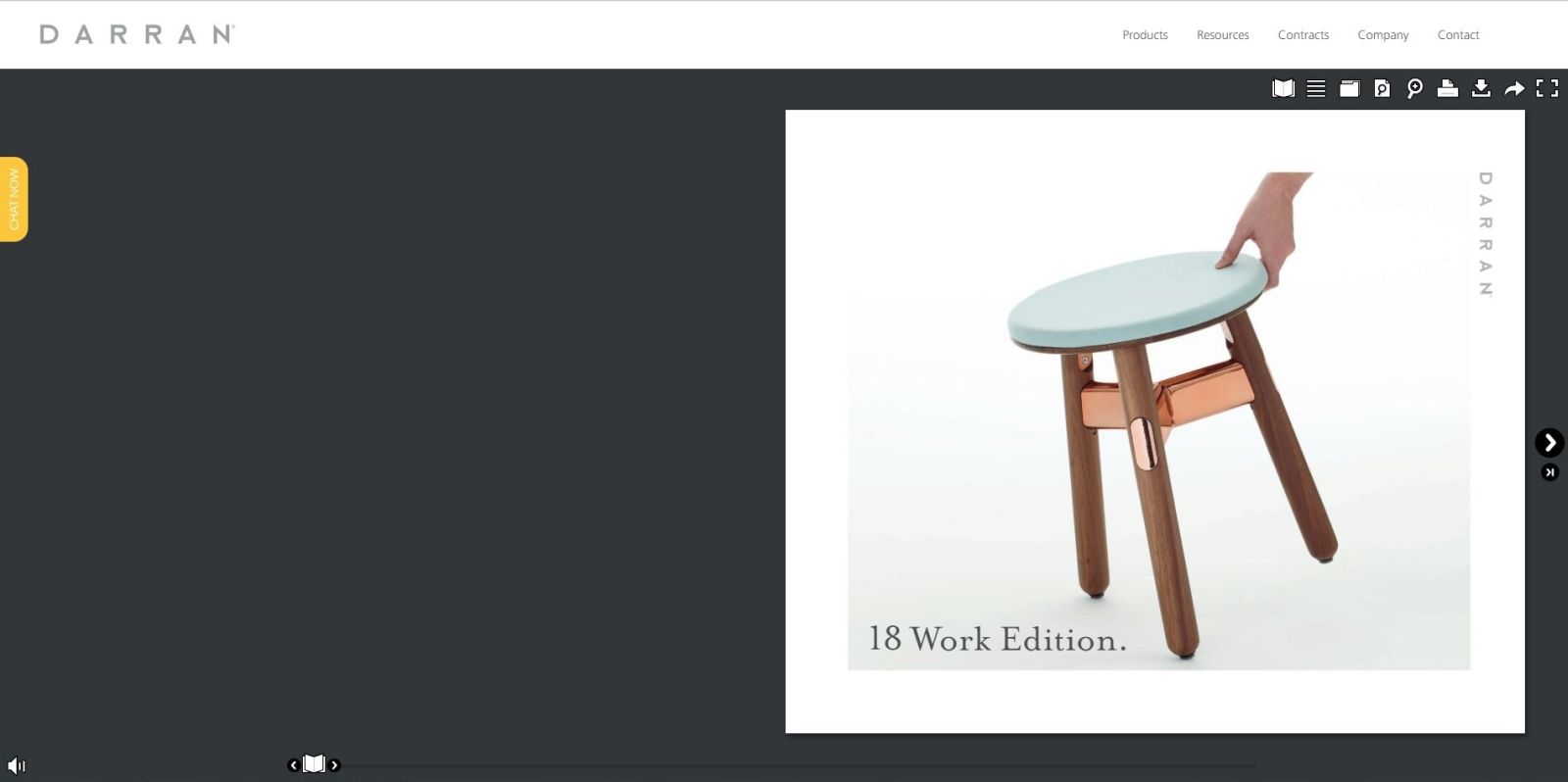
We’ll start off with the basics: what is an embed? Simply put, an embedded publication will be displayed in a webpage outside of Calaméo. In this example from DARRAN Furniture‘s site, their catalog appears ready to read in our viewer:
You can embed any digital publication that you’ve created with Calaméo. Even private publications can be included in your website, as long as they have not been set to be visible only to your account.
Getting Started
In order to embed your publication, you’ll have to work with a bit of code. You can insert your publication into your blog, a website built with HTML or in a dedicated tab on your Facebook page.
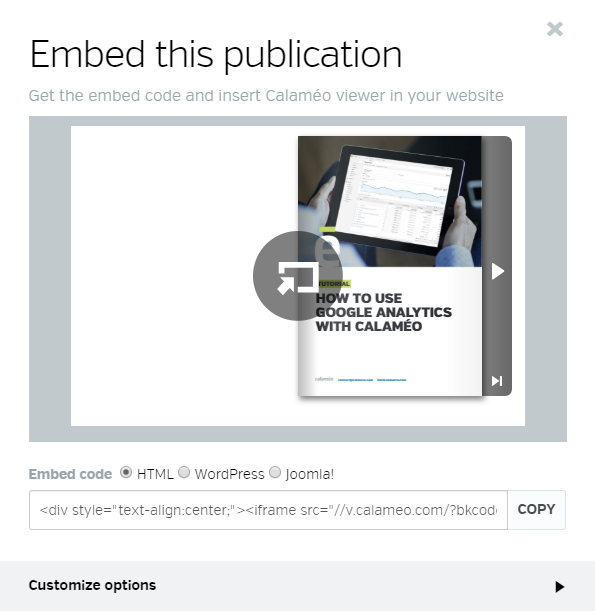
Finding the code is easy. In the Publications tab of your account, mouse over the title you want to embed, click the arrow and select “Embed” from the drop-down menu. You can choose from HTML, WordPress or Joomla for your embed code, depending on the needs of your site.
💡TIP: Be sure you’ve installed the appropriate Calaméo plug-in before using WordPress or Joomla embed codes.
Hit the “Copy” button and you’re ready to go!
Virtual Library
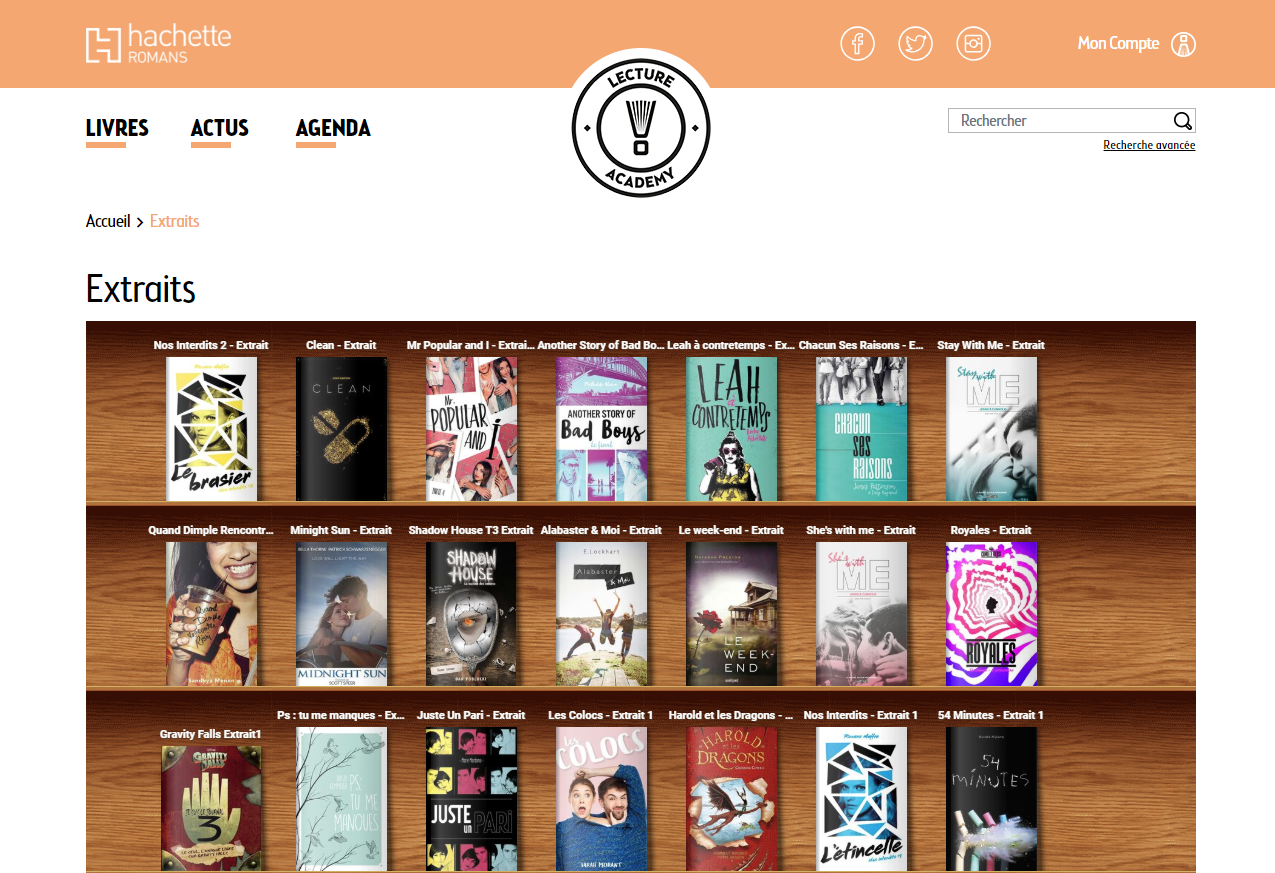
The only thing better than embedding one of your digital publications on your business’s website is embedding a whole series for your audience to discover. We’ve covered the brand benefits of creating a Calaméo Library Widget before, and here’s a great example from Hachette:
Our tutorial video recaps how to customize your Library Widget and get the embed code. The best part? New publications are added to your Library Widget display on your website automatically, so you never have to update the code in order to update your readers.
In the next part of our Complete Guide to Embeds, we’ll be reviewing the options to ensure your publication looks exactly how you want it to on your website.
Marketing content is one of your company’s most valuable assets—but only if people can actually find and use it.
Brochures, white papers, sales presentations, catalogs, and reports are often spread across cloud drives, emails, websites, product folders, and collaboration tools. As a result, teams spend valuable time searching for the right resources, sales representatives share outdated materials, and content quickly loses its value.
A Calaméo library widgetsolves this problem by bringing all your digital publications together in one organized, accessible space. Instead of managing disconnected files, you create a centralized content hub that’s easy to browse, share, and embed on your website.
Why marketing content becomes disorganized
Even companies with well-established marketing processes can struggle to keep their content organized. Several factors contribute to this challenge:
Content is stored across multiple platforms, from cloud storage and CRMs to intranets and email.
There’s no clear ownership of content management.
Multiple versions of the same document circulate throughout the organization.
Marketing, sales, and communications teams often work in separate silos.
Employees don’t have a single place to access the latest approved resources.
This lack of organization creates several problems:
Teams waste time looking for documents.
Outdated or incorrect materials are shared internally and externally.
Brand messaging becomes inconsistent.
Valuable content is underused instead of supporting marketing and sales efforts.
Turn your Calaméo library widget into a central content hub
A Calaméo library widget is much more than a collection of publications. When thoughtfully organized, it becomes a central hub for your marketing content.
Instead of simply storing documents, you create an environment where content is easy to discover, share, and reuse.
A well-organized library widget can:
Provide a single source for your marketing publications.
Help internal teams quickly find the resources they need.
Deliver a consistent brand experience across every touchpoint.
Support sales teams with ready-to-share content for prospects and customers.
Rather than functioning like another shared folder, your library widget becomes a strategic content resource for your entire organization.
How to structure your Calaméo library widget
The effectiveness of your library widget depends less on the number of publications it contains than on how they’re organized.
Organize by audience
One of the simplest ways to improve navigation is to group publications according to the people who use them.
For example:
Executive decision-makers
Marketing teams
Technical teams
Existing customers
Prospective customers
This approach allows every audience to quickly access the content that’s most relevant to their needs.
Organize by funnel stage
Another effective method is to organize publications according to the buyer’s journey.
Top of the Funnel (TOFU): Educational content, industry insights, trend reports, and guides.
Middle of the Funnel (MOFU): White papers, comparison guides, customer success stories, and case studies.
Bottom of the Funnel (BOFU): Product brochures, sales presentations, pricing information, and product documentation.
This structure helps marketing and sales teams work from the same content strategy while supporting prospects at every stage of the purchasing process.
Organize by product or service
If your company offers multiple products or services, organizing publications by offering is often the most intuitive solution.
For example:
Product documentation
Technical datasheets
Industry-specific use cases
Service presentations
Solution overviews
Sales teams can quickly locate the most relevant materials without searching through unrelated content.
Make your library widget easy to navigate
An organized library only delivers value if users can easily browse and share its content.
Here are a few best practices:
Use clear, descriptive publication titles instead of internal file names.
Organize publications with meaningful categories based on audience, product, or purpose.
Add concise descriptions that explain the value of each publication.
Regularly remove or replace outdated documents.
Highlight your most important publications so visitors find them first.
The easier your content is to access, the more likely people are to use it.
How different teams can benefit
A well-structured Calaméo library widget supports teams across your organization.
Marketing
Marketing teams can centralize campaign assets, repurpose existing publications, and maintain consistent messaging across every channel.
Sales
Sales representatives can quickly find the right brochures, presentations, and product information to share with prospects, making every customer conversation more effective.
Internal communications
Internal teams can distribute company updates, onboarding materials, HR resources, and training documents from one central location, ensuring everyone has access to the latest information.
Conclusion
Organizing your Calaméo library widget isn’t just about storing publications—it’s about building a smarter content management system.
By replacing scattered files with a centralized, well-structured library, you make your marketing content easier to discover, easier to share, and far more valuable for every team that relies on it.
When your content is organized, it doesn’t just become easier to find—it becomes easier to use.
In the digital age, online content creation is a necessity for any business or individual looking to reach a wider audience. However, with so much content online, it can be difficult to stand out from the crowd. In this article, we’ll discuss 5 tips for creating unforgettable online publications.
Use compelling images
Images are an important part of any online publication. Readers are more likely to read an article if it’s accompanied by eye-catching images. Images can also help convey information more effectively. Be sure to use high-quality images that match the subject of your publication.
Tell a story
Stories are a powerful way of capturing readers’ attention. When creating an online publication, try to tell a story that’s relevant to your target audience. Use anecdotes, examples and testimonials to bring your story to life.
Be original
With so much content online, it’s important to stand out by being original. Avoid using ready-made phrases or clichés, and try to find a unique angle for your publication. Research your topic thoroughly to find new and interesting information to share.
Use the right tone
The tone you use in your publication is important for capturing your audience’s attention. Try to find a tone of voice that suits your subject and your target audience. Use simple, clear language to make your message easy to understand.
Use a clear, easy-to-read layout
The layout of your publication is also important for understanding your message. Use a clear layout that makes your publication easy to read. Use headings and sub-headings to organize your content, and use short paragraphs to make it easier to read.
Conclusion
Creating outstanding online publications may seem difficult, but by using these 5 tips, you can create publications that stand out in any channel (whether on Calaméo or on social networks). Use captivating images, tell a story, be original, use an appropriate tone and a clear layout to capture your audience’s attention and communicate your message effectively.