The ability to include external links is a key feature of digital publishing. For many publishers, increasing the number of readers who click on their links is an important goal. The click-through rate (CTR) of a link will tell you which percentage of total viewers clicked on it. So what are some quick steps you can take to boost CTR in your digital publications?
Start Linking
The first step to boosting your CTR couldn’t be simpler: add external links to your publications! You can insert links with our easy-to-use Editor once your document has been uploaded to Calaméo. If you prefer to include links in your original document, be sure that you format them correctly and they will be automatically converted in your publication.
Consider Mobile
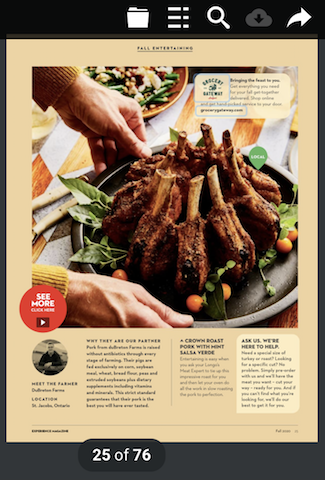
Did you know that over 50% of Internet users worldwide browse on their mobile devices? It’s true—and means you should always check how your links look on mobile. Thanks to our HTML5 viewer, your publications on Calaméo always display perfectly on any device. For example, this page from Longo’s Magazine with video and external links looks beautiful on a smartphone:
To ensure best results, we recommend opening your publication on your phone and test clicking. You may want to adjust the size of your links or experiment with custom link colors and behaviors to optimize them for mobile.
Include a CTA
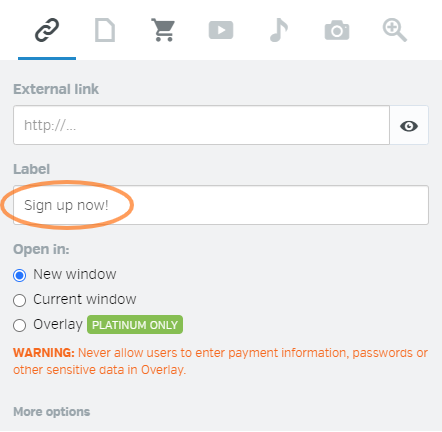
Now that your readers can see all of your links as they page through your publication, it’s time to tell them why they should click. In other words, you can help improve your CTR with a “Call to Action” (CTA)! A good CTA will briefly give your audience an idea of what they’ll be doing once they click your link. To add a CTA to an external link on Calaméo, first open your publication in the Calaméo Editor. Next, select the link icon and type the CTA in the “Label” field.
The example above shows a strong CTA for a link to more information about an event or activity. Readers will know that by following the link, they can register for the event that interests them.
Analyze What Works
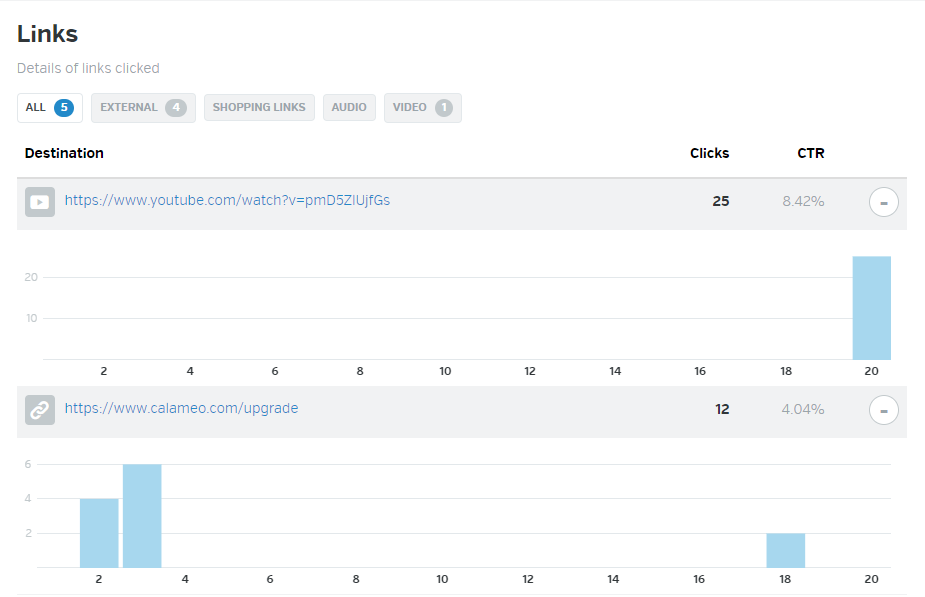
Understanding which of your external links have the highest click-through rate can offer valuable lessons. Is there a particular CTA that performs better than the rest? Perhaps links placed on a specific page or even on a certain spot receive more clicks than others. With advanced PLATINUM statistics, you enjoy access to a detailed breakdown of link clicks for each of your publications.
See the number of clicks on every link, including audio and video elements. Plus, the CTR is calculated for you automatically.
Equipped with these quick tips, you should in great shape to optimize your external links and boost CTR for your publications on Calaméo. Want to go even further to drive traffic to your website? Check out our post on 5 Ways to Increase Your Website Traffic with Calaméo!
If you have questions about your Calaméo statistics, it’s no problem. Visit our Help Center for more information or write to us at contact@calameo.com anytime.
Do you know the term “dark social”? Although a lot has changed about social media since the idea was first described in 2012, dark social sharing is as important as ever. In fact, this type of sharing might be even more key to understanding your content’s success today. Read on to learn why dark social matters in 2021 and how to track it for your digital publications on Calaméo.
Dark social sharing basics
All the way back in 2012, people were beginning to wonder how much content was being shared to social media networks. Or how much content was being shared in other ways. Because networks like Facebook and Twitter were growing fast, share buttons popped up all around the web to make reposting to your own feed easy—and trackable.
But while the number of shares ticked up, this new behavior couldn’t be the only way users were passing along videos, publications and posts. Despite the buzz around social feeds, research showed that plenty of people were sharing in a simple way: copying and pasting the content’s URL into email and messages. Unlike regular social shares, this kind of social activity wasn’t tracked.
As a result, it was easy to miss dark social sharing’s value. However, over the past several years sharing to social media platforms has declined. There are several reasons to explain this trend, including algorithm changes, rising interest in digital privacy and concerns about how information spreads online. Since more than a third of businesses say that “social shares” are a goal for their content, these harder-to-see forms of social sharing must be taken into account.
💡 TIP: Not sure whether social shares are a priority for your publications? Our quick checklist will help you brush up on your digital publishing strategy in no time.
How to track shares on Calaméo
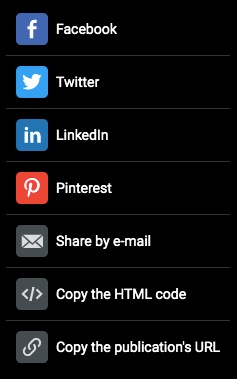
So, how should you track the “dark social” sharing of your content? When it comes to your digital publications, Calaméo’s advanced statistics are a great place to start. That’s because our publication viewer’s own share button was designed with lots of different uses in mind. Take a closer look and you’ll see some options beyond the usual social networks.
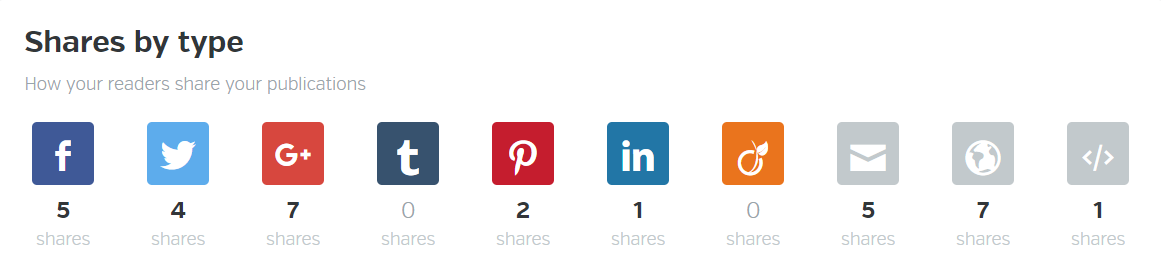
Even better, the Shares section of your Calaméo statistics will show you just how many times your publication was emailed, embedded or its URL copied. And the results might surprise you. For example, we were checking the stats for our most recent issue of CALAMEO Magazine and noticed this breakdown:
30% shares to social media platforms
70% “dark social” shares to email, embed or copying URL
To access your publications’ Shares data, go to the Statistics section of your Calaméo account. Click on the “Shares” tab and scroll down to find the full statistics.
Also, be sure to note that these numbers only reflect “dark social” shares coming from inside the publication viewer. You can almost certainly be sure that other readers have, for instance, copied and pasted the publication URL directly from their browsers to share with their networks. Or to put it another way, public social shares may only be telling you a small part of the story.
💡 TIP: To keep digging deeper into the impact of dark social sharing for your content, consider using tracked links and Google Analytics to reveal more data.
In short, social media metrics don’t give you the whole picture when you want to measure how your content is shared online. If you’d like to start looking at complete Shares statistics for your publications on Calaméo, request your free, two-week PLATINUM demo today.
In the digital age, virtual libraries have become essential tools for organizing, sharing and accessing online resources. Thanks to technological advances and new solutions such as the Library Widget from Calaméo, it’s easier than ever to create a virtual library that meets users’ modern needs. In this article, we’ll explore the key steps to creating your own virtual library and show you how to make the most of the tools available.
A virtual library is an organized collection of digital documents, accessible online. Unlike ordinary libraries, virtual libraries offer unlimited accessibility, simplified content management and the ability to adapt to the needs of their users.
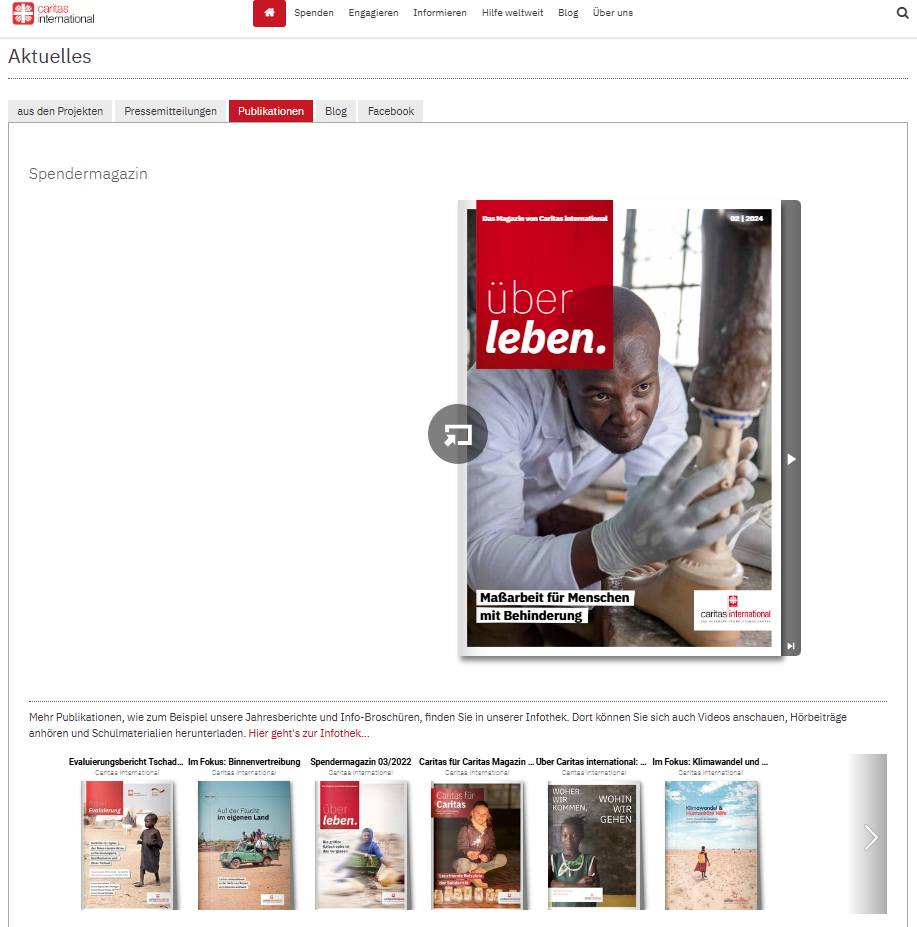
Here’s an example of a virtual library created with Calaméo:
Why you should create a virtual library: the major advantages
Optimized visual display
One of the greatest advantages of creating a virtual library is the simple, interactive way of showcasing your publications. Whether you want to display every issue of your magazine or a varied collection of documents, the virtual library enhances the visual impact of your content. Thanks to intuitive navigation, visitors can easily browse your virtual shelves and click on a cover to open the publication in full screen or in a new window. They can then easily return to your virtual library once they’ve finished reading.
Automatic updates
Automatic updates make it easy to manage your virtual library. Every time you add a new publication to your Library Folder on Calaméo, it instantly appears on your virtual shelves. By choosing to create a virtual library, you’re freed from repetitive manual management tasks. Removing publications is just as easy: mark them as private or move them to another Folder to adjust their accessibility with a few clicks.
In-depth analytics
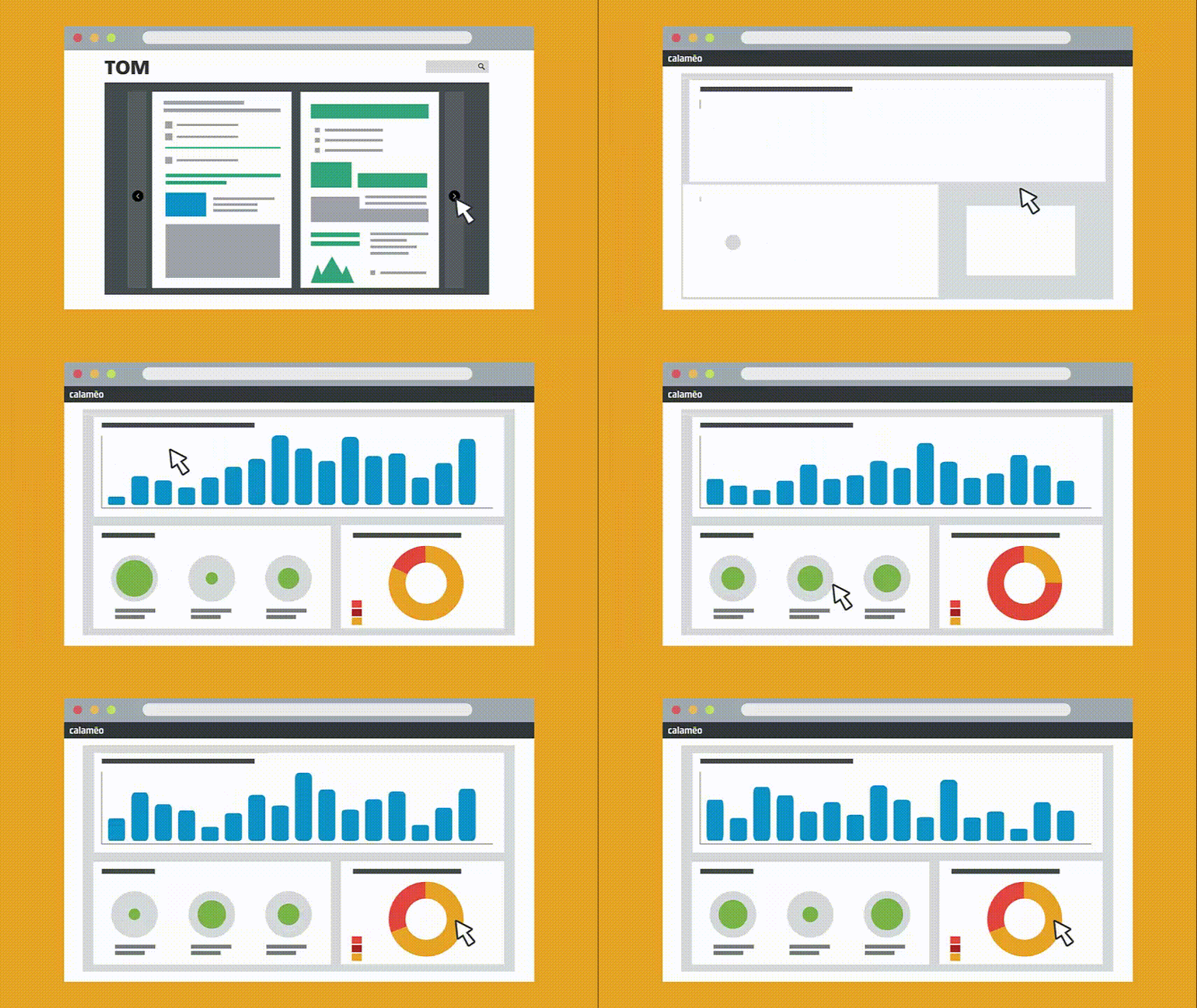
When you create a virtual library, you also benefit from detailed analytics on how your audience interacts with your publications. You can track views, link clicks, downloads and traffic origin. These analyses enable you to adapt your content to better meet your audience’s expectations and improve engagement with your virtual library.
Why choose Calaméo to create your virtual library?
To create an effective virtual library, it’s essential to choose a platform tailored to your needs. Several solutions are available on the market, but the Library Widget from Calaméo stands out for its ease of use, intuitive interface and numerous advanced features. This solution is ideal for those who want to create a virtual library quickly and without any particular technical skills.
By using this feature, you benefit from :
Easy embeding on your website: Calaméo enables effortless embeding of your virtual library on your website, which means you can showcase your digital resources in a harmonious, professional way.
Visual customization to match your brand: Thanks to a variety of customization options, you can adapt the appearance of your library to reflect your brand identity and blend seamlessly into the pages of your website.
Numerous options for sharing and distributing your publications: With Calaméo, you can easily share your publications on social networks or by e-mail. This enables you to reach a wider audience and increase the visibility of your resources.
Step 1: Publish and organize your documents on Calaméo
Organizing your documents is a key step in ensuring an optimal user experience and smooth navigation in your virtual library. To ensure that your publications are easily accessible and well structured, it’s important to prepare them well before publishing them on Calaméo.
Start by publishing your digital documents on Calaméo. Each publication should be accompanied by a catchy, descriptive title, incorporating relevant keywords linked to your content. Don’t forget to fill in the description of each publication with clear, engaging summaries that will encourage users to discover your content.
Next, organize your publications by placing them in Folders or adding them to a Favorites list. For these documents to be visible in your virtual library, it is essential that Folders and publications are defined as public.
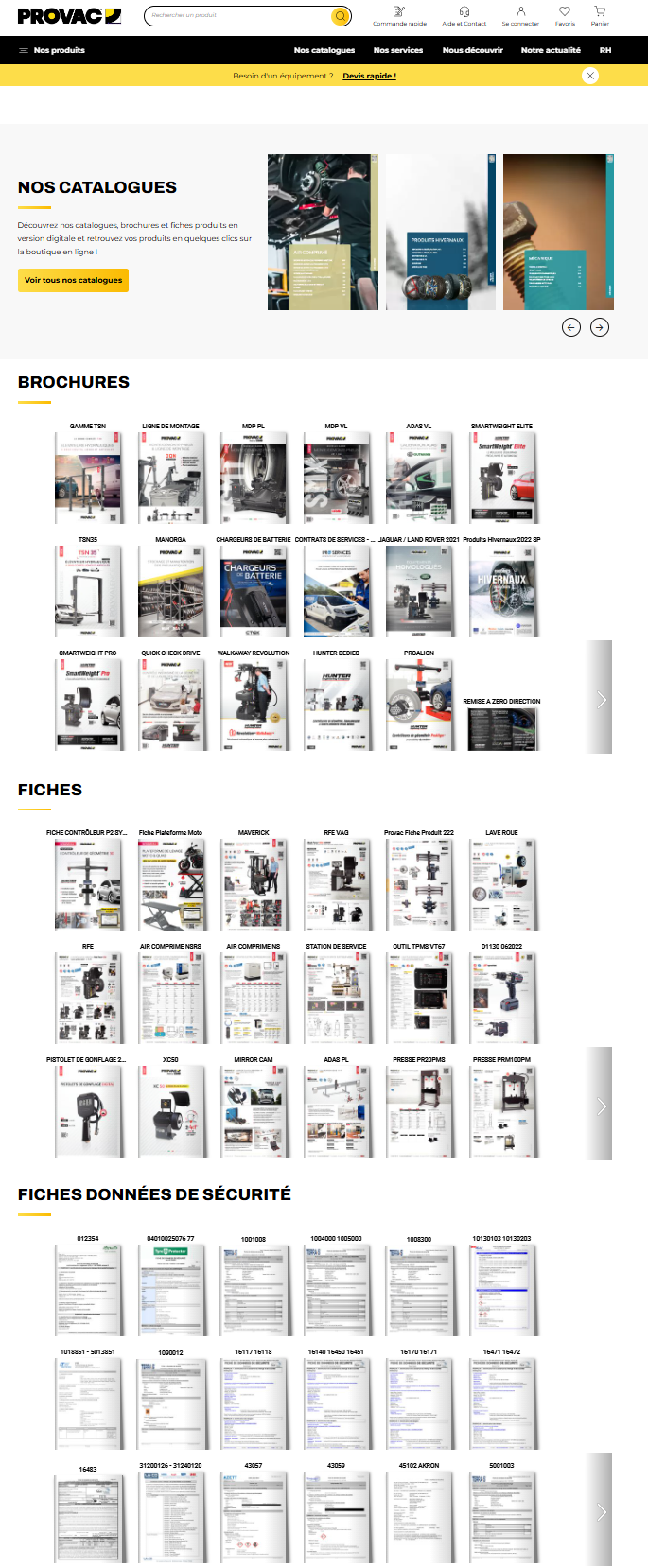
NOTE: Private publications will not be displayed in the Library Widget, giving you total control over what is visible to your users.
All you have to do is select the Folder (or favorites list) whose contents you wish to display in your virtual library. All public publications in this folder will automatically appear in your library, making it easy to manage your documents without any extra effort.
Step 2: Customize the appearance of your Library Widget
Personalizing your virtual library is essential to ensuring a user experience that reflects your brand identity. Thanks to the many customization options offered by the Calaméo Library Widget, you can adjust the appearance of your library so that it blends seamlessly with your website while reinforcing your brand image.
You can adjust the following elements of your Library Widget:
The texture or background color of the library to match the style of your website.
The number of shelves to display to visually organize your publications.
The size of your publication thumbnails for optimized display.
The information to be displayed for each publication (such as title or description).
The order in which your publications appear, allowing you to highlight certain strategic documents.
The way publications open (in a new window or full screen).
You can also adjust the appearance of thumbnails by choosing, for example, a shadow or other visual effects that enhance the impact of your publications. These subtle details play a key role in enhancing the aesthetics and navigation of your virtual library.
TIP: While you’re customizing the look and feel of your Calaméo Library Widget, you can see the changes in real time thanks to the preview function. This allows you to test different configurations and ensure that each modification fits perfectly into your overall site before finalizing the upload.
By customizing your virtual library with these options, you offer your users a fluid, visually appealing experience, while reinforcing your brand identity at every stage.
Step 3: Embed the Calaméo Library Widget into your website
Once you’ve carefully customized the look and feel of your virtual library, the next step is to embed it directly into your website. This step is crucial to making your virtual library accessible to your users and enabling smooth navigation between your content and the other pages of your site.
Embeding the Calaméo Library Widget is quick and easy, and you have several options for doing so. Once you’re happy with the configuration and design of your virtual library, simply copy the embed code provided by Calaméo. This code can be inserted on any page of your website, whether on a page dedicated to your publications or another section of your site.
This intuitive process makes it easy to present your digital document collections in a professional, interactive way.
READ MORE: If you need help with embedding, resources such as the tutorial or the support pagein the Calaméo Help Center are available to guide you step by step.
By embedding a Calaméo library on your site, you enable your visitors to easily explore your digital publications directly from your platform, without having to navigate to another site. This not only enhances the user experience, but also reinforces the consistency of your brand image by providing seamless access to your documents in a controlled environment.
Embeding requires no advanced technical skills and, once the code has been inserted, your virtual library will be automatically updated every time you publish new documents or modify existing ones. So you don’t have to worry about manually keeping your library up to date, which saves you and your team valuable time.
With just a few clicks, you can create a dynamic, scalable virtual library that blends seamlessly with your website, while enriching your users’ experience and facilitating access to your digital content.
Conclusion
Creating a virtual library represents a unique opportunity to modernize your content management and improve access to your digital resources. With the Calaméo Library Widget, you have a powerful and flexible tool at your disposal to set up a virtual library perfectly adapted to your needs.
Don’t wait any longer, transform the way you share information by starting to build your virtual library with Calaméo today!




 Here’s an example of a virtual library created with Calaméo: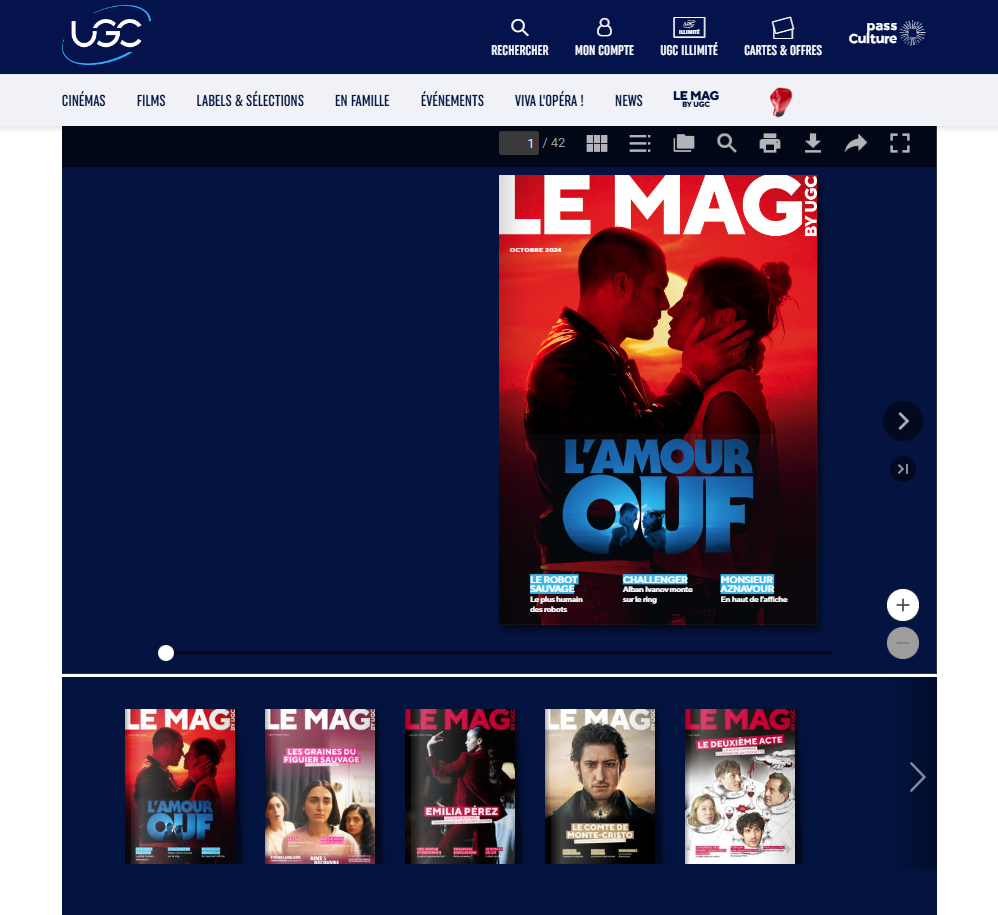
 NOTE: Private publications will not be displayed in the Library Widget, giving you total control over what is visible to your users.
 Request your