Thanks to social media, delivering content to thousands of people at once is as easy as hitting the “Post” button. But it isn’t always easy to achieve the results you have in mind. That’s why we’re bringing you a new series all about making these channels work for your digital publishing needs. Next up: how to promote content with LinkedIn.
Why use LinkedIn to promote content?
If you think of LinkedIn mostly as a place to look for job openings, think again. Over the past several years, the social network built for professionals has added lots of new features and tools designed for content. Although it’s not the biggest social platform, LinkedIn’s 810 million users represent a particularly valuable audience of executives, entrepreneurs and employees.
As a result, LinkedIn has become a key channel for distributing B2B digital content. In other words, businesses that sell their products or services to other businesses want to be seen in LinkedIn Feeds. In fact, it’s the #1 social media network for B2B marketers with a content strategy. A recent study found that 95% said they published non-sponsored posts on LinkedIn. (More focused on B2C? Keep reading—B2C marketers use the platform, too.)
Since 30 million companies have joined LinkedIn, the importance of B2B influencers has exploded. Also called “thought leaders,” these users can attract big audiences to their reflections on trends, tools and ideas in business. Consider how your digital publications, from brochures to white papers, can help your company join the conversation and reach the right readers. Then, get ready to promote content with LinkedIn.

Choose the right format
The first choice you’ll need to make when posting your content to LinkedIn is what format to use. Because LinkedIn offers different options than most other social platforms, this can be a little more complicated than usual. For example, personal profiles and business pages don’t have the same posting possibilities.
If you’re posting from a business page to promote content with LinkedIn, you’ll have three main choices. You can create a classic Link post, an Image post or a Document post.
Link post
A Link post is great for sharing important sales and lead generation content, like your professional digital publications on Calaméo. Whether embedded on a landing page or ready to browse in our full-screen viewer, your publications can benefit from readers coming from LinkedIn.
Image post
An Image post will contain a featured .jpg or .png file, plus your message. To achieve an Image look while still including a link in your update, first enter the post text and link. Then, LinkedIn will pull a selection of images from your link to use in your post. Choose the image you prefer and hit Post!
Document post
A Document post allows you to publish an entire PDF file within a LinkedIn update. Readers will be able to view your document without ever leaving their feeds, which means you can share more complex content directly in the Feed.
If you’re posting from a personal profile, you also have access to LinkedIn’s Articles feature. The Articles format is similar to a blog post: longer than the messages that accompany Link, Image and Document posts, but more limited in scope than a digital publication.
In short, the post format that works best for you will depend on why you want to promote content with LinkedIn. For instance, Articles and Image posts might help you find new followers and build an audience on the platform. However, Link posts to your digital publications may be most effective for nurturing prospects and gaining customers.

Optimize your message
In addition to its professional user base, marketers love LinkedIn for its generally high engagement rates for organic posts. You should expect to see 1-2% of the people who see your update to comment, click, react or share. Meanwhile, engagement rates on Facebook and Twitter are only about half of that: 0.50% to 1%.
What’s more, LinkedIn has been open about the factors that make a post likely to get better reach. Above all, engagement matters. Getting your followers—and their followers!—to respond to your posts is the key factor to effectively promote content with LinkedIn.
So what can you do in concrete terms to encourage engagement? There are lots of ideas out there, but the most common advice is to focus on your post text. For every type of post format, you’ll be able to include a message of up to 700 characters. Use that space to speak to your audience! Explain why they should click, ask what they think, tell them a story about your content. To finish, add a few well-chosen hashtags to make your post easier to discover.

Watch for conversions
Once you’ve started sharing on LinkedIn, you can begin to evaluate the kinds of content that you’d most like to emphasize. For many B2B oriented companies, online content marketing with guides, case studies, white papers and more has become an important way to find new customers. And you’ll want to know how well these digital publications are performing.
LinkedIn provides a number of useful statistics about your updates, which are visible to company Page Administrators in their Analytics tab. Besides gaining valuable insights into your audience, you can check the reach, clicks and overall engagement rate of your posts. Unfortunately, there are no more specific details available about the digital publications that you’ve shared. In other words, even Document posts won’t have data about publication views.
Therefore, you can get the best out of both worlds when you promote content with LinkedIn that is part of your sales and marketing strategy. Create a post about a digital publication embedded on your website, where a pop-up form can generate leads. Or enrich your business’s catalogue with Shopping links, then share to support sales. Your digital publications on Calaméo come with advanced statistics that help you dig deeper into audience engagement.
Ready to start?
Now that you’ve got all the details about how to promote content with LinkedIn, it’s time to turn your online documents into great digital publications. Sign up for your free Calaméo account today and explore what digital publishing can do for you!

Many marketing campaigns today are entirely digital, but not all of them are successful. Companies should put thought and intention into their digital marketing campaigns so that they reflect the brand and reach the right audience. Here we have compiled the top tips for creating a successful digital marketing campaign.
What is digital marketing?
Before we dive into how to create a successful digital marketing campaign, let’s first define digital marketing. More people than ever are using the Internet for almost everything in their lives. So it’s no wonder that companies are doing less traditional marketing (printed media, billboards, television, etc.). They are now embracing digital marketing, which comprises all marketing that uses the Internet or an electronic device. Due to widespread use of the Internet, digital marketing can of course reach a much larger audience via these digital channels than traditional marketing. So how exactly should your brand approach these potential customers?
Take advantage of key moments
There are several factors to take into consideration for your digital marketing campaign, timing being one of them. You need to know when consumers will be open to your campaign.
ZMOT
According to Google’s ZMOT model, the Zero Moment of Truth is the stage in the purchasing cycle when consumers research a brand or product online before making their purchase. The Zero Moment of Truth arrives between the stimulus (needing a product) and the First Moment of Truth (buying a product). Consumers make their decisions based on Internet research, consulting several sources. Your brand needs to make a good first impression during this preliminary research stage.
Micro-Moment Marketing
The ubiquity of smartphones has changed digital marketing over the past few years. The ZMOT concept has evolved to now encompass micro-moments. Rather than one moment in which consumers sit down to research (ZMOT), their research is broken up into many (micro) moments throughout the day. These are the small increments of time during the day that consumers are on their mobile devices researching or considering a product or brand. Now, digital marketers have opportunities all day long to grab consumers’ attention and the possibility of engaging directly with them.
Consumers encounter a plethora of digital campaigns every day because they are constantly connected. Differentiate your brand by personalizing your content to make it unique. Make sure that your brand is recognizable (and that your content is mobile-friendly).
No matter the medium or the channel you decide to use, any material that you put online should reflect your brand ethos and be well-constructed. Otherwise, consumers won’t get a true sense of your brand and will favor another brand that feels more authentic. Consumers consult several sources before making their final decision. There is a lot of competition to vie for consumers’ attention, so make sure your digital presence is strong.
A successful digital presence can be the key factor in consumers deciding to go with your brand over another. Ensure that your content is engaging and the customer journey or path to purchasing is clear.
💡TIP: To personalize your digital publications, enrich your content with the Calaméo “Editor” tool!
Make it easy to navigate
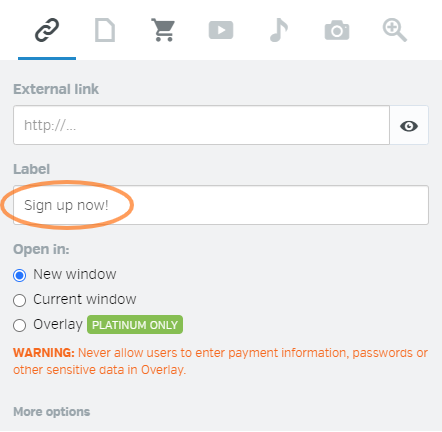
An arduous and time-consuming search or buying process can turn potential customers off. Enrich your content but make sure there is a path for the customer journey. Create an effective and clear Call to Action (CTA) to give consumers some direction. Calaméo users can put links directly in the publication so potential customers can be easily redirected to the website to make a purchase.
Make it shareable
We all remember digital marketing campaigns that have gone viral. You can instantly recall the brand and exactly what they were promoting. Viral campaigns often include video elements or an eye-catching graphic. Sometimes they are social media campaigns that encourage users to upload their own content, or user-generated content. Not every digital marketing campaign should have the goal of going viral, but it should at least be easy to share! Make sure that your campaign is shareable and optimized for social networks.
Remember the ZMOT and Micro-Moment Marketing concepts? Consumers have to start their search somewhere once they realize they need a new item. In fact, 89% of customers begin their research with a search engine. SEO, or Search Engine Optimization, is a valuable tool that will help you nab the right audience at the right time. You do this by using key words and phrases in your campaign that your target audience is searching for. Want to know more about SEO? Read our SEO trends for 2021.
Analyze your results
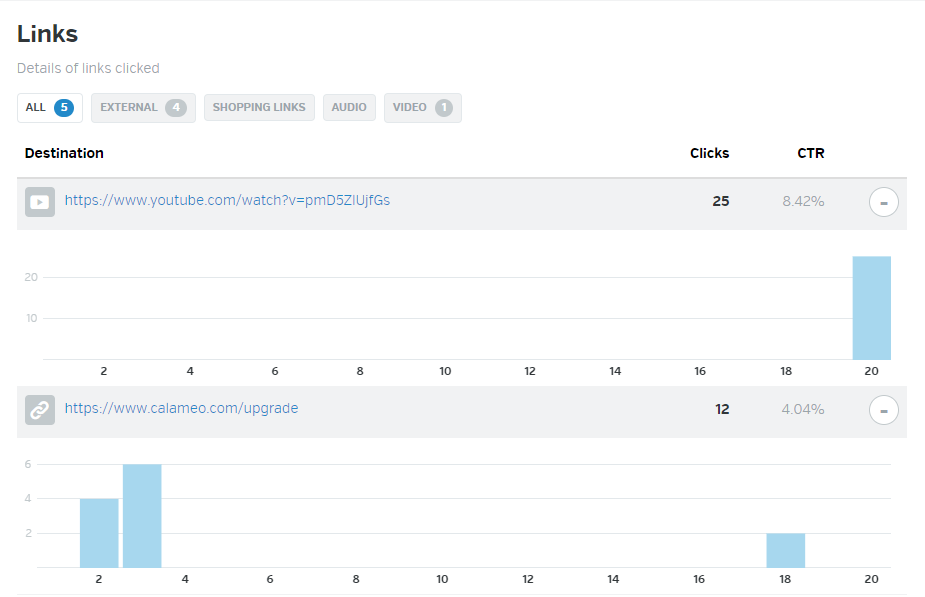
You won’t know if your campaign is successful unless you are analyzing all the associated metrics and data. Are you looking at your leads, sales, page views, clicks, “dark social” shares? All of these (and more!) add up to give you a full picture of your digital marketing campaign’s success. If you are publishing with Calaméo, you can easily track your publication’s statistics. This feature is integrated in Calaméo and intuitive to use. Another option is Google Analytics. It’s a great tool for tracking how consumers are engaging with your content.
A successful digital marketing campaign depends on several factors. Make sure you are taking advantage of key moments, creating content that reflects your brand, targeting the right audience, and analyzing your results. With these tools in hand, you will be well on your way to creating a successful digital marketing campaign.
Why an interactive publication can (actually) generate leads
A digital publication isn’t just a nicer-looking PDF. When it’s built with intent, it becomes a true acquisition asset: it attracts attention (SEO and sharing), keeps people engaged (smooth reading and navigation), and drives action (clicks, form submissions, requests). The difference between a publication that simply “gets views” and one that generates leads usually comes down to one thing: a clear, trackable journey. Readers immediately understand what’s in it for them, click at the right moment, and land on a conversion step that makes sense (a landing page/form or a meeting booking flow), while the data flows cleanly into your stack (analytics + CRM).
Lead gen with an interactive publication means turning readers into qualified contacts through contextual links and CTAs, connected to a landing page/form or a meeting-booking module—then measured with UTMs, KPIs, and analytics (e.g., GA4).
The part most teams miss: integrations matter as much as CTAs
A CTA without an integration is just a click that goes nowhere. A CTA with the right integration creates a lead that lands in the right place, at the right time, with the right context: source, campaign, intent—and a follow-up you can trigger faster. In short: the CTA is what people see. The integration is what makes it work. That’s what separates a publication that feels engaging from one that converts.
Checklist :
1 primary goal per publication (demo, quote request, signup…)
Contextual CTAs (repeat the main CTA 2–3 times max)
UTMs on every channel (email, social, ads, QR, partners)
Measurement via Google Analytics 4 or Matomo
Why choose Calaméo to generate leads from your publications
If you publish PDFs (catalogs, brochures, magazines, reports), the goal isn’t just readability. It’s making them actionable (CTAs that drive to conversion points) and trackable (tracking + attribution), while keeping the workflow simple for your team. With Calaméo, you can turn a publication into a lead-gen entry point thanks to integrations that sit right inside the reading experience: meeting booking (Calendly, HubSpot Meetings, OnceHub, Zoho Bookings), forms (HubSpot Form, Typeform, Jotform, Fillout, Formbricks, Google Forms), analytics (GA4, Matomo), rich content (Embedly, YouTube, Vimeo, TikTok), and even e-commerce (Shopify), depending on your use case.
7 lead gen scenarios (with recommended Calaméo integrations)
An interactive publication can generate leads at different moments in the journey—from very high-intent actions (requesting a quote, booking a meeting) to more long-term goals (newsletter growth, nurturing). The goal isn’t to switch on all seven plays at once. The fastest path is to pick one scenario, execute it cleanly (CTA + integration + tracking), then reuse that model across your future publications.
In each scenario below, you’ll find:
the context and goal (so you know when to use it),
the recommended journey (how readers move from reading to action),
the Calaméo integrations to enable (forms, meetings, analytics, rich content),
the CTAs—and what to measure to improve results.
Each scenario lines up with a stage of the funnel:
A catalog is often viewed by prospects who are already pretty far along. Your priority is to shrink the gap between “I’m interested” and “I’m talking to someone / requesting a quote.” The publication becomes both a showcase and a shortcut to action.
The journey that works
A reader lands on a product line, browses 2–3 pages, then hits a clear CTA (quote or meeting) that sends them to a super simple landing page or straight into booking. At this stage, every bit of friction costs you leads: forms that are too long, pages that feel generic, or a lack of proof.
Integrations to enable (Calaméo)
To convert product interest into leads without friction, pair a “request a quote” CTA with an embedded form—and offer a direct meeting option for the hottest prospects.
HubSpot Form or Jotform (or Typeform): capture the request (product/category, quantity, timeline, contact details) directly inside the publication.
Calendly, HubSpot Meetings, OnceHub, or Zoho Bookings: offer one-click booking to speed conversion (especially effective on “best sellers” and “bundles”).
Google Analytics 4 or Matomo: track CTA clicks and compare channels (email, social, ads, QR, partners) using UTMs.
CTAs (keep them extremely direct)
“Request a quote”
“Talk to an advisor”
“Book a time slot”
What to measure
The most useful trio: CTR, landing/booking conversion, and opportunity conversion rate.
A B2B brochure converts when it drives one clear action: the demo. The best timing is after the promise—then right after proof (case study, results, numbers).
The journey that works
Your brochure reassures (benefits), proves (results), then offers a simple next step: “Book a demo.” The landing page shouldn’t re-explain everything—it should reinforce the promise and make it easy to take action.
Integrations to enable (Calaméo)
The goal is straightforward: move readers from “I get it” to “I’m booking.” A calendar integration inside the publication is often the shortest path.
HubSpot Meetings or Calendly (or OnceHub / Zoho Bookings): book a demo directly inside the publication with a smooth flow.
HubSpot Form or Typeform: if you want to qualify before the demo (team size, need, timeline) via an embedded form.
Google Analytics 4 or Matomo: measure click-through rate, traffic source, and campaign performance.
Recommended CTAs
“Request a demo”
“See an example”
“Talk to an expert”
What to measure
Booked meetings / landing visits, show-up rate (if you track it), and opportunity conversion.
Scenario 3: White paper / report → lead magnet (email-gated access)
Study/report/benchmark formats are great for inbound leads—if the value is obvious. The most effective approach is usually to tease 1–2 insights, then offer full access.
The journey that works
Readers sample the content, see the value, then share an email to access the rest (or annexes/templates). After that, you run a short follow-up sequence to keep momentum.
Integrations to enable (Calaméo)
A lead magnet works when it’s simple: clear promise, short form, measurable follow-up.
Mailchimp or MailerLite: embed a signup form to capture email and feed your list (ideal for nurturing).
HubSpot Form: if you want a more CRM/MQL-style approach with qualification fields.
Fillout, Jotform, or Typeform: if you want a more tailored form (topic choice, role, needs) without hurting the reading experience.
Google Analytics 4 or Matomo: attribute leads to channels (SEO, social, ads, partners) via UTMs.
Recommended CTAs
“Get the full report”
“Access the annexes / templates”
What to measure
Form conversion rate, source quality (UTMs), and follow-up performance if you run sequences.
Scenario 4: Press kit → media requests / partnerships (PR-ready)
Press kits get skimmed quickly. Your goal isn’t to force a full read—it’s to make contact effortless and provide the right assets (logos, photos, media kit).
The journey that works
After the pitch and key stats, you offer a clear press contact (email or mini-form), then easy access to the media kit. The experience should feel simple and professional.
Integrations to enable (Calaméo)
Here the priority is fast, “PR-ready” contact: interview requests, media kit access, partnerships.
Fillout or Typeform (or Google Forms): embedded mini-form (outlet, topic, deadline) to centralize requests without sending readers elsewhere.
Embedly, YouTube, or Vimeo: add “proof” content (interview, coverage, demo, excerpt) to build credibility.
Google Analytics 4 or Matomo: see which channels and pages drive the most press requests.
Recommended CTAs
“Contact the press team”
“Download the media kit”
“Request an interview”
What to measure
Contact clicks, media kit downloads, and UTM sources (press/partners).
Here, the lead is the subscriber. It’s often the highest-ROI long-term play: you build an audience you own instead of relying on social reach.
The journey that works
You deliver value (a strong article), then make a simple promise: “Get the next issue.” The form should stay minimal, and the welcome email should reinforce why it’s worth subscribing.
Integrations to enable (Calaméo)
The biggest lever is capturing subscribers at the right moment (after strong content) without interrupting the flow.
Mailchimp or MailerLite: embed a simple signup form (email + optional interest area) to grow your owned audience.
HubSpot Form: if you want richer data (role, industry) and qualification at signup.
Google Analytics 4 or Matomo: measure click/signup rates by channel and by issue (UTMs).
Recommended CTAs
“Subscribe to the newsletter”
“Get the next issue”
What to measure
Signup conversion, email engagement (opens/clicks), and return readership.
In a sales cycle, an interactive publication is valuable when it helps you follow up better. Send a clear asset, then watch for intent signals (pricing, demo, comparison clicks) to prioritize outreach.
The journey that works
Sales sends a link, the prospect browses, then clicks a key section. Follow-up becomes more relevant because it’s contextual: you’re not “checking in,” you’re responding to real interest.
Integrations to enable (Calaméo)
The goal isn’t more steps—it’s capturing a simple signal (question, request, meeting) and moving quickly into a real conversation.
HubSpot Meetings or Calendly (or OnceHub / Zoho Bookings): embed a “Book a call” CTA at the right moments (objections, pricing, comparisons).
HubSpot Form or Jotform: embed “Ask a question” / “Request a proposal” to turn silent readers into leads.
Google Analytics 4 or Matomo: track clicks on key sections (pricing, comparison, demo) and measure outreach impact (UTMs by sequence).
Recommended CTAs
“Compare plans”
“See the demo”
“Ask a question”
What to measure
Clicks on key sections, follow-up success rate, and pipeline progression.
Scenario 7: Event (trade show, conference) → leads via QR code (ultra-fast conversion)
At events, your publication should be mobile-first and conversion-first. Full reading is secondary—you want a fast lead with clean event attribution.
The journey that works
Scan QR → clear entry page → “Get the presentation” CTA → ultra-short form → instant email. The goal is to capture the lead while the conversation is still warm.
Integrations to enable (Calaméo)
On-site, everything is about friction: a short form or an immediate meeting—measured cleanly with UTMs.
HubSpot Form (or Jotform / Google Forms): ultra-short embedded form (name, email, company) for mobile lead capture.
Calendly or HubSpot Meetings (or Zoho Bookings): “Book a meeting” option for the most qualified visitors—right inside the publication.
Google Analytics 4 or Matomo: clear attribution with utm_source=qr + utm_campaign=event_name, and comparisons across events/booths.
Recommended CTAs
“Get the presentation”
“Book a meeting”
“Request a callback”
What to measure
Scans→views, form conversion, meetings/calls post-event.
Where to place CTAs without “breaking” the reading experience
The goal isn’t to add CTAs everywhere. It’s to place CTAs where intent is strongest: after proof, after an “offer” section, after a case study, or at a decision moment (pricing, bundles). A simple rule works well:
one main CTA repeated 2–3 times in the publication,
a few secondary CTAs only if they don’t dilute the main goal,
a consistent landing experience (same promise, same wording, same benefit).
At a minimum, you should be able to answer: which channel drives the most clicks? which channel drives the most qualified leads? which CTAs perform best? Google Analytics 4 and Matomo are the two Calaméo integrations that cover measurement and attribution.
Common mistakes (often integration-related)
A form that’s too long (especially on mobile)
Reading inside a publication is smooth. If conversion takes 10 fields, you break the flow and lose a big chunk of leads. Capture the essentials first—qualify later.
No UTMs, so no attribution
Without UTMs, you can’t compare email vs social vs QR vs ads. You’ll get leads, but you won’t know what’s worth scaling.
A promise that doesn’t match the landing page or form
If the CTA says “Get the full report” and the next step asks for a generic “Reason for contacting us,” conversion drops. Message match is non-negotiable.
Launching too many scenarios at once
Start with one scenario, then replicate. Performance comes as much from iteration as from your initial choice.
Conclusion
An interactive publication becomes a lead engine when it’s built like a system: CTA → integration → follow-up → improvement. The 7 scenarios above are intentionally easy to reuse: activate one quickly, measure with UTMs and GA4/Matomo, then optimize based on the pages and CTAs that actually perform.
Suggested CTA (adapt as needed) • Button: “Create a lead-focused publication” • Secondary button: “Enable tracking (UTM/GA4)”
FAQ
How do you generate leads with an interactive publication?
An interactive publication generates leads when it guides readers to one clear action (demo, quote, signup) using contextual CTAs connected to a form or a meeting-booking module. To improve performance, tag your links with UTMs, then analyze what converts in Google Analytics 4 or Matomo.
What are the best CTAs to convert inside a publication (catalog, brochure, magazine)?
The best CTAs are simple and action-driven: “Request a demo,” “Request a quote,” “Book a time slot,” “Get the full report,” “Subscribe.” They work best after proof (case study, metrics, offer) and when the next step is perfectly consistent.
Where should you place CTAs in an interactive publication to maximize leads?
Place the main CTA 2–3 times max: (1) after the promise, (2) after proof (case study, metrics), (3) near a decision section (bundles, comparison, contact) or in the final recap. Avoid putting everything on the last page.
Landing page or embedded form: what converts better?
Landing pages convert better when you need to persuade (proof, benefits, case study). Embedded forms convert better when intent is already high (event leads, quick quote, “hot” demo). In both cases, the key is CTA → promise → form consistency and fewer fields.
Which Calaméo integrations should you use to capture leads inside a publication?
For forms: HubSpot Form, Typeform, Jotform, Fillout, Formbricks, Google Forms. For newsletter signup: Mailchimp and MailerLite. For meeting booking: Calendly, HubSpot Meetings, OnceHub, Zoho Bookings. For measurement: Google Analytics 4 and Matomo.
How do you track leads from a publication and know which channel converts (email, social, QR, ads)?
Add UTMs to every distribution link (and ideally to key CTAs). In GA4 (or Matomo), you can compare conversions by source, medium, and campaign. Without UTMs, you lose the ability to prioritize and scale.
What metrics should you track to optimize a lead-focused publication?
The most actionable metrics are: views/readers, CTA clicks, CTR, conversions (forms or bookings), and UTM sources (email, social, QR, ads). The goal is to identify what triggers action—then repeat that pattern in future publications.
What mistakes kill conversion on an interactive publication?
Most often: too many CTAs (unclear goal), forms that are too long, no UTMs, a landing page that doesn’t match (no message match), and no iteration. Often, moving a CTA, simplifying the form, and tightening the promise is enough to boost conversion.