There are many ways to make publishing your documents online easier, faster and smarter with Calaméo. From adding engaging video to developing a social strategy, our tools can help you enrich your publications and reach your audience. But before you start, be sure to check out our tips all about how to optimize your documents for publishing on Calaméo.
Just these five simple steps will get your documents ready to become great digital publications.
Check file type
You already know that digital publishing with Calaméo can help you go beyond the PDF. However, our powerful conversion technology handles many different file types. In addition to PDFs, you can upload text files, Word documents, Powerpoints and Excel files directly to Calaméo. Before you publish, take a moment to make sure that your document is in one our accepted file formats.
Reduce file size
When you work with high-quality images, complex layouts and other data-rich elements, the size of your file sometimes grows quickly. Since BASIC and PREMIUM users can convert files of up to 100 MB on Calaméo, it may be necessary to reduce your file size before upload. Don’t want to worry about limits? Upgrade to PLATINUM and start publishing with a maximum file size of 500 MB.
Format links
Our easy-to-use Editor is a great tool for transforming your documents into interactive digital publications with GIFs, video, audio and more. If you have external links to include in your publication, you can also take advantage of automatic link detection on Calaméo! All you need to do is add the site URL in a clickable zone on your PDF. Once your file is converted, a link will automatically appear in your publication.
Print to PDF
Most importantly, every part of your document should always look impeccable online. To ensure a flawless conversion on our platform, try printing your file to PDF rather than exporting to PDF. (We especially recommend this for Word documents with images, tables and other layout features.) As well as preventing display errors, you’ll also benefit from a reduced file size by printing to PDF.
Prepare images
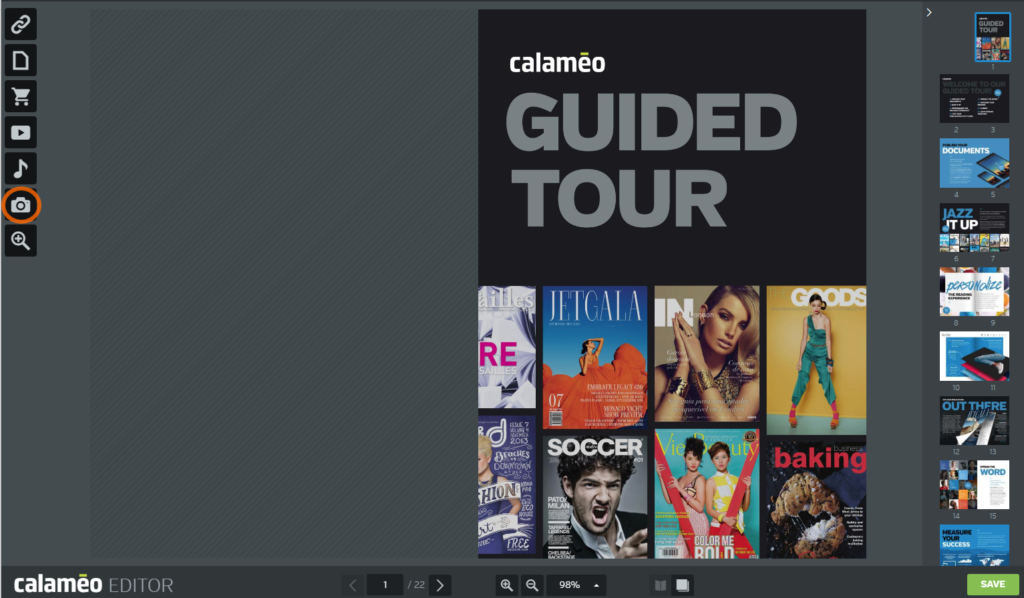
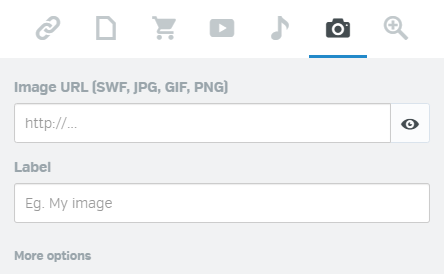
Our cutting-edge conversion technology offers vibrant, clear images for publications that are works of art. But for those times that you need ultra-high resolution, consider adding image files to your publication with our Editor. First, make sure that your file (.JPG or .PNG) is hosted securely online. Next, leave a blank space in your original document where you wish to place the image. Finally, insert your image and save. You’ll enjoy perfect quality, even at the highest levels of zoom.
Keep these tips in mind to optimize your documents for digital publishing on Calaméo. By taking a few minutes to prepare your files, you’ll get the best results faster than ever. And if you’d like to learn more about ways to optimize your publications, check out our guides to SEO trends, making a virtual library and more.
Our PLATINUM plan is packed with great professional features. To request your free, two-week trial, visit our Pricing page now!

Since the beginning of 2020, much of the world has undergone rapid changes in response to the COVID-19 outbreak. With more than 30% of global population under some form of lockdown in April, everything from doing business to keeping busy has been turned upside-down and everyone is being forced to innovate.
That’s why we decided to update our list of digital publishing strategy trends for 2020. Although the strategies we discussed back in 2019 are still important, we wanted to highlight trends that have emerged this spring. Read on to learn how businesses are adapting digital publishing to meet new needs during the coronavirus pandemic.
DIGITIZATION
A main concern for companies across all industries has been getting their business up and running online. Of course, having an internet presence and even offering online sales are already key for modern organizations. However, when stores are closed and potential customers are quarantined at home, digital platforms are vital for staying in touch. One recent survey showed more than 85% of marketers anticipate bigger demand for online services, while 70% expect increased e-commerce.
In addition to serving customers online, businesses are also figuring out how to enable remote work for their teams. For many, the shift from office life to working from home was sudden. Overnight, thousands of companies have had to adjust priorities and adopt new ways to collaborate. In the US alone, the number of people working from home jumped from 4% of the workforce to 34% during the first week of April 2020.
This unprecedented move to the web means companies are racing to digitize documents of all types. From internal memos to product catalogs, their materials need to be available for customers and employees online. And due to production and distribution difficulties, the trend is even stronger for businesses with print publications. In challenging conditions, digitization is helping to provide critical publishing solutions.
SOLIDARITY
Another publishing trend to come out of the pandemic is more widely shared content. Digital publishers quickly recognized the need for people at home to stay informed, entertained and learning. Overwhelmingly, they have responded by making content that is usually paid available for free online.
Here at Calaméo we have seen inspiring examples of publishers showing solidarity with their readers. We rounded up some of the educational resources that our publishers shared to help quarantined parents and children on the blog in French. We’ve also noticed special journals, activities and more being shared on our platform for everyone to enjoy.
💡 TIP: Published something on Calaméo that you’d like us to check out? Don’t forget to tag us @calameo when you share it on Facebook,Twitter or LinkedIn.
Indeed, this is a trend that’s become clear among publishers all over the internet. Newspapers and magazines like the New York Times and Vanity Fair are letting readers without a subscription access their coverage of the coronavirus. As a result, views were 30% higher on average in March 2020 than in 2019. Some sites have even reported doubling their traffic due to free content initiatives, demonstrating a strong connection with audiences online.
E-BOOKS
The last publishing trend we’ll highlight today is a bit unexpected: e-books. After a decade of highs and lows, by 2019 e-books made up about 20% of all book sales. But as more and more businesses turn to online tools to digitize and share content, e-books have gained new popularity amid the pandemic.
Offering readers the opportunity to download digital copies of their material is an important option for publishers in lockdown. Booksellers are reporting increased demand, while libraries have experienced a surge of e-book borrowing. For example, digital library book checkouts climbed by 30% during the first weeks of quarantine in the United States. And in France, e-book sales rose up to 200%.
Businesses in every industry are working hard to adapt to the extraordinary circumstances created by the coronavirus. However, the immediate future remains uncertain. Some experts predict, for instance, that 25-30% of people may still be working from home in 2021. Others wonder whether advertising will continue to support online content as usual.
We don’t know yet how these digital publishing trends will evolve over the coming months. But one thing seems clear: the best strategies in 2020 will focus on being useful in a changing world.
To learn more about digital publishing on Calaméo, check out our Guided Tour below. Write to us with your questions any time at contact@calameo.com.
Why publish an online magazine (instead of emailing a PDF)
Publishing an online magazine from a PDF isn’t just about “uploading a file” and sharing a link. If your goal is to grow an audience, boost visibility, and drive measurable actions (subscriptions, clicks, inquiries, sales), you need to treat your magazine like a real content asset.
A high-performing online magazine usually comes down to four pillars:
A clean embed on your website (to capture traffic, reinforce your brand, and improve SEO)
A multichannel distribution plan (website, email, social)
A solid mobile experience
Consistent analytics (UTMs + KPIs) so you can see what works and improve issue after issue
Publishing an online magazine means making editorial content accessible on any screen, easy to share, and measurable. The goal isn’t just display—it’s distribution (email/social/website), visibility (SEO), and analysis (engagement, sources, clicks).
Quick pre-publish checklist
Prep a landing page (SEO + context)
Plan distribution (website, email, social)
Add CTAs / links (subscribe, contact, offer)
Track (UTMs, KPIs, reporting)
Improve using the data (most-read sections)
Why choose Calaméo to publish an online magazine (from a PDF)
If you want to publish an online magazine that’s easy to read on mobile, easy to share, embeddable on your website, and measurable, Calaméo is a strong option. The goal isn’t just “put the PDF online”—it’s building a complete setup: reading experience + distribution + SEO + analytics.
Fast publishing, no technical headache
Calaméo lets you turn a PDF into a digital publication in just a few steps, without needing custom development. For a marketing or editorial team, that matters: you can publish new issues quickly, iterate, and keep a consistent release rhythm.
Publish directly from a PDF
A reading experience designed for the web
Easy updates and issue management for your team
A better reading experience (especially on mobile)
Most reading happens on smartphones now. Calaméo gives you a web-friendly experience compared to sending a PDF attachment: smoother navigation, better comfort, improved accessibility, and less friction.
Mobile-first reading (depending on your publication setup)
More intuitive navigation than a raw PDF (TOC/markers, depending on how you set it up)
To maximize SEO and keep control of your traffic, the best approach is to embed your magazine on your own domain—on an optimized “Issue” page. Calaméo supports that: you can share via link and/or embed the publication on a WordPress page, a landing page, or a “Magazine” hub page.
Website embedding (dedicated page) to reinforce your brand
A hub approach: issue page + archives + topic collections
Better alignment with your content strategy (SEO + conversion)
Distribution and privacy options that fit professional use cases
A magazine can be public (to acquire traffic) or restricted (subscribers, clients, internal). Depending on your needs, Calaméo lets you adjust how you share: open publication, link-based sharing, or more restricted access (based on your plan and settings).
Public distribution to grow reach
Controlled sharing when content is restricted
Alignment between goals (audience) and constraints (privacy)
Data-driven improvement, issue after issue
Publishing is just step one. What makes the difference is continuous optimization. With Calaméo, you can analyze publication performance and connect your distribution actions to measurable outcomes.
Performance tracking (views, engagement, clicks—depending on your plan)
Ability to structure tracking with UTMs (email, social, QR, partners)
Editorial optimization: see what truly grabs attention and what drives clicks
Built to drive actions (not just reading)
An online magazine can support business goals: subscriptions, contact requests, quote requests, traffic to key pages. Calaméo fits well here because it helps create a reading experience that pushes users toward useful next steps (landing pages, forms, product pages, etc.).
Links and CTAs placed where they matter (not only at the end)
Shorter path from reading to action (less friction)
Click measurement to improve CTR and conversion
Calaméo is a great fit if… – You publish issues regularly (magazine, journal, long-form newsletter) – You want to centralize distribution on a dedicated page (SEO + measurement) – You need something easy for a marketing/editorial team to run – You want to measure and optimize (sources, clicks, engagement) – You want a higher-quality experience than a PDF email attachment
How to plug it into your workflow (simple recommendation)
To get the most out of Calaméo with WordPress, a proven approach is:
Create an “Issue” page on your website (summary + table of contents + CTA)
Add the Calaméo publication (embed or a “Read” button)
Drive all channels to that page (email, social, QR)
Tag links with UTMs and track your KPIs
Reuse the same template for every issue (make it repeatable)
Step 1 — Prep your PDF for online reading
Check readability (and avoid “fake problems”)
A PDF can look perfect in print and still be hard to read on mobile. Before publishing, check:
font size (comfortable on screen)
contrast (text too light, busy backgrounds)
margins (content too close to edges)
consistency in headings and sections (mental navigation)
Reduce PDF weight without killing quality
File weight directly impacts the experience: heavier files load slower, and slow loads increase drop-off. Aim for a reasonable balance:
An online magazine isn’t just “for reading”—it should guide people. Plan for:
a clickable table of contents (if possible)
stable sections (so you can compare performance over time)
action zones: subscribe, explore an offer, contact, download
Step 2 — Choose the format: flipbook, scrolling, or hybrid
There’s no one “best format.” It depends on your audience and your goal.
Flipbook: magazine feel and navigation
A flipbook makes sense if you want to:
keep the page-flip experience
showcase layout and design
offer a print-like navigation feel
Scrolling: efficient, faster reading
A scrolling format (web-page style) works well if:
your content reads like an article
you want a more mobile-first experience
you want more indexable text around the content
Hybrid approach (often the most effective)
In practice, a strong strategy is to:
publish the magazine (flipbook/reader)
host it on a dedicated page with contextual text (summary, TOC, highlights, links)
turn key sections into SEO articles (excerpts) that link back to the full issue
Step 3 — Build one landing page per issue (the core of SEO)
A common mistake is sharing a magazine via a simple link without building a page on your own domain. The result: weak SEO visibility, less control over the reader journey, and fragmented measurement.
Recommended structure for an “Issue” page
Your page should stand on its own as real content. A simple, effective structure:
1) Clear title + promise
Example: “Magazine X — January 2026 Issue: trend A, feature B, interview C.”
2) Summary (5–8 lines)
Explain what readers will get, using the words your audience actually searches for (helps SEO and LLMs).
3) Table of contents (bullets work great)
Feature story: …
Interview: …
Picks/selection: …
Events/agenda: …
4) “Key takeaways” block (3–5 bullets)
Great for featured snippets and AI answers.
5) Primary CTA + secondary CTA
Primary: “Subscribe” / “Get the next issue” / “Explore the offer”
Secondary: “Download the print version” / “Contact the editorial team”
6) Embedded reader (or a “Read the magazine” button)
If you embed, leave enough space and make sure it’s responsive. If not, a clear “Read the magazine” button works well.
7) Links to archives and related content
Add:
“All issues”
“Topic collections”
“Related articles”
Simple, practical SEO wins
One dedicated page per issue (stable, descriptive URL)
What matters is consistency (same logic every issue).
Repeatable monthly reporting
top sources (+ trend)
top clicked links
best-performing sections/pages
2–3 recommendations for the next issue
Step 6 — Improve issue after issue (the optimization loop)
Your advantage compounds over time when you systematize:
repeat what performs (sections, angles, CTAs)
remove friction (mobile, speed, navigation)
build topic pages that recycle content (evergreen SEO)
turn top themes into long-form SEO articles (acquisition)
Common mistakes (and how to avoid them)
Publishing without a dedicated page
Without an issue page, you lose SEO, journey control, and conversion opportunities.
Sending the PDF as an email attachment
You lose tracking, update flexibility, and often the mobile experience.
Too many generic CTAs
Better: 1 primary CTA, 1 secondary, plus contextual CTAs in the right sections.
No UTM tracking
Without UTMs, you can’t reliably compare email vs social vs QR vs SEO.
Conclusion
A strong online magazine is a system: dedicated page + multichannel distribution + tracking + continuous improvement. Once that foundation is in place, every issue becomes a longer-lasting asset that shares better and drives measurable results.
CTA suggestion (edit as needed)
Button: “Publish your next issue”
Secondary button: “Set up clean tracking (UTM/GA4)”
FAQ
How do I publish a PDF as an online magazine with Calaméo?
Upload your PDF to Calaméo, publish it as an online magazine, then create an “Issue” page on your site (summary + TOC + CTA) that embeds the publication (or links to it). Add UTMs to your distribution links to measure what performs.
How do I embed a Calaméo magazine on WordPress?
Create (or open) your WordPress issue page, paste the Calaméo embed code/block, then check mobile rendering. Add text around it (summary, highlights, key topics) to improve the experience and strengthen SEO.
How do I get a Calaméo magazine to show up on Google?
Don’t rely on the embed alone. Publish each issue on a dedicated page with unique text (summary, topics, highlights), strong internal linking (“Magazine” hub, related articles), and solid mobile performance. That’s what helps Google understand and index the page.
Can I track Calaméo publication visits in GA4?
Yes. Use UTM-tagged links in emails, social posts, QR codes, and paid campaigns so GA4 can identify sources. Then combine that with publication stats to analyze engagement and outcomes.
What analytics can Calaméo track for a digital magazine?
In practice, you’ll want to track audience (views/readers), engagement (reading depth and time), and clicks (actions). With well-structured UTMs, you can connect performance to channels and campaigns (email, social, QR, ads). Calaméo can track things like:
Total views (overall volume)
Total downloads (strong intent signal)
Total pages viewed (reading depth)
Average reading time (retention/quality)
Total clicks (interaction on links)
Shares, favorites, comments (engagement/virality)
Device breakdown (desktop/mobile/tablet)
Reader location (geography)
Views by hour (timing insights)
And with GA4 properly set up, you can go further by:
Getting more realistic unique-user views
Analyzing the full journey (before/during/after reading)
Is it better to email a PDF attachment or share a Calaméo link?
Share a link. It’s easier on mobile, easier to update, and much easier to track. Attachments make measurement harder and often degrade the reading experience.
Flipbook or scrolling PDF: what works best for an online magazine?
Flipbooks preserve the “magazine” feel and highlight layout. Scrolling is more direct and often more mobile-first. The most effective setup is often hybrid: an SEO-optimized issue page plus the embedded (or linked) Calaméo publication.