Digital design is always evolving and in recent years user experience has been a major focus. Also known as UX, user experience involves improving how people interact with digital products and services. And it’s become a key investment for modern businesses. That’s because a great user experience can encourage visitors to spend more time on your website, help them view your brand positively and even increase sales.
Luckily for our publishers, Calaméo offers an exceptionally user-friendly HTML5 reader that allows their documents to shine on every device. But there are a few simple steps you can take to create an even better experience for your online audience! Learn about four essential UX principles and how to apply them to your digital publications.
Use consistent visuals
A top rule for ensuring great user experience is committing to one, coherent graphic design. Whichever fonts, colors and layouts you have chosen for your documents, they should match the visual identity of your business. Otherwise, too many different graphic elements risk overwhelming your online audience and can negatively impact UX.
So how do you create a seamless visual transition between your brand and your digital publications? To start, you can customize the appearance of the viewer. For example:
Choose a background for the viewer to harmonize with your website.
Build a custom theme and fine-tune the viewer right down to the font.
Reduce friction
For UX designers, “friction” is anything that gets between users and their goals. For digital publishers, this often means not ensuring optimal readability for their online documents. When publishing on Calaméo, take a moment to select the best options for your publication in its properties. Easy ways to reduce friction include:
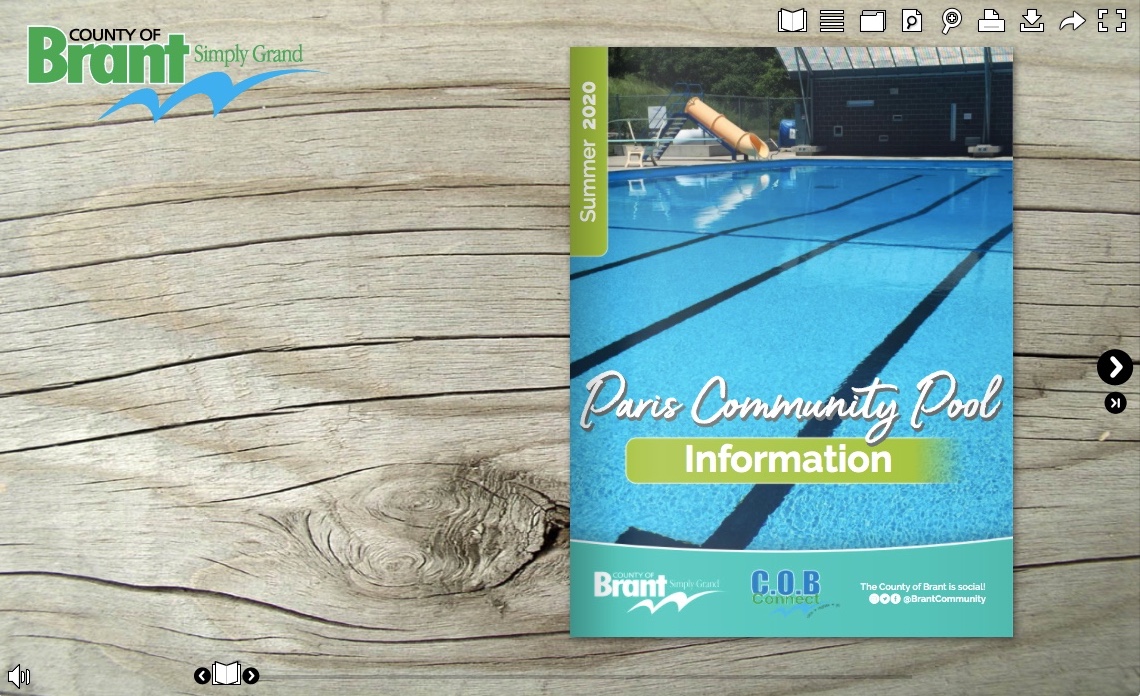
Thanks to decades of digital culture, certain features of user experience are already understood and expected by just about everybody. For instance, Internet users expect that clicking a logo in the top left-hand corner of a web page or window will return them to the home page.
The publication above from County of Brant shows a great example of this strong UX element. With Calaméo, it’s simple to place your logo directly in the viewer and add a link. Take advantage of it in your digital publications to increase traffic to your site!
Encourage action
Do you wish you could:
Let your readers follow your business’s social media accounts in just one click?
Modify a button in the viewer to include a call to action, such as “Download now”?
Create a smart contact button in the viewer to help generate leads?
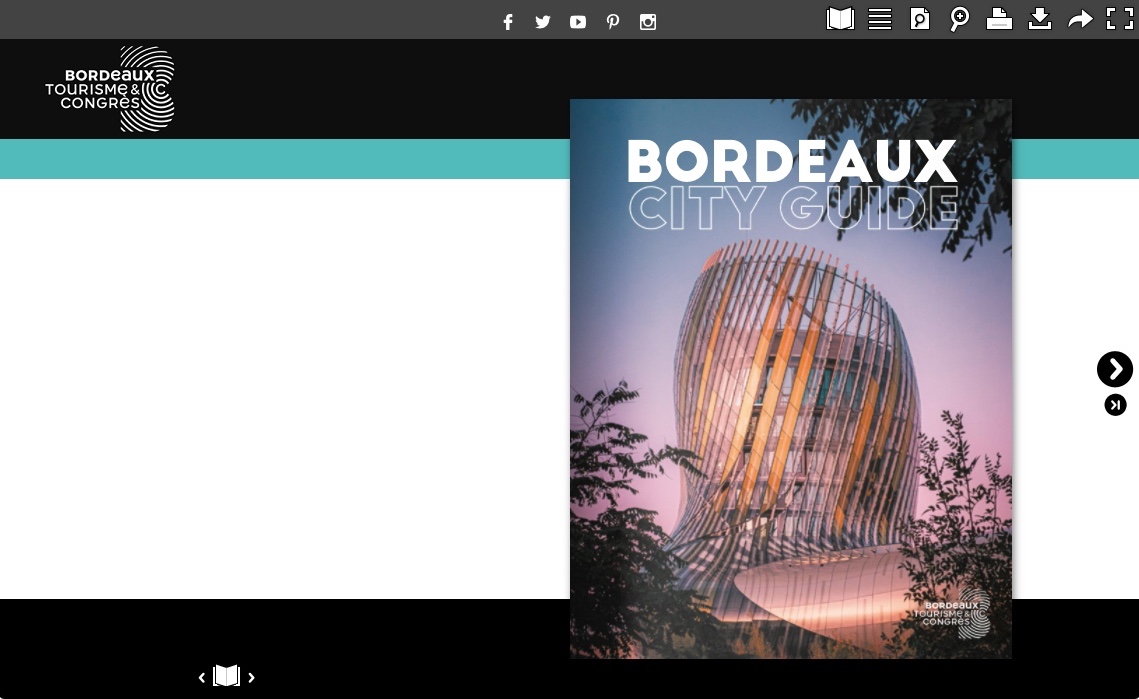
Then you need to explore Calaméo’s custom themes feature. Because of its unique flexibility, you can adapt the user experience of your digital publications to best serve your business’s goals. Check out this example from Office de Tourisme de Bordeaux Métropole:
We’ve put together an illustrated tutorial to show you how to get started customizing your theme. But to discover the full range of possibilities, take a look around our Developer resources.
From one-click options to made-to-measure themes, Calaméo gives you powerful tools to create the best possible user experience for your digital publications.
Our PLATINUM plan includes all the must-have features to boost your digital publications’ UX. Request your free, two-week demo and try them out today!
Want to reinforce your brand identity on Calaméo? Nothing could be easier! With our platform, you can add your logo directly to the viewer, so your readers will see it every time they open one of your documents.
In this article, discover our video tutorial “How to add your logo to the Calaméo viewer” — a step-by-step guide to help you personalize your publications and highlight your brand.
Please note that this feature is available for PREMIUM and PLATINUM users only.
Why add your logo to the viewer?
Displaying your logo on the Calaméo viewer is a great way to strengthen your brand image and provide a professional reading experience for your audience.
Whether you’re publishing a magazine, a catalog, a corporate report, or a brochure, this personalization feature helps make your publications unique and instantly recognizable.
Key benefits:
Enhance your visual identity: Your logo appears on all your publications, ensuring a consistent and professional brand image.
Boost brand awareness: Readers immediately associate your content with your brand.
Unify your communications: Maintain a consistent visual signature across all your digital materials.
A step-by-step video tutorial
Adding your logo to the Calaméo viewer is simple and fast. Our video tutorial “How to add your logo to the Calaméo viewer” walks you through each step, helping you configure this feature in just a few clicks.
Don’t forget to turn on subtitles (available in 7 languages).
Conclusion
Customizing the Calaméo viewer with your logo is a simple yet powerful way to showcase your brand and offer your readers a unique, professional reading experience.
Whether you’re a business, an institution, or a content creator, this feature helps you make every publication look polished and aligned with your brand identity.
The first thing you need to know about digital publishing is that it’s simple. So simple, in fact, that you might already be doing it! Professionals, teachers, entrepreneurs, aspiring creatives, students, freelancers and people everywhere with something to share online turn to digital publishing every day.
That’s why the second thing to know about digital publishing is why it’s such a popular choice—and how to do it better. In this article, we’ll explain all the most important basics, tips to help you find the right solution and a few special extras to make the most out of your publications online. Read on to learn more about:
Digital publishing means using online tools to make media of all kinds available via the Internet. Instead of traditionally printed books, magazines and newsletters, digital publishing makes ebooks, blogs and online publications. Readers access this content on computers, smartphones or other digital devices. In short, anyone who has documents to distribute online can benefit from digital publishing technology.
Because digital publishing covers many genres and formats, there are plenty of different options to consider. From specialized content management systems to bespoke applications, there’s something for everyone. However, digital publishing platforms stand out above the rest: They offer a convenient, fast and easy way to convert your files to online publications.
Benefits of HTML5 publications
Although a few platforms still use Flash technology, the gold standard is now HTML5 for online publications. But what exactly does it mean to make an HTML5 publication?
Let’s imagine you have a Powerpoint that you need to get online and send out to colleagues. Using a modern digital publishing platform, your PPT file is converted into a browsable publication built with HTML5 and hosted at a unique address on the web. Then to send to your coworkers, simply copy the link and share.
Effortless sharing is just one advantage of HTML5 publications. More key benefits include:
Visibility. Unlike a basic file upload, your HTML5 publications are easy to optimize for search. Help searchers find your content thanks to smart keywords, structured data and automatically indexed text.
Compatibility. Never worry about problems opening your documents again. Your HTML5 publications work with all devices, all operating systems and all browsers. Better yet, there’s no extra software, downloads or plug-ins required.
Versatility. HTML5 publications are ready for anything. You can enrich them with audio and video content, add links and images, and embed them in your own website or blog. Plus, customize the presentation with your own logo, branding and design.
Usability. Above all, your HTML5 publications are always available online. View, share and update from anywhere, anytime.
Want to go beyond email attachments and plain PDFs? No matter what type of content you have to distribute online, digital publishing can help you get more out of it.
Why businesses use digital publishing
The name might make you think it’s all about novels, but digital publishing is actually a powerful tool for a wide range of businesses. Since an online presence is essential for companies in every sector, having smart digital content matters. Depending on your goals, the best reasons to take advantage of digital publications may differ. Here are three of the most common businesses uses.
Marketing
To create irresistible online materials. Traditional marketing formats like brochures and modern channels like video work together perfectly in digital publications. Marketers can mix and match to produce content that works for their target audience. A light footprint and detailed analytics make it practical for A/B testing, too.
Communications
To connect content with people. Newsletters, magazines, how-to guides and employee handbooks need to be online. Digital publishing platforms make it easy not just to upload content, but also to manage it. Advanced privacy controls and distribution features help communications pros get their message out there, the right way.
Sales
To modernize the sales funnel. Today, content and sales are closer together than ever. Both sales teams and ecommerce operations can make good use of digital publications. For example, email a personalized prospectus for leads to browse on the go. Or transform a PDF catalogue into an interactive, shoppable experience for customers online.
Education and digital publishing
One of the biggest challenges currently facing education is adapting to virtual learning. However, online publishing offers a user-friendly solution for digitizing teaching material. All that students and teachers need is access to an Internet connection to exchange documents securely. Because the best digital publishing platforms can handle multiple file types, converting assignments, tests and more to HTML5 publications is simple.
As a result, digital publishing can be used for many virtual learning materials like:
Study guides and lesson plans
Activities and homework
Presentations and projects
School newspapers and yearbooks
In addition, educational publishers often make sections of textbooks available online as digital publications. Expect this trend to grow while virtual classrooms continue to evolve.
Independent digital publishing
Before the Internet age, a creative career usually started with finding a talent agent. But now, online tools like digital publishing have opened the ability to produce and distribute to everyone. Authors and artists in every genre can choose to publish their work independently in digital formats. For instance, portfolios and media kits help show off your projects and skills, while previews and collections let audiences sample your creations. Even a whole book can easily become a multimedia digital publication to share or sell—no agent necessary.
Advantages of an online platform
Digital publishing is an important part of the online ecosystem. So it’s no surprise that there are many options to help you make and publish content digitally, including traditional software. However, there are several serious advantages to an online platform.
First, your digital publications are accessible 24/7 on the web. Second, you don’t need to take care of hosting your publications. In other words, there are no finicky details for hosting set-up and maintenance to handle. And finally, you don’t have to deal with separate software to download, install and keep updated.
A true online platform should offer you all the features of digital publishing right on your favorite browser. To sum it up, these three advantages add up to major convenience for your content.
Choosing a digital publishing platform
Once you’ve decided to begin using digital publishing for your online content, it’s time to decide which tools are right for you. If you’re searching for a platform to produce and host HTML5 publications, start by considering your main needs. For instance:
Storage. How many digital publications are you planning to create? How large are the files that you work with?
Reliability. How fast do you want your publications to load?
Security. What privacy options would you like to have for your publications? How do you want your audience to be able to access them?
Support. What guidance would you like to receive? What kind of assistance is available if you need help with your publications?
Of course, there are many other potential questions you might ask according to your specific objectives. Say that you have high-quality video content to include in your digital publications. In that case, you may want to make seamless integrations with YouTube a priority. When you have a good idea of what you’re looking for in a digital publishing platform, you’ll be well prepared to find the best fit.
Digital publishing UX
A good digital publishing platform will provide you with smart options to optimize the UX of your online documents. An important part of web design, UX or user experience covers everything that shapes how people interact with digital products.
In this case, there are key UX elements to consider in the publication viewer. Most of all, you want to ensure that your audience can read your publications comfortably. Choices like Right to left reading, scroll and slide views, sharp zoom and full screen availability allow you to always define the right UX for your publications.
But another big factor to keep in mind is how flexible these and other UX options are. Since everyone’s needs are different, watch out for platforms that limit you to a “one size fits all” solution. In fact, with just a little basic tech know-how you should be able to customize the UX of your publications. From the viewer to embed options, online publishing gives you an incredible opportunity to enhance the reading experience for your audience.
Publishing in multiple languages
Thanks to the Internet, the world is growing more connected every day. Even small businesses can serve global customers with ecommerce tools and online communication. However, it can take some extra effort to make sure you’re speaking your audience’s language.
For successful multilanguage publications, prioritize platforms whose features help you organize and manage your online documents. Double check that the languages you publish in are supported for display and search so that your readers aren’t frustrated by text mistakes and missing results. And don’t forget to match the viewer language to your publications—or create your own.
Ready to start?
We think you’ll love digital publishing on Calaméo. But don’t just take our word for it! You can start publishing today. It’s free, fast and easy to join.
To see great digital publishing features in action, browse our Guided Tour.



 Please note that this feature is available for PREMIUM and PLATINUM users only.